Older Taiwanese men had less osteoporosis but similar fractures
Osteoporosis affected 32.4% of men versus 51.4% of women, while spinal fractures affected 22.7% versus 22.8%, respectively.
Limit: Referral patterns could overrepresent men with high fracture risk compared with women
Edited by Boris Djordjevic · AgingResearch.News
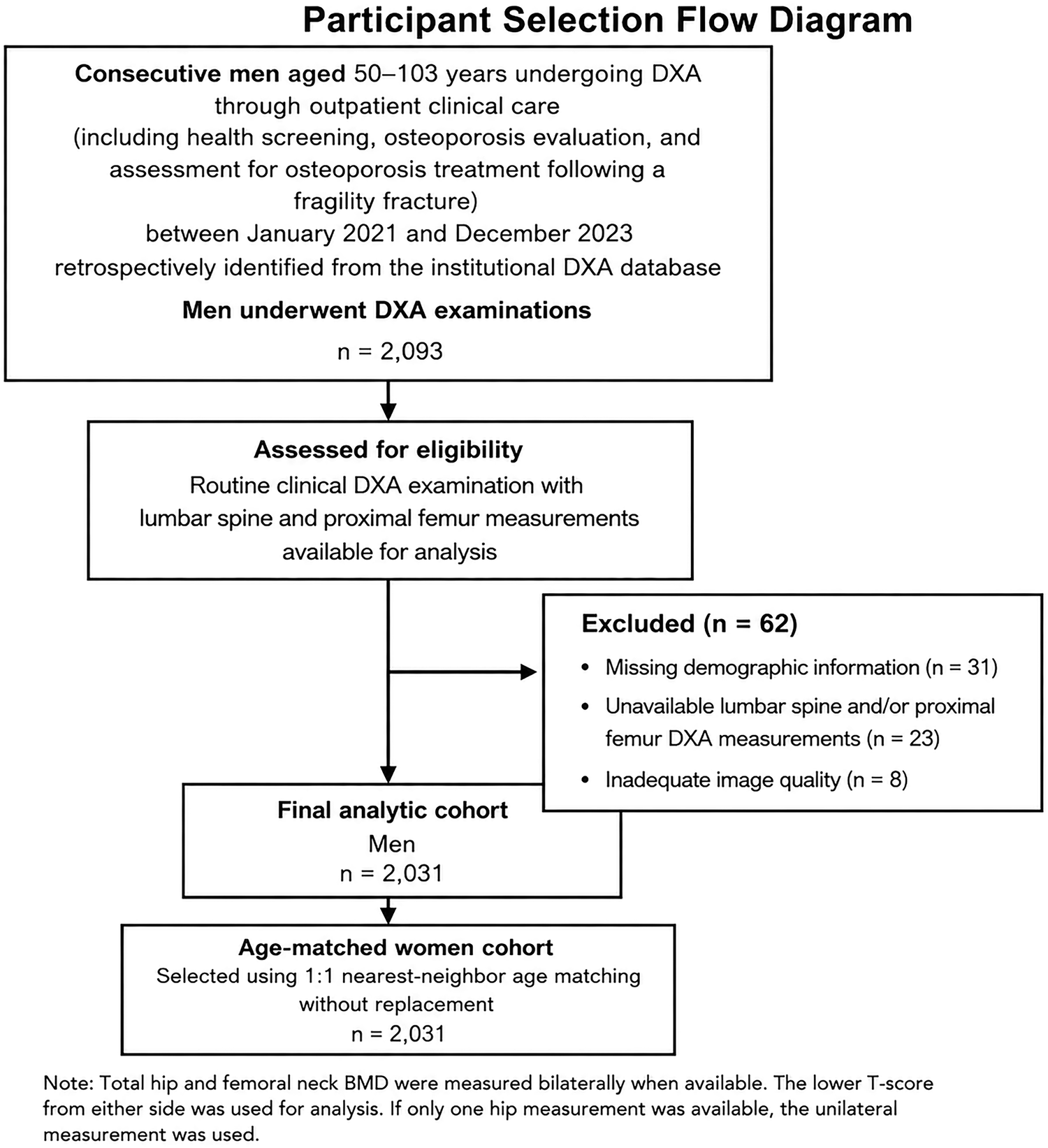
A retrospective cohort study compared 2,031 older Taiwanese men who underwent clinical bone-density scans between 2021 and 2023 with 2,031 age-matched women. Researchers defined osteoporosis, a condition that weakens bones, using bone-density measurements at the spine or hip. They identified spinal and hip fractures from X-rays and electronic medical records.
Men had a lower prevalence of osteoporosis but a comparable prevalence of spinal fractures. Hip fractures affected 6.1% of men and 5.0% of women, a difference that was not statistically significant. Male sex remained associated with both spinal and hip fractures after adjustment for age, body mass index—a measure of weight relative to height—and osteoporosis.
Why it matters
Osteoporosis-related fractures are a concern in older age. The authors emphasized assessing fracture risk with both bone density and clinical risk factors.
Caveats
The men were selected through clinical bone-density testing, which may limit how well the findings apply to the wider population. This observational comparison cannot establish causes.
From the paper
- Participants
A total of 2093 men underwent DXA in the outpatient setting for health screening, osteoporosis evaluation, or assessment for osteoporosis treatment following a fragility fracture between January 2021 and December 2023.
- Limitation
First, this was a retrospective single-center study, which may limit the generalizability of our findings to other populations and healthcare settings.
Quoted word for word from the full text on link.springer.com.
- Osteoporosis
- Hip fracture
- Fragility fracture
- Hip fracture prevalence
- Moderate-to-severe vertebral fracture prevalence
- Humans
The paper
Archives of Osteoporosis, Oct 31, 2026, Open access, CC BY

Comments
Be the first to comment.