Weight-loss surgery linked to lower bone density years later
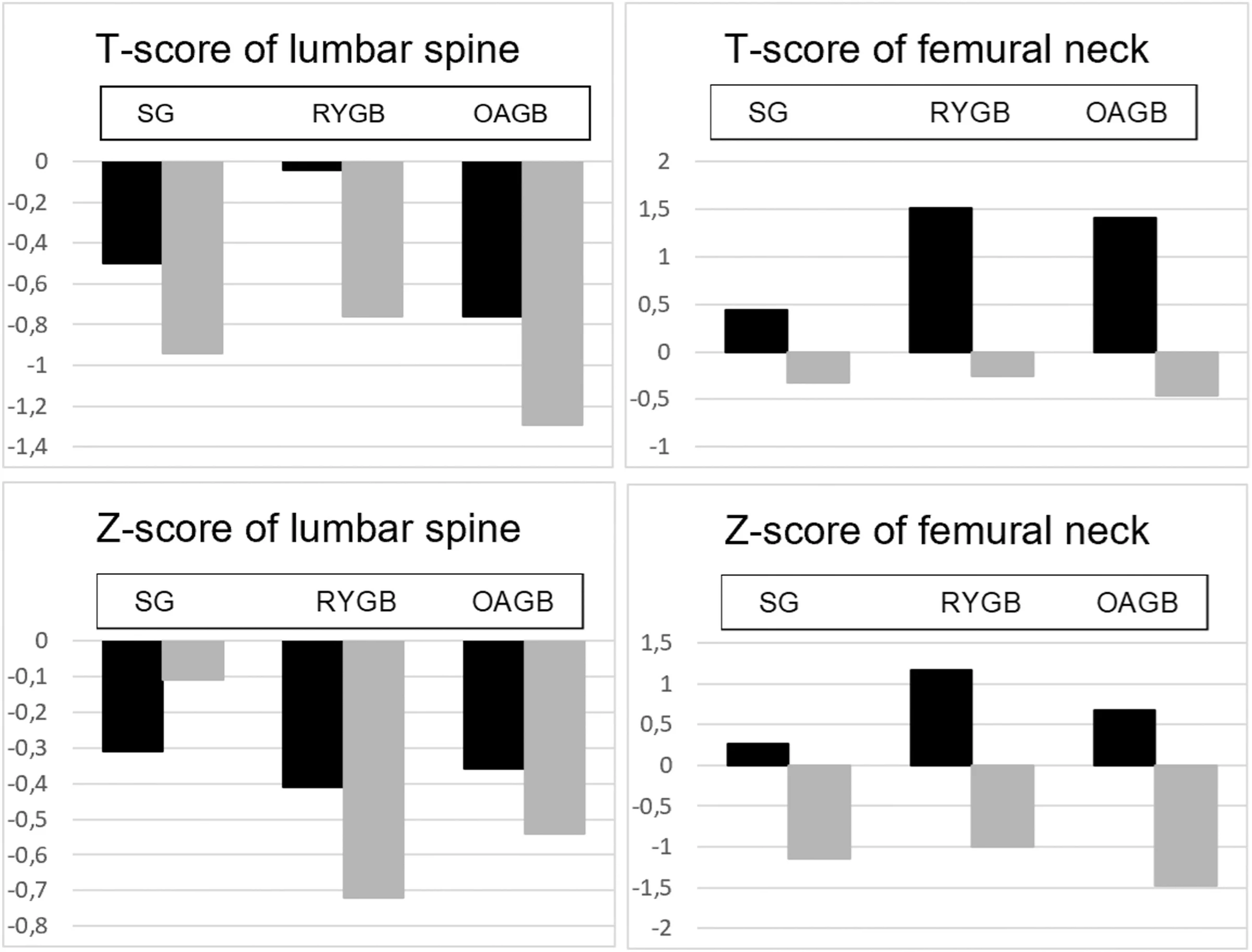
After stomach-reducing sleeve surgery, upper thigh-bone density fell from 0.99 to 0.49 grams per square centimeter; both gastric bypass groups also showed declines.
Our read
Interventions- Studied:
- Cohort study of 60 patients who underwent weight-loss surgery, mean 10.1 years
- What changed:
- Upper thigh-bone density fell from 0.99 to 0.49 grams per square centimeter after sleeve surgery; bypass groups also declined
- The catch:
- Only 60 patients total, with 20 in each surgical procedure
- In the record:
- The 201st paper on bariatric surgery with results in people; 433 on record in all.
- Why it’s aging research:
- It bears on staying healthy in midlife and later life.
Editor of record: Boris Djordjevic · AgingResearch.News
In an observational cohort study, 60 patients had bone health assessed before weight-loss surgery and an average of 10.1 years later. Researchers combined retrospective records with prospective long-term follow-up. Twenty patients had sleeve gastrectomy, which reduces stomach size. Two other groups of 20 had different types of gastric bypass surgery.
Bone scans showed lower density at the neck of the thigh bone after all three operations. Density in the lower spine did not change significantly. Blood tests related to bone health largely stayed within reference ranges. Vitamin D levels rose after all procedures, reflecting supplementation after surgery. A fracture-risk calculator estimated higher 10-year risks of major osteoporosis-related fractures and hip fractures at follow-up.
Why it matters
Osteoporosis weakens bones, making fracture prevention a concern as people age. The authors supported considering routine bone health monitoring after weight-loss surgery.
Caveats
This observational before-and-after comparison cannot establish that surgery caused the changes. It included 60 patients, and the fracture results were calculated risks, not reported fracture counts.
- Sleeve gastrectomy
- Bariatric surgery
- One-anastomosis gastric bypass
- Vitamin D
- Osteoporotic fractures
- Humans
The paper
Medical University of Vienna
Surgery for Obesity and Related Diseases, Jul 30, 2026
Comments
Be the first to comment.