The splicing axis of aging: mechanisms and therapeutic opportunities
Abstract
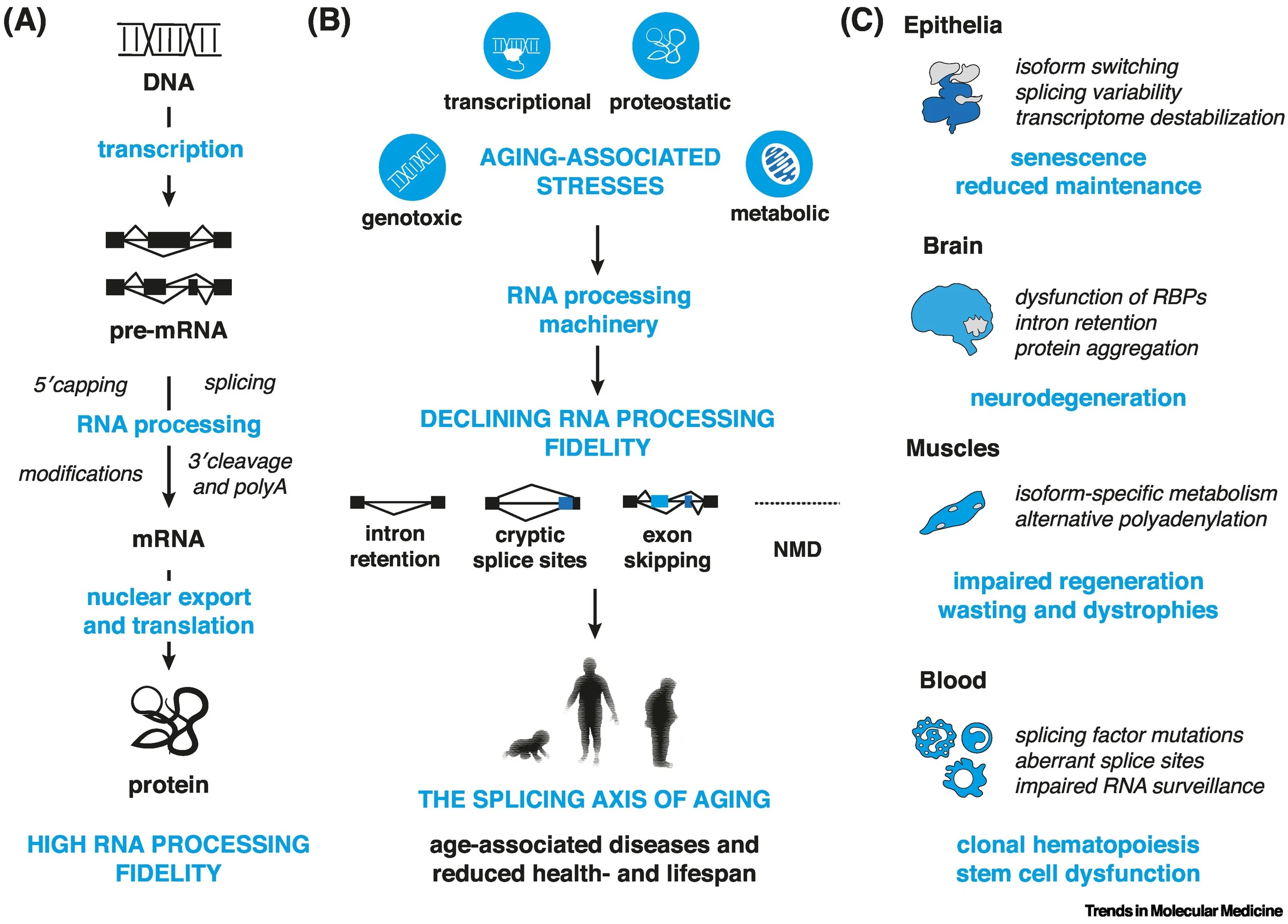
Aging is characterized by progressive loss of molecular fidelity that compromises stem-cell function and tissue homeostasis. Aging transcriptomes show widespread disruption of RNA processing, including increased intron retention, cryptic splice-site usage, and altered RNA quality control. These changes arise from somatic mutations as well as accumulated transcriptional, metabolic, and proteostatic stress. Importantly, similar splicing abnormalities are observed in age-associated diseases such as clonal hematopoiesis and neurodegeneration, overlapping with physiological aging states. Here, we synthesize mechanistic, stem-cell, and longevity studies to define declining RNA-processing fidelity as a unifying contributor to aging across systems. We propose the 'splicing axis of aging' as a framework linking RNA-processing dysfunction to tissue decline and outline emerging therapeutic strategies to restore spliceosome integrity and RNA homeostasis.
The paper
Polish Academy of Sciences
Trends in Molecular Medicine, 21 Sep 2026