Smoking status and adherence to diagnostic follow-up after community-based low-dose CT screening
365 days
Abstract
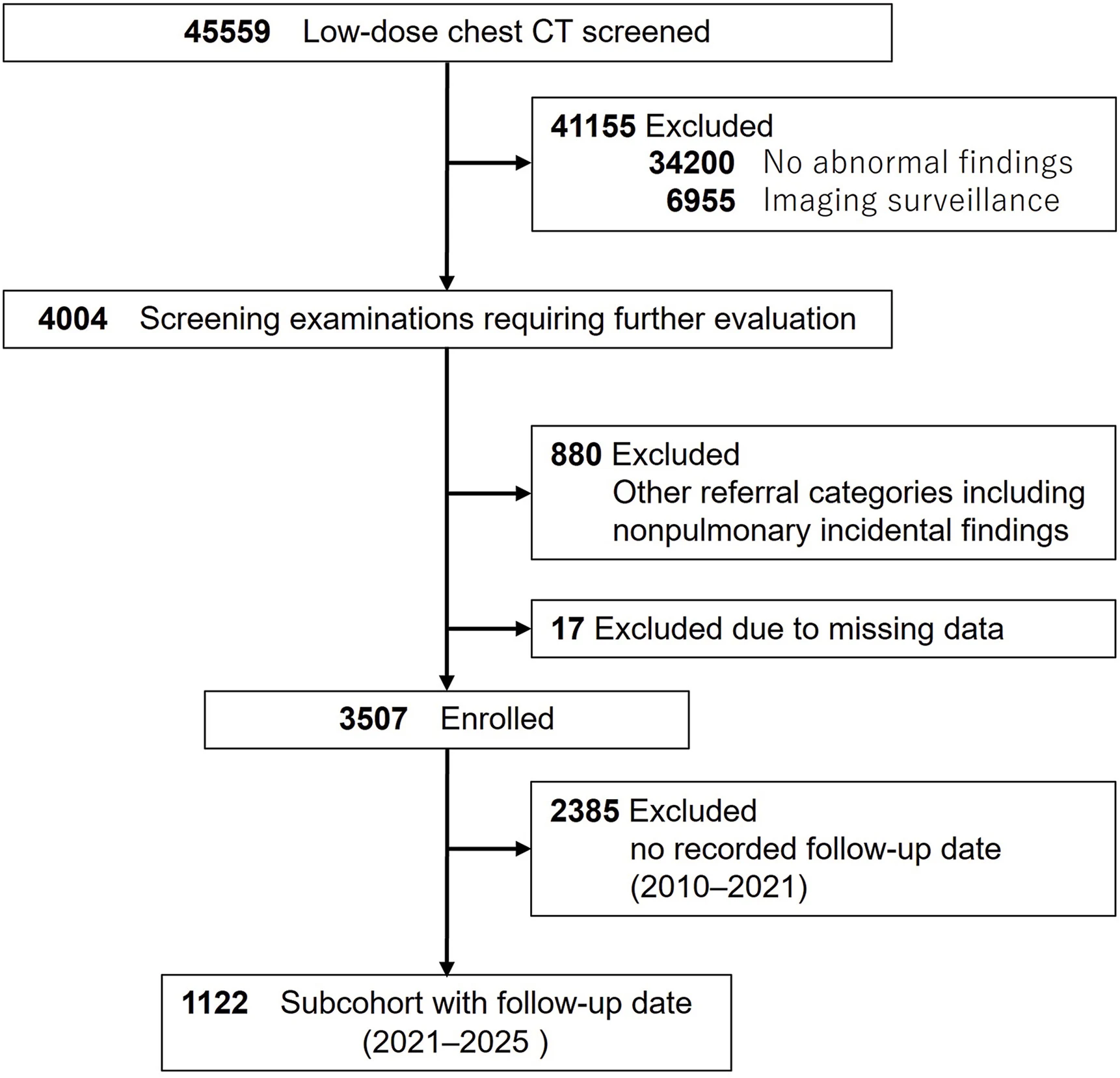
BACKGROUND: Low-dose computed tomography (CT) screening reduces lung cancer-specific mortality; however, its effectiveness depends on adherence to recommended diagnostic follow-up after abnormal findings. Factors associated with follow-up nonattendance in real-world screening settings remain insufficiently characterized. METHODS: We conducted a retrospective cohort study using a community-based low-dose CT screening program in Japan (2010-2025). Examinations requiring further evaluation were included (n = 3507). The primary outcome was nonattendance for diagnostic follow-up within 365 days. Multivariable logistic regression models were used to estimate adjusted odds ratios (ORs). In a subcohort with documented follow-up dates (2021-2025; n = 1122), time to follow-up attendance was analyzed using Kaplan-Meier methods and multivariable Cox proportional hazards models. RESULTS: Among 3507 examinations requiring further evaluation (mean [SD] age, 67.4 [9.5] years; 73.9% male), 678 (19.3%) had no documented follow-up within 365 days. Current smoking was strongly associated with higher odds of nonattendance compared with former smoking (adjusted OR, 2.15; 95% CI, 1.71-2.70). Respiratory symptoms were associated with lower odds of nonattendance (OR, 0.66; 95% CI, 0.55-0.79). In time-to-event analyses, current smoking was associated with delayed follow-up attendance (adjusted HR, 0.63; 95% CI, 0.52-0.75; P < .001). Suspected disease category was not associated with follow-up nonattendance in the multivariable logistic regression analysis. CONCLUSIONS: These findings suggest that smoking status may be an important determinant of successful linkage to diagnostic care, highlighting the need for targeted strategies to improve follow-up adherence among participants with current smoking in CT screening programs.
The paper
Shimane University
Respiratory Investigation, 21 Sep 2026, Open access