Older-looking retinas linked to smoking and diabetes
The gap between model-predicted retinal age and actual age was 2.52 years greater in people with diabetes than in matched controls.
7,535 participants, cohort study
Limit: Voluntary screening likely selected more health-conscious participants than the general population
Edited by Boris Djordjevic · AgingResearch.News
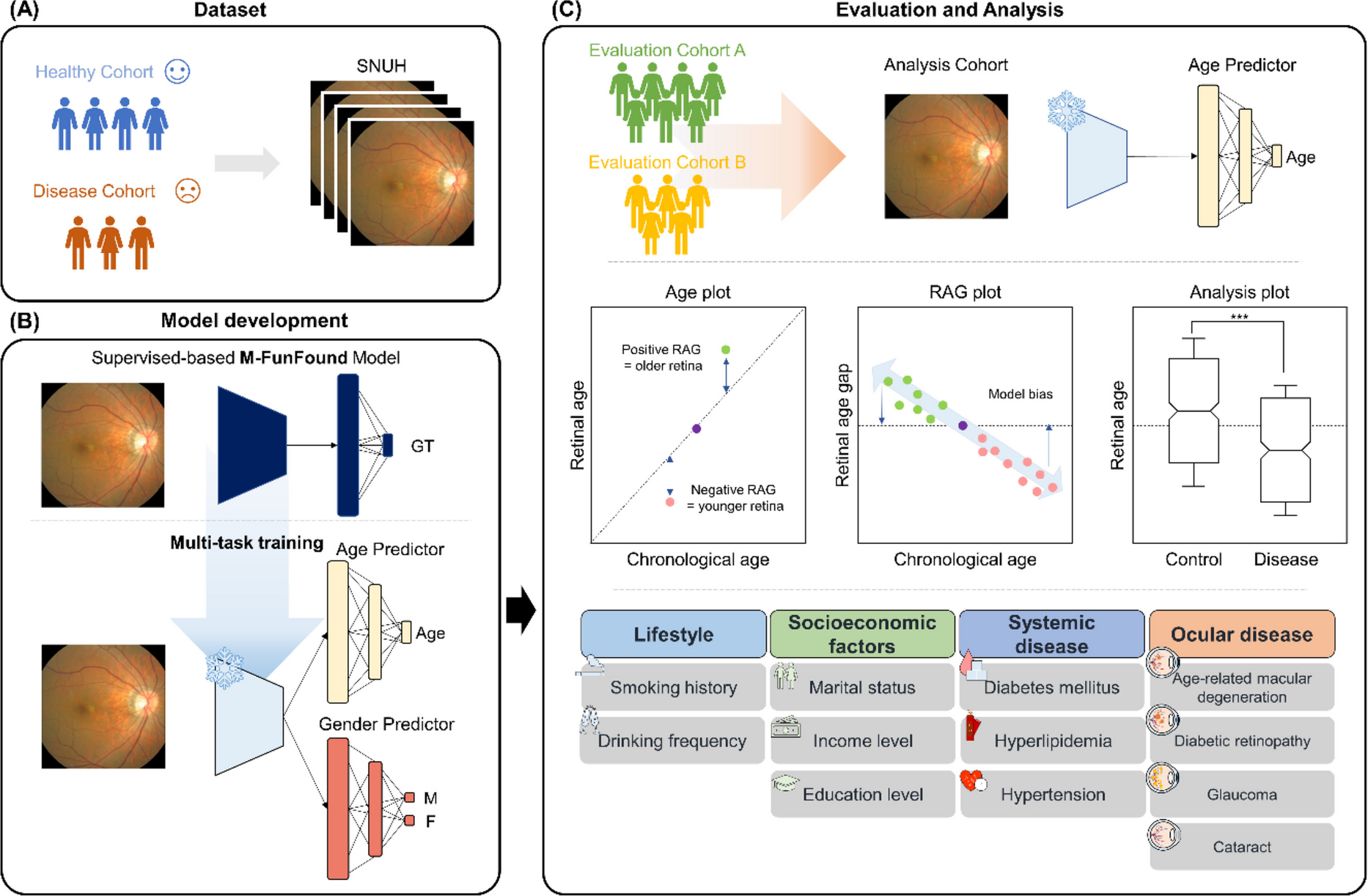
A retrospective observational cohort study in Seoul, South Korea, examined 5,606 health-screening participants averaging 44.5 years old (48.5% male) and a separate 1,810 averaging 46.5 years (56.1% male). Researchers used an image-analysis model to estimate age from photographs of the retina, the light-sensing layer at the back of the eye. The retinal age gap was predicted age minus actual age.
In the larger group, former and current smokers had gaps 0.46 and 0.50 years higher, respectively, than never-smokers after accounting for age and sex. Diabetes was linked to a gap 2.52 years higher than in matched controls. In the separate eye-disease group, gaps were higher than in normal eyes by 0.60 years with age-related macular degeneration, which affects central vision, and 1.86 years with cataract, clouding of the eye’s lens.
Why it matters
People of the same age can differ in biological aging. The authors said testing against established aging measures over time is needed to determine whether the retinal age gap reflects that variation.
Caveats
These observational comparisons cannot establish cause and effect, and participants came from one health-screening center. The authors said the measure currently suits population-level characterization better than individual risk assessment.
From the paper
- Participants
Evaluation cohort A included 5606 participants (mean age 44.5 ± 8.6 years; 48.5% male) with comprehensive lifestyle, socioeconomic, and systemic health data and was used to examine associations between the RAG and non-ocular factors, including smoking, alcohol consumption, marital status …
- Result
… both smoking categories were significantly associated with RAG: ex-smokers (β = +0.46, 95% CI 0.20 to 0.72; P < 0.001) and current smokers (β = +0.50, 95% CI 0.29 to 0.71; P < 0.001) showed a higher RAG than never-smokers …
Results, Associations of RAG with lifestyle and socioeconomic factors
- Limitation
First, this study was retrospective and conducted at a single center, and the exclusive inclusion of Korean participants may limit generalizability to other populations and healthcare settings.
Quoted word for word from the full text on link.springer.com.
The paper
Seoul National University; Massachusetts Eye and Ear Infirmary
GeroScience, Sep 17, 2026, Open access
