Sarcopenia index (serum creatinine/cystatin C ratio) independently identifies sarcopenia risk and mortality in older hospitalized patients with type 2 diabetes mellitus: a retrospective analysis
Declared no competing interests
Abstract
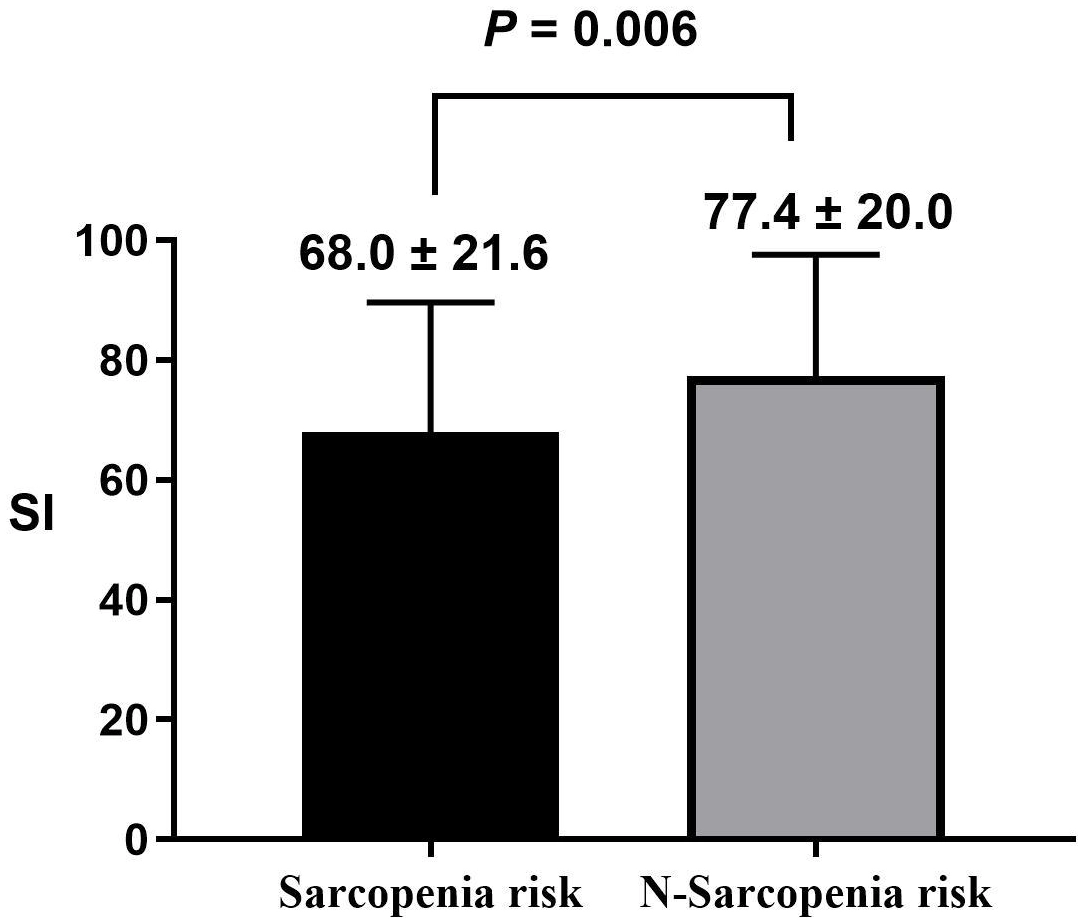
Sarcopenia is increasingly recognized as a complication of type 2 diabetes mellitus (T2DM); however, simple screening tools for hospitalized older adults remain limited. The sarcopenia index (SI), calculated as serum creatinine (mg/dL)/cystatin C (mg/L) × 100, has been proposed as a readily available biomarker of muscle mass. However, its clinical utility and optimal cut-off value in older Chinese inpatients with T2DM are unclear. This retrospective study included 296 hospitalized older patients with T2DM from the Department of Geriatrics at Shanghai Sixth People's Hospital between July 2019 and April 2020 and evaluated all-cause mortality. Sarcopenia risk was diagnosed according to the Asian Working Group for Sarcopenia 2019 consensus criteria. Logistic regression was performed to assess the association between SI and sarcopenia risk. Receiver operating characteristic (ROC) curve analysis was used to determine the optimal cut-off value, and Cox regression was used to evaluate the association between SI and mortality during follow-up (median 212 days). SI was significantly lower in patients with sarcopenia risk than in those without sarcopenia risk (68.0 ± 21.6 vs. 77.4 ± 20.0, P = 0.006). After adjusting for potential confounders, each 1-SD increase in SI was associated with a 68% lower risk of sarcopenia (adjusted OR = 0.32, 95% CI: 0.15-0.69). The optimal SI cutoff for detecting sarcopenia risk was 77.3 (AUC = 0.68, 95% CI: 0.59-0.77). Higher SI corresponded to a reduced risk of all-cause mortality during follow-up (median 212 days). after adjusting for potential confounders (HR per 1-SD = 0.70, 95% CI: 0.48-0.97). Subgroup analyses further revealed that the discriminative ability of SI varied by renal function, underscoring the necessity of kidney-specific validation. These findings suggest that SI is independently associated with sarcopenia risk and mortality in hospitalized older Chinese patients with T2DM and may provide a simple, low-cost tool for early sarcopenia screening in this high-risk population.
From the paper
- Participants
This retrospective study consecutively enrolled 425 diabetic patients with diabetes who were hospitalized in the Department of Geriatrics at Shanghai Jiao tong University Affiliated Sixth People’s Hospital between July 2019 and April 2020.
- Follow-up
Higher SI was independently associated with a lower risk of all-cause mortality during follow-up (median 212 days).
Results, Association of SI with all-cause mortality during follow-up
- Result
In the unadjusted model, each SD increase in SI was associated with a 37% lower odds of developing sarcopenia risk(OR per 1-SD = 0.63, 95% CI: 0.45–0.89).
- Limitation
First, the cross-sectional design precludes causal inference regarding the relationship between sarcopenia risk and the SI.
Quoted word for word from the full text on PubMed Central.
The paper
Shanghai Jiao Tong University
Frontiers in Endocrinology, 1 Sep 2026