Effects of 12-Week Resistance Training on Metabolic and Immune Responses in Normal-Weight and Older Women with Obesity
12 weeks, declared no competing interests
Abstract
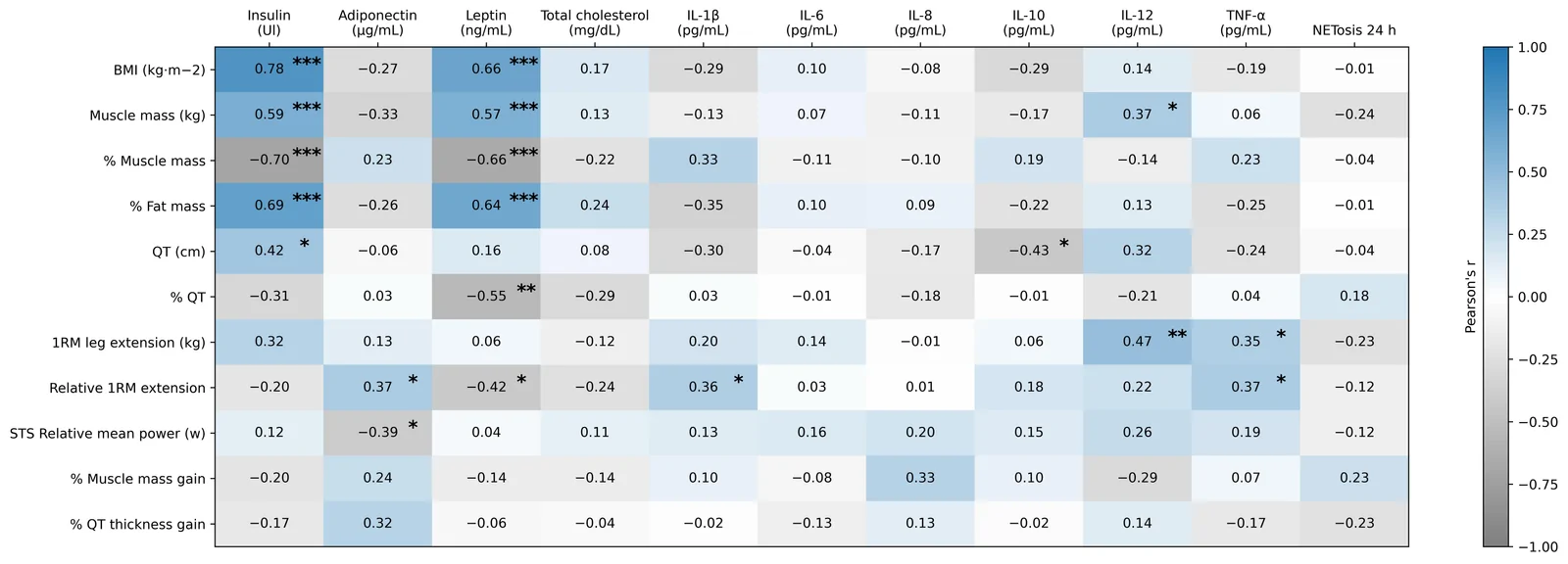
Ageing and obesity represent major public health challenges and are associated with metabolic dysfunction, chronic inflammation, and loss of skeletal muscle mass. Resistance training (RT) is an effective strategy to increase muscle mass; however, its effects on metabolic and immune parameters in older women with obesity remain unclear. The study aimed to compare the effects of 12-week progressive overload RT programme on metabolic and immune responses in women aged 60-79 years with obesity and normal-weight women. Thirty older women were allocated into two groups according to body composition: women with obesity (OB: 68 ± 4.21 years; body mass index [BMI] = 33.01 ± 2.62 kg/m²; body fat percentage = 42.23% ± 2.98%; n = 16) and normal-weight women (NW: 66 ± 4.31 years; BMI = 22.60 ± 1.36 kg/m²; body fat percentage = 33.11% ± 3.61%; n = 14). At baseline, the OB group showed higher serum concentrations of leptin, insulin, triglycerides, and HOMA-IR and lower HDL cholesterol concentrations compared with the NW group, while no differences were observed in circulating cytokines or NETosis. After 12 weeks of RT, fasting glucose decreased only in the OB group (p = 0.030). Both groups exhibited reductions in total cholesterol and adiponectin, along with an increase in NETosis. Leptin, insulin, and pro-inflammatory cytokines were associated with lower muscle quality, whereas higher baseline adiponectin concentrations were associated with greater muscle mass gains in the NW group (p < 0.05). In conclusion, baseline metabolic differences were observed between normal-weight older women and those with obesity; however, both groups showed changes after 12 weeks of RT in metabolic and immune parameters. Furthermore, higher baseline adiponectin concentrations were associated with greater muscle mass gains in the NW group.
The paper
Universidad de La Frontera
International Journal of Molecular Sciences, 25 Aug 2026