Plant compound cycloastragenol extended lifespan in worms
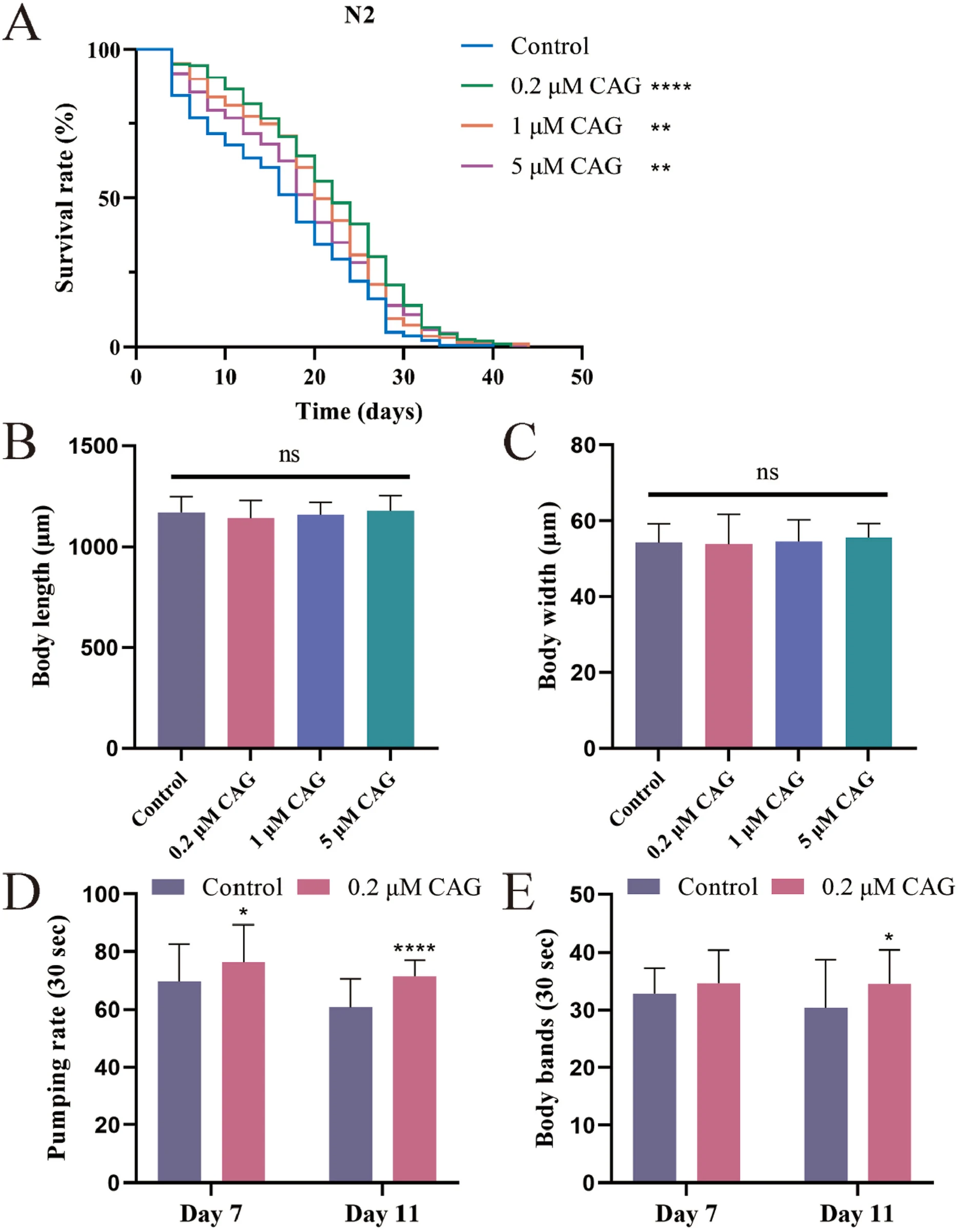
Mean lifespan rose 30.64% at a concentration of 0.2 micromolar; treated worms also showed better movement and stress resistance.
Limit: The abstract does not identify the lifespan comparison group
Edited by Boris Djordjevic · AgingResearch.News
In experiments with Caenorhabditis elegans worms, researchers tested cycloastragenol, a compound from the plant Astragalus membranaceus. They identified 0.2 micromolar as the optimal concentration, extending mean lifespan by 30.64%. Treated worms also moved better, accumulated less lipofuscin, a pigment that builds up with age, and resisted stress better. They showed stronger immunity against the bacterium Pseudomonas aeruginosa.
Using worms with specific mutations and measurements of gene activity, the researchers investigated how the compound worked. They reported reduced activity in a pathway that carries insulin-related signals and increased activity in a pathway involved in innate immunity, the body's built-in defenses. The authors described this mechanism as independent of telomerase, an enzyme that maintains chromosome ends.
Why it matters
The authors see the connection between innate immunity and longevity as a basis for exploring cycloastragenol for age-related disorders.
Caveats
These laboratory experiments in worms do not establish benefits or safety in people. The abstract does not specify the lifespan comparison group or report sample sizes.
- Cycloastragenol
- Immune response
- Insulin/IGF-1 signaling
- Lipofuscin
- Pseudomonas aeruginosa infection
- C. elegans
The paper
Qilu University of Technology
European Journal of Pharmacology, Sep 10, 2026, Open access