Abnormal cholesterol carrier linked to artery plaque in people
Levels of an abnormal cholesterol carrier were 4.0% in people at cardiovascular risk versus 2.7% in controls.

Our read
Mechanisms- Studied:
- Cross-sectional study of 118 people without symptoms
- What changed:
- People with higher H5 levels had more neck artery plaque buildup
- The catch:
- The human study did not measure whether targeting H5 reduces artery disease
- Why it’s aging research:
- It studies something that builds up in the body with age.
Editor of record: Boris Djordjevic · AgingResearch.News
An observational study examined blood from 131 people without symptoms: 95 with metabolic syndrome, a cluster of conditions that raises cardiovascular risk, and 36 without it. Researchers separated high-density lipoprotein (HDL), a cholesterol carrier, into five subtypes. They focused on H5, an abnormal subtype with a strong negative electrical charge.
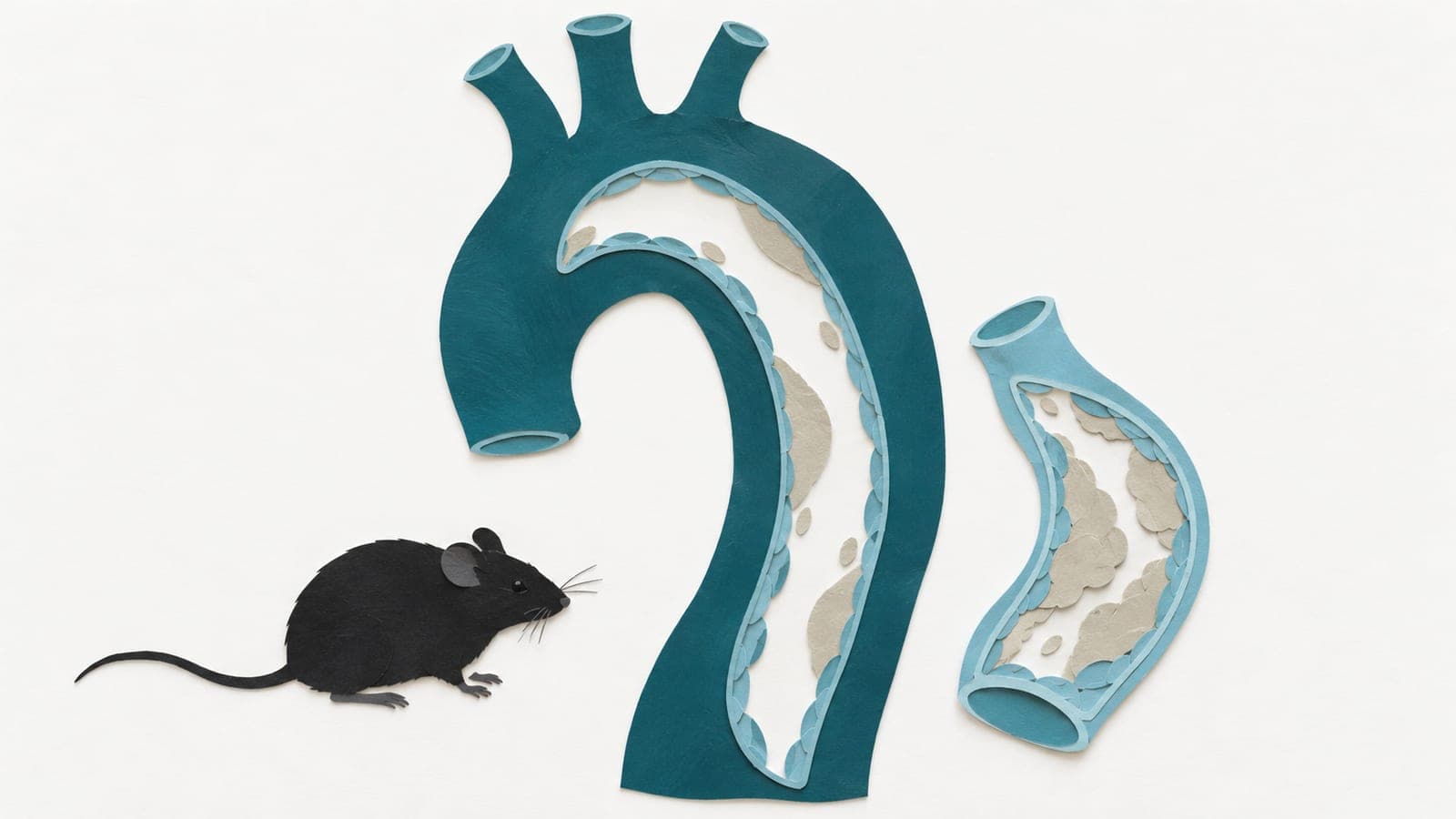
In an imaging cohort of 118 participants, higher H5 levels were independently associated with thicker neck artery walls and more plaque buildup. Separate experiments in cells grown in the lab and in mice found that H5 induced dysfunction in blood vessel lining cells and senescence, a state in which cells stop dividing. The authors suggested that elevated H5 levels were associated with cardiovascular disease risk.
Why it matters
The study connects blood vessel aging with the question of why therapies aimed at HDL have offered limited benefits. The authors proposed targeting HDL quality, specifically H5, as a therapeutic strategy.
Caveats
The human findings were observational and cannot show that H5 caused artery disease. The cell and mouse experiments do not establish that targeting H5 would benefit people.
- Electronegative hdl subfraction H5
- Cellular senescence
- DNA damage response
- Metabolic syndrome
- Cardiovascular disease risk
- Mice
The paper
Kaohsiung Medical University; HEART
GeroScience, Sep 9, 2026


Comments
Be the first to comment.