Early high-fat diet linked to altered metabolism in flies
In female fruit flies, larval exposure to a diet with 18% coconut oil was linked to adult changes in energy production and gut bacteria.
Limit: Only three independent culture jars per diet supplied the experimental flies
Edited by Boris Djordjevic · AgingResearch.News
Researchers studied female fruit flies (Drosophila melanogaster) in an experiment comparing a standard larval diet with one containing 18% coconut oil. Both groups received standard food after pupation.
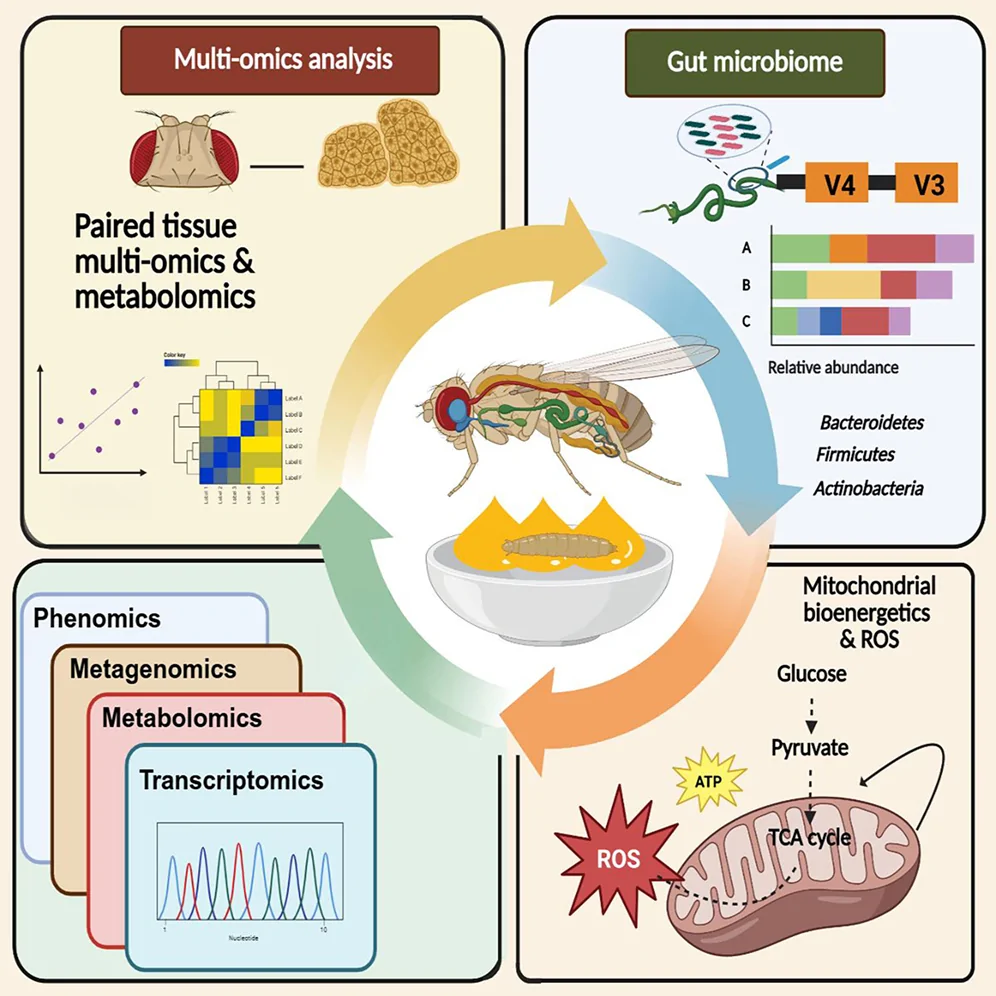
At three days of adulthood, high-fat-exposed flies had lower activity of energy-producing genes in the fat body, a nutrient-storage tissue. Their mitochondria, the energy-producing structures inside cells, also functioned less well. Gene activity changed less in whole heads. Gut bacterial communities also differed. Adult supplements of nicotinamide riboside or alpha-ketoglutarate, compounds involved in energy metabolism, partly improved mitochondrial function. Both extended lifespan by about 8–13% under sustained supplementation compared with unsupplemented high-fat-exposed flies. Adding Acetobacter gut bacteria also improved mitochondrial function and extended lifespan.
Why it matters
The work addresses whether the lasting metabolic effects of early-life nutrition remain open to changes in adulthood that influence lifespan.
Caveats
The findings came from a laboratory experiment in female flies, not people, with three independent culture groups per diet. Key mitochondrial assays were performed early in adulthood, before substantial age-related decline.
From the paper
- Limitation
This study integrates transcriptomics, metabolomics, microbiota profiling, mitochondrial-associated assays, and intervention experiments to define persistent adult consequences of developmental HFD exposure.
Quoted word for word from the full text on PubMed Central.
- Nicotinamide riboside
- Alpha-ketoglutarate
- Microbiome composition
- NAD+ metabolism
- Reactive oxygen species
- Flies
The paper
Early life high-fat diet exposure modulates adult metabolic phenotypes in Drosophila
University of Delhi
iScience, Aug 29, 2026, Open access
