Gene-silencing marks linked to disc degeneration in dogs
Single-cell analyses of spinal discs from nine dogs linked gene-silencing marks to lower activity of genes involved in disc development and maintenance.
Our read
Interventions- Studied:
- Cross-sectional study of adult dogs, against healthy adult dogs
- What changed:
- Dogs with disc degeneration had higher repressive H3K27me3 marks at key developmental genes than healthy adult dogs
- The catch:
- Only 3 dogs per group were analyzed
- Why it’s aging research:
- It looks at how biology varies with age or lifespan.
Editor of record: Boris Djordjevic · AgingResearch.News
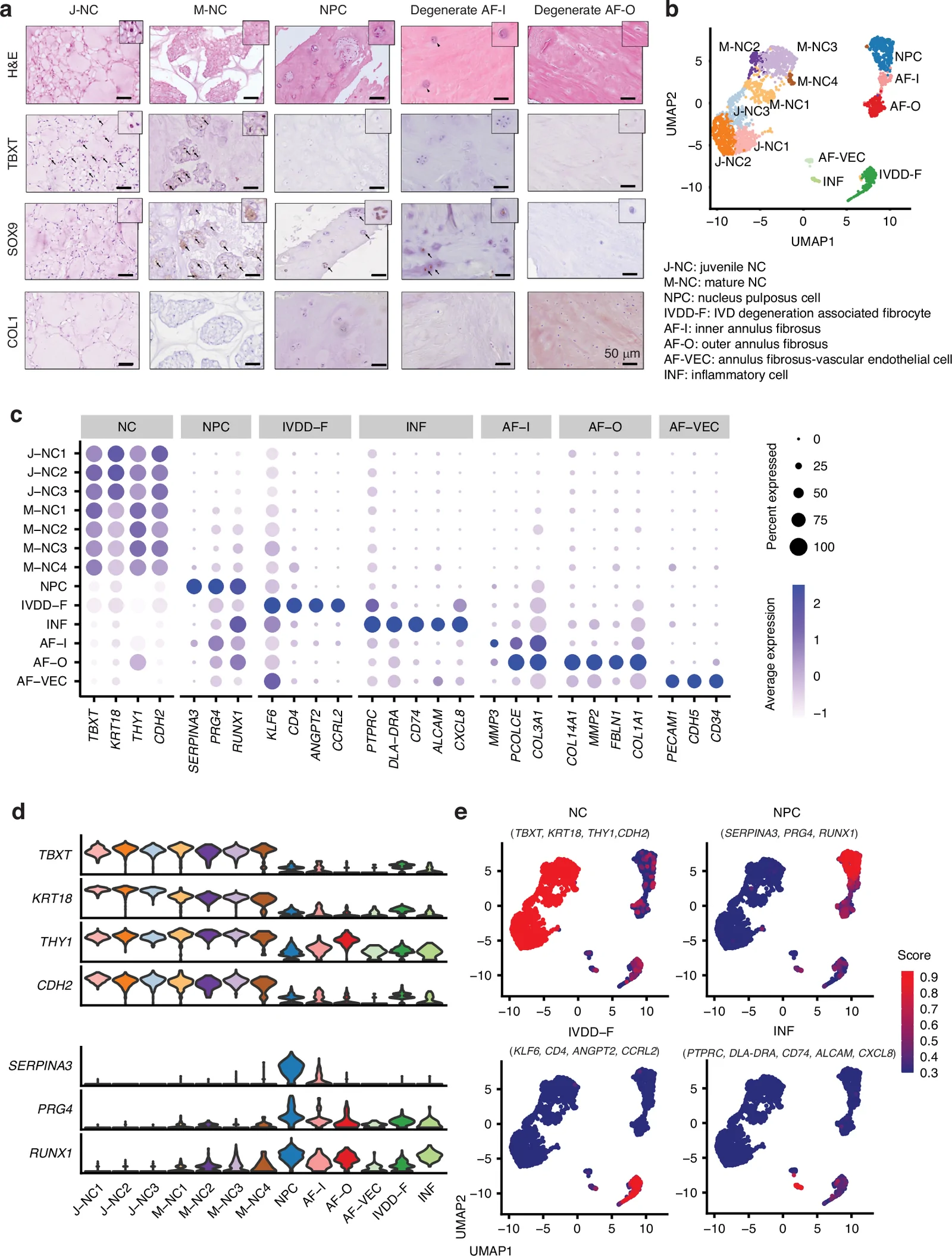
Researchers compared spinal disc tissue from three stillborn dogs, three healthy adult dogs and three adult dogs with degenerative disc disease in a cross-sectional analysis. They mapped gene activity in individual cells. In the six adult dogs, they also measured H3K27me3, a chemical mark on DNA-packaging proteins that can suppress gene activity. Enrichment of this mark at genes involved in disc development and maintenance aligned with lower gene activity during aging and degeneration.
The team also ran experiments in lab-grown disc cells from five human donors aged 58–89. TBXT, a gene involved in disc development, was inactive and carried the mark in all five donors. After two weeks, a compound reduced these marks, but the reported increase in TBXT gene expression was not statistically significant.
Why it matters
Disc degeneration is a major cause of chronic lower back pain. The authors suggested that identifying developmental cues may guide efforts to help degenerated disc cells regain healthier characteristics.
Caveats
The dog analysis was cross-sectional: it compared different donors rather than following degeneration over time. The experiments in lab-grown human cells did not establish disc repair or pain relief.
- TBXT
- Chromatin and 3D genome organization
- Histone modification and chromatin remodeling
- H3K27me3
- TBXT gene expression
- Dogs
The paper
Utrecht University
Bone Research, Sep 7, 2026, Open access

Comments
Be the first to comment.