Childhood BMI trajectories and hypertension in adulthood: a population-based cohort study
Dose-response, declared ties to: Novo Nordisk
Abstract
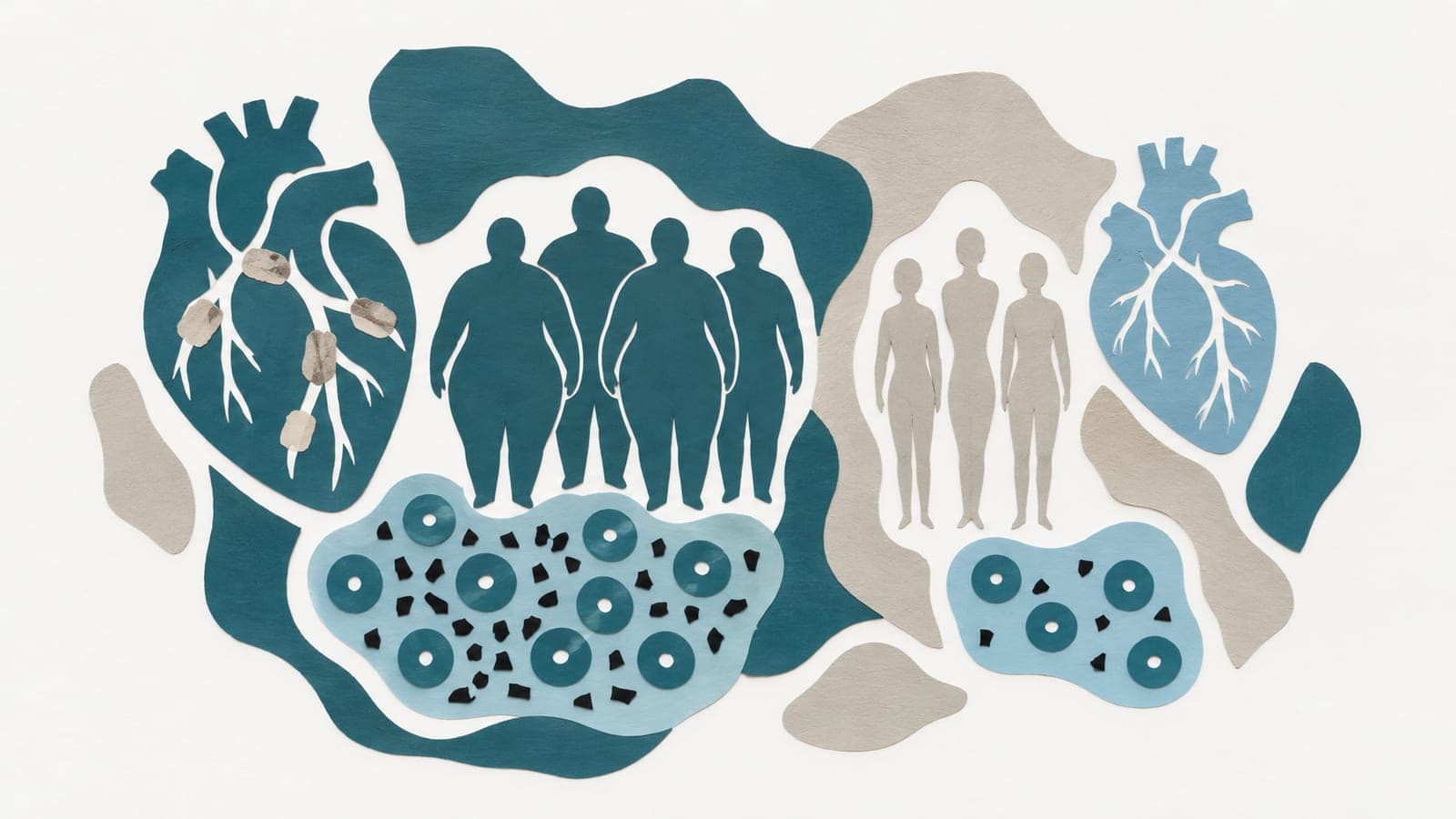
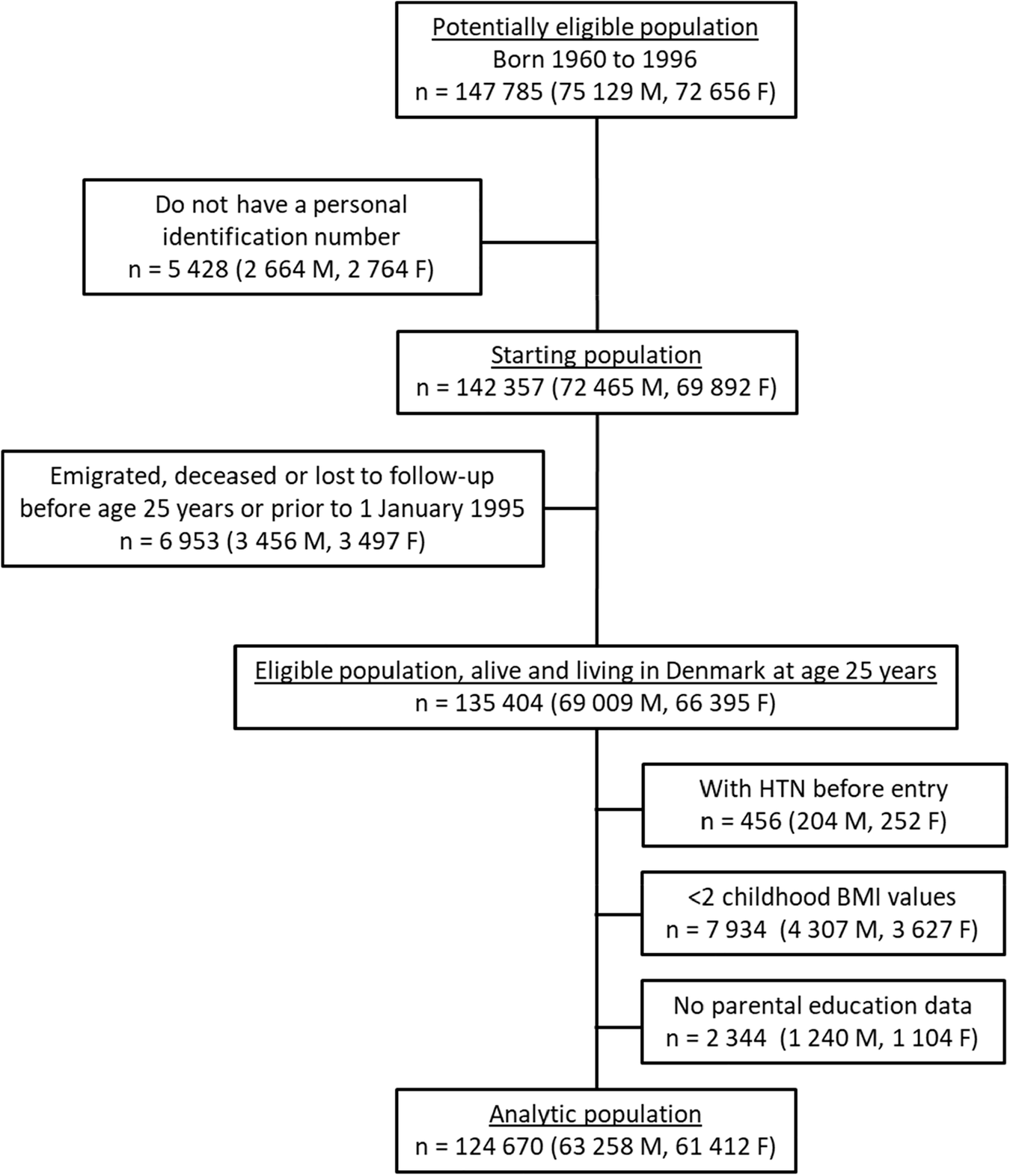
Higher body mass index (BMI) in childhood is associated with hypertension (HTN) especially in young adulthood. We examined whether longitudinal patterns of BMI development in childhood are associated with HTN across adult ages. We included 124 670 children (51% boys), born between 1960-1996, from the Copenhagen School Health Records Register with height and weight measurements at ages 6-15 years. Latent class trajectory models were used to identify five sex-specific BMI trajectories: below-average, average, above-average, overweight, and obesity. Individuals were followed from age 25 in national health registers from 1995-2022 for HTN. Cox models were used to estimate sex-specific hazard ratios (HRs) with 95% confidence intervals (CIs) for HTN across childhood BMI trajectories, with adjustment for birth cohort and parental education. Follow-up was split into ages 25-39, 40-49, and 50-62 years. Over a median 18-year follow-up, 5 970 men (9.4%) and 5 712 women (9.3%) developed HTN. Men and women with above-average, overweight, and obesity childhood BMI trajectories had higher hazards of HTN than those with the average trajectory. Associations attenuated with age but remained significant. Compared to men with the average trajectory, the obesity trajectory was associated with a HR = 4.31 (95% CI: 3.45-5.37) at ages 25-39 and HR = 2.12 (1.63-2.76) at ages 50-62 years. Compared to women with the average trajectory, the obesity trajectory was associated with a HR = 3.53 (2.89-4.30) at ages 25-39 and HR = 2.19 (1.70-2.82) at ages 50-62 years. Childhood BMI trajectories are positively associated with adult HTN in a dose-response manner highlighting the potential value of early obesity prevention.
From the paper
- Participants
A total of 124 670 individuals (49.3% women) with BMI values in childhood (ages 6–15 years) were included in the study.
- Follow-up
During a median follow-up of 18 years (25th–75th percentiles: 12–23 years), 11 682 individuals developed HTN between ages 25 and 62 years, including 5 970 (9.4%) men and 5 712 (9.3%) women.
- Result
In men, the childhood obesity trajectory was associated with the highest hazard of HTN, particularly at ages 25–39 years (adjusted HR = 4.31, 95% CI: 3.45–5.37) compared to the average BMI trajectory.
- Limitation
Although BMI might not be a reliable indicator of fat mass at the individual level, it is regarded as a useful proxy for adiposity at the population level.
Quoted word for word from the full text on nature.com.
The paper
Frederiksberg Hospital; Copenhagen University Hospital
Journal of Human Hypertension, 4 Sep 2026