Verbal memory gains in healthy Japanese adults 40+ with low scores
In a randomized trial, standardized verbal memory scores were 10.1 points higher with a scallop-derived supplement than with placebo after 12 weeks.
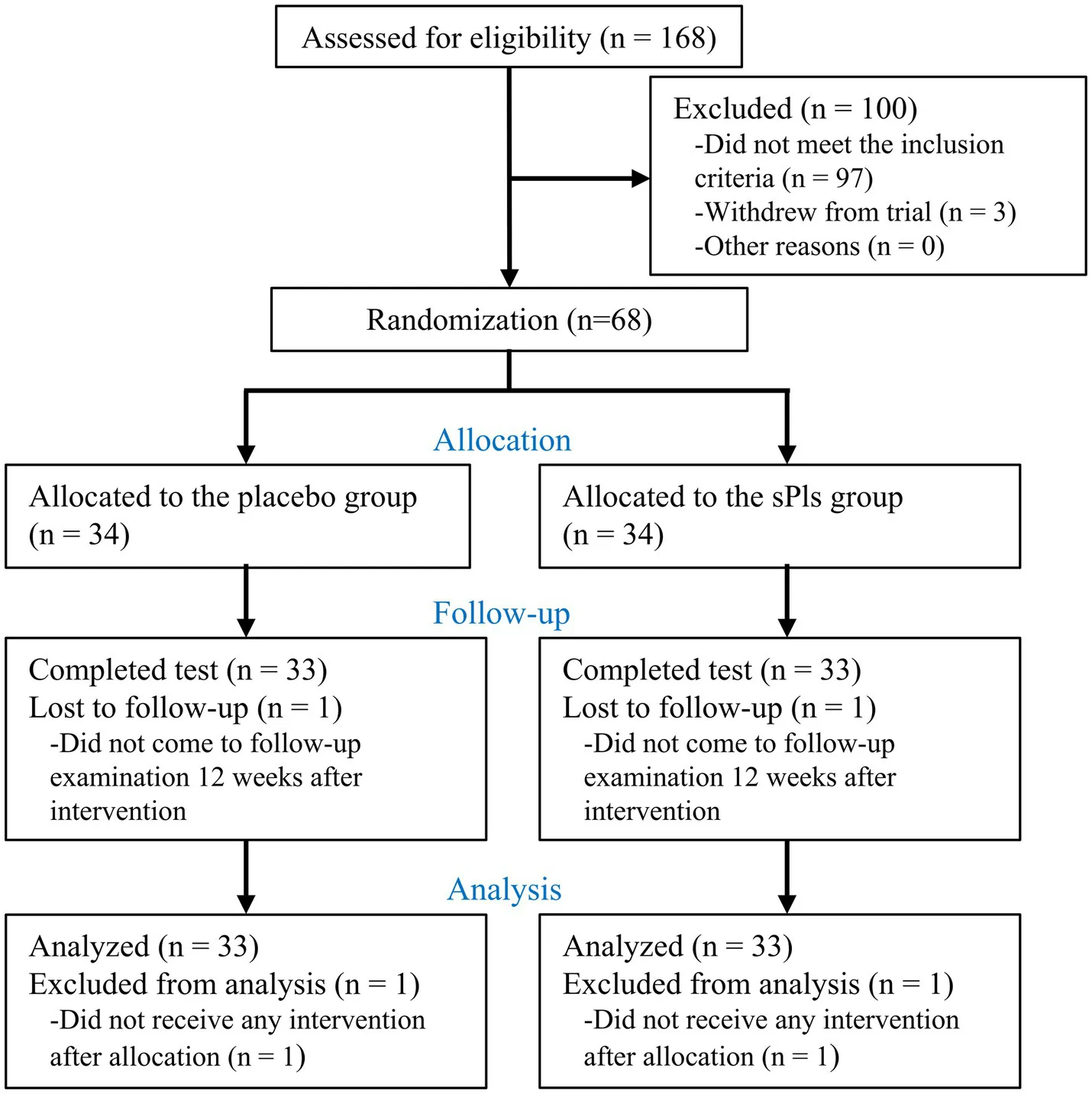
68 eligible participants, 12 weeks, double-blind, placebo-controlled, registered UMIN000057985
Limit: Repeated Cognitrax testing could raise scores through familiarity with the test
Stake: An author holds shares in B&S Corporation. An author works for ORTHOMEDICO.
Edited by Boris Djordjevic · AgingResearch.News
Researchers randomly assigned 68 cognitively healthy Japanese men and women aged 40 or older with below-average verbal memory for their age to a scallop-derived supplement or placebo. The double-blind trial tested 1 milligram daily of plasmalogens, fat molecules enriched in the brain, for 12 weeks.
The analysis included 66 participants, 33 in each group. On a web-based cognitive test, standardized verbal memory scores were 10.1 points higher with the supplement than with placebo after adjustment for baseline scores. Exploratory analyses also suggested improvements in selected attention measures. No adverse events were reported in either group, and assessments found no clinically meaningful safety concerns.
Why it matters
The trial addressed whether a dietary supplement might support cognitive function in otherwise healthy people in middle and later life.
Caveats
The analysis excluded two randomized participants who never received their assigned capsules, and follow-up lasted only 12 weeks. The findings do not cover adults under 40 or people with dementia or other disorders affecting cognition, and do not establish long-term safety.
From the paper
- Participants
Of the 168 individuals who provided informed consent, 68 met the eligibility criteria and were randomly assigned to the sPls or placebo group.
- Who took part
Inclusion criteria were healthy Japanese adults, both sexes, aged ≥40 years with verbal memory performance below the age-matched normative mean, absence of clinically diagnosed disease, a MMSE-J score of at least 24 at screening and a validity index of “yes” on the Cognitrax verbal memory test with a standardized verbal memory score <100 at screening …
- Duration
Efficacy and safety were assessed at baseline and after 12 weeks of intervention.
- Analyzed for verbal memory
As a result, 66 participants (33 per group) were included in both efficacy and safety analyses based on FAS.
- Primary outcome
The EMMs were 89.4 ± 3.5 (SE) in the placebo group and 99.5 ± 3.5 in the sPls group, corresponding to a between-group difference of 10.1 (95% CI, 0.4–19.9; p = 0.042).
- Harms
No adverse events were reported in either group.
- Limitation
Although the randomized, double-blind, placebo-controlled design strengthens the internal validity of the study, the sample size was primarily calculated based on the primary outcome.
- Attention
The EMM for complex attention was 101.1 ± 1.7 in the placebo group and 106.5 ± 1.7 in the sPls group (difference, 5.4; 95% CI, 0.6–10.3; p = 0.028).
Quoted word for word from the full text on PubMed Central.
The paper
Hachioji Center for Research and Development
Frontiers in Nutrition, Aug 12, 2026, Open access
