Physical Activity and Purkinje Cells: Mechanisms of Cerebellar Plasticity and Neuroprotection
Abstract
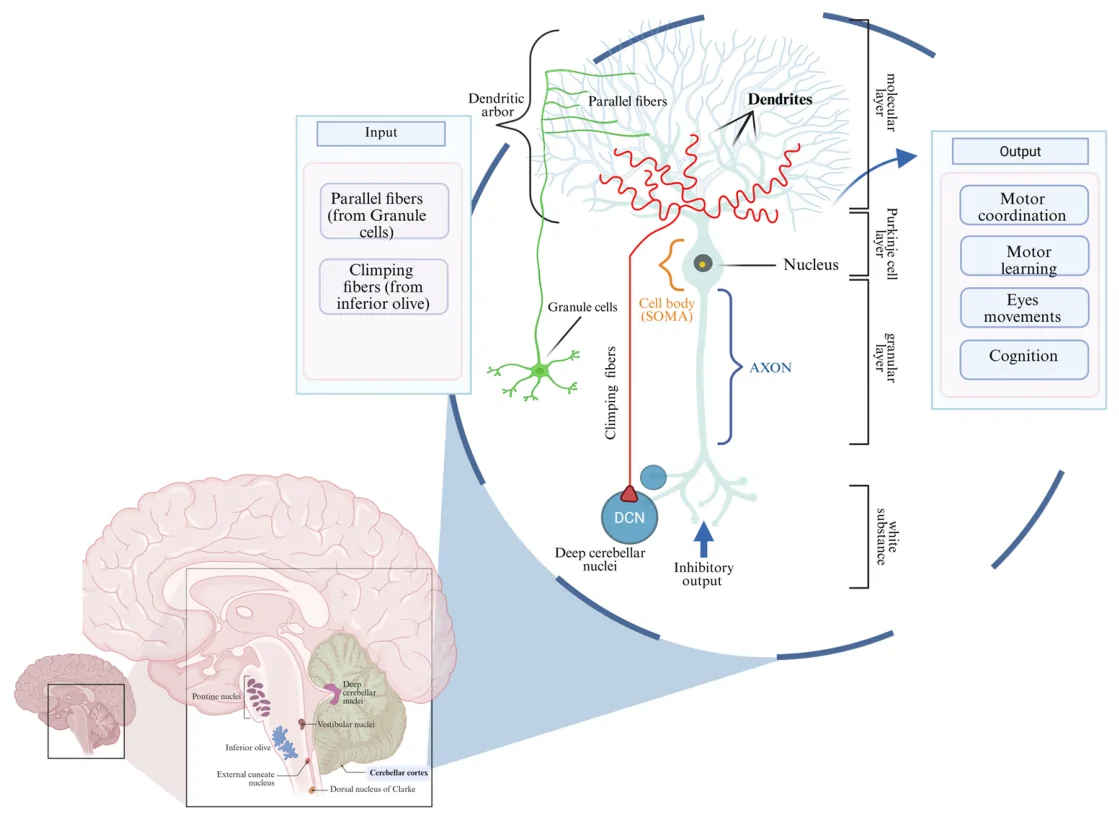
The cerebellum plays a key role in regulating movement, coordination, and certain cognitive functions. Purkinje cells are the principal neurons of the cerebellum, essential for integrating information and modulating output to other parts of the central nervous system. Physical exercise is crucial for maintaining psychophysical well-being and improving quality of life. Moreover, its beneficial effects on brain health are well established. After a brief overview of cerebellar anatomy, this narrative review aims to summarize current experimental evidence on the effects of physical activity on Purkinje cells, particularly in the context of neuronal plasticity and neuroprotection. Special attention is given to structural and functional adaptations under both physiological and pathological conditions, including neurodegenerative diseases, neurodevelopmental disorders, traumatic brain injury, and aging. Overall, the available findings suggest that Purkinje cells represent a key cellular target of exercise-induced cerebellar plasticity. Physical activity may therefore contribute to preserving cerebellar function and promoting neuroprotection through mechanisms involving structural remodeling and synaptic adaptation of Purkinje cells.
The paper
University of Catania
Journal of Functional Morphology and Kinesiology, 3 Aug 2026