Continuous Cuffless Blood Pressure Estimation Using a Multimodal Conv1D-LSTM Architecture and the SOUNDI® Wearable Device
Declared ties to: Biocubica and SOUNDI
Abstract
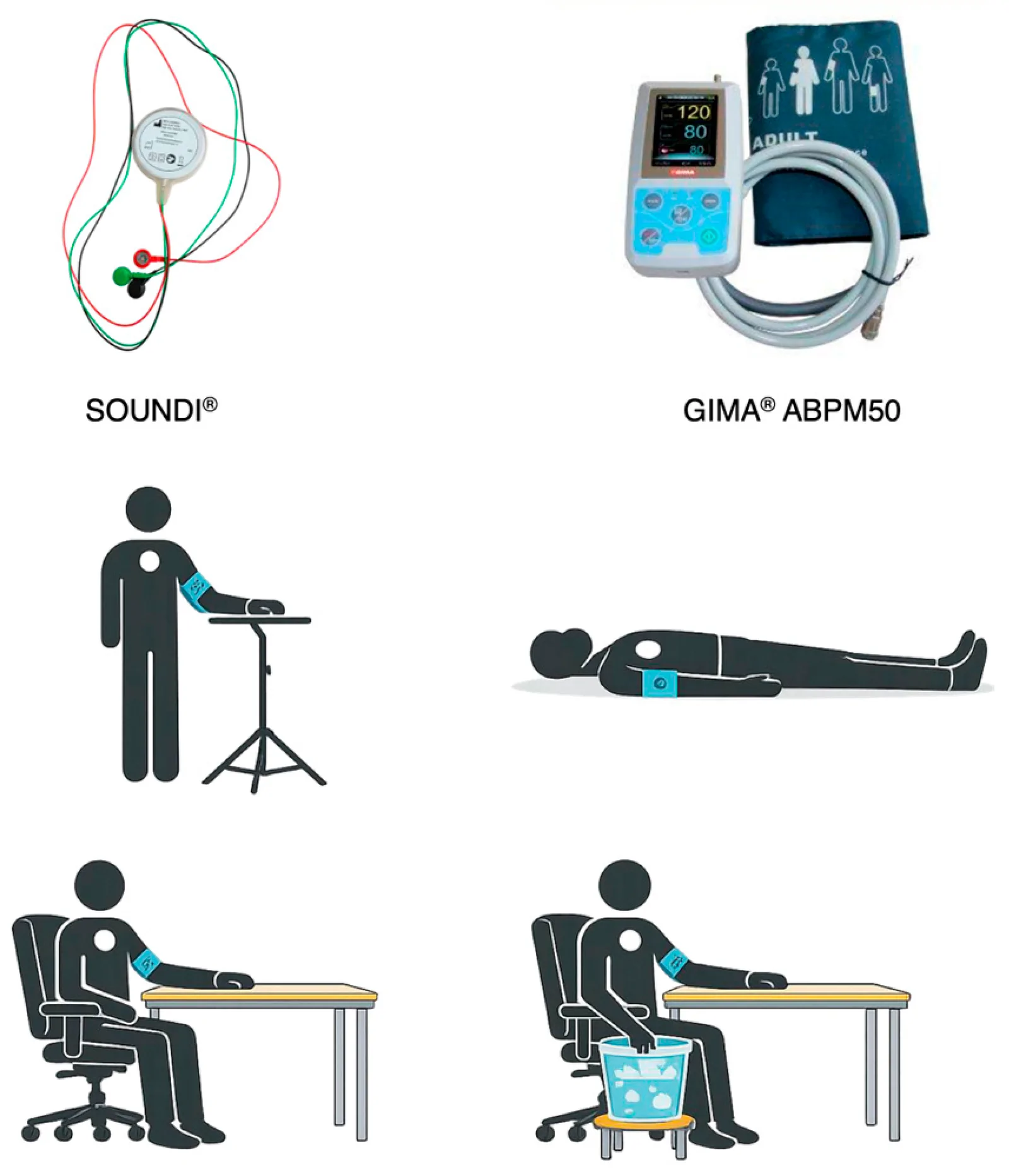
Arterial blood pressure (BP) is a crucial physiological parameter reflecting cardiovascular function and exhibiting dynamic oscillations in response to physiological, psychological, and environmental changes. Since conventional cuff-based measurements provide only intermittent "snapshot" readings, there is growing interest in reliable cuffless and noninvasive systems capable of capturing BP dynamics over time. This work proposes a continuous cuffless BP estimation system based on SOUNDI®, a proprietary wearable device for multimodal physiological and environmental monitoring developed by Biocubica srl. An end-to-end neural network architecture combining convolutional and long short-term memory (LSTM) layers was designed to automatically extract features from pre-processed signals and directly predict systolic and diastolic BP (SBP and DBP). Data were collected from 20 healthy subjects (7 females, 13 males) using a tailored acquisition protocol with reference targets acquired through the validated GIMA® ABPM50 device. Model performance was evaluated using both a Leave-One-Subject-Out (LOSO) cross-validation framework to assess subject-independent generalizability and a conventional 80/20 segment-level split reflecting a personalized monitoring setup. Under the subject-independent LOSO cross-validation, the model achieved a best-subject MAE of 4.93 mmHg for SBP and 3.76 mmHg for DBP, demonstrating the feasibility of generalizing across unseen individuals despite inter-subject physiological variability. Under the conventional 80/20 split, the framework achieved an MAE of 2.98 mmHg for SBP and 2.68 mmHg for DBP, with RMSE values of 4.16 mmHg and 3.72 mmHg, respectively, and Pearson correlation coefficients of R = 0.95 for SBP and R = 0.94 for DBP. These results establish a promising feasibility proof-of-concept for multimodal cuffless BP tracking under dynamic states and nocturnal conditions, highlighting both the strength of multi-sensor fusion and the value of lightweight calibration for real-world deployment on larger, clinical cohorts.