Computer models spotted falls early in human motion recordings
Models identified falls an average of 636 milliseconds before impact in wearable-sensor recordings, with several model types performing comparably.
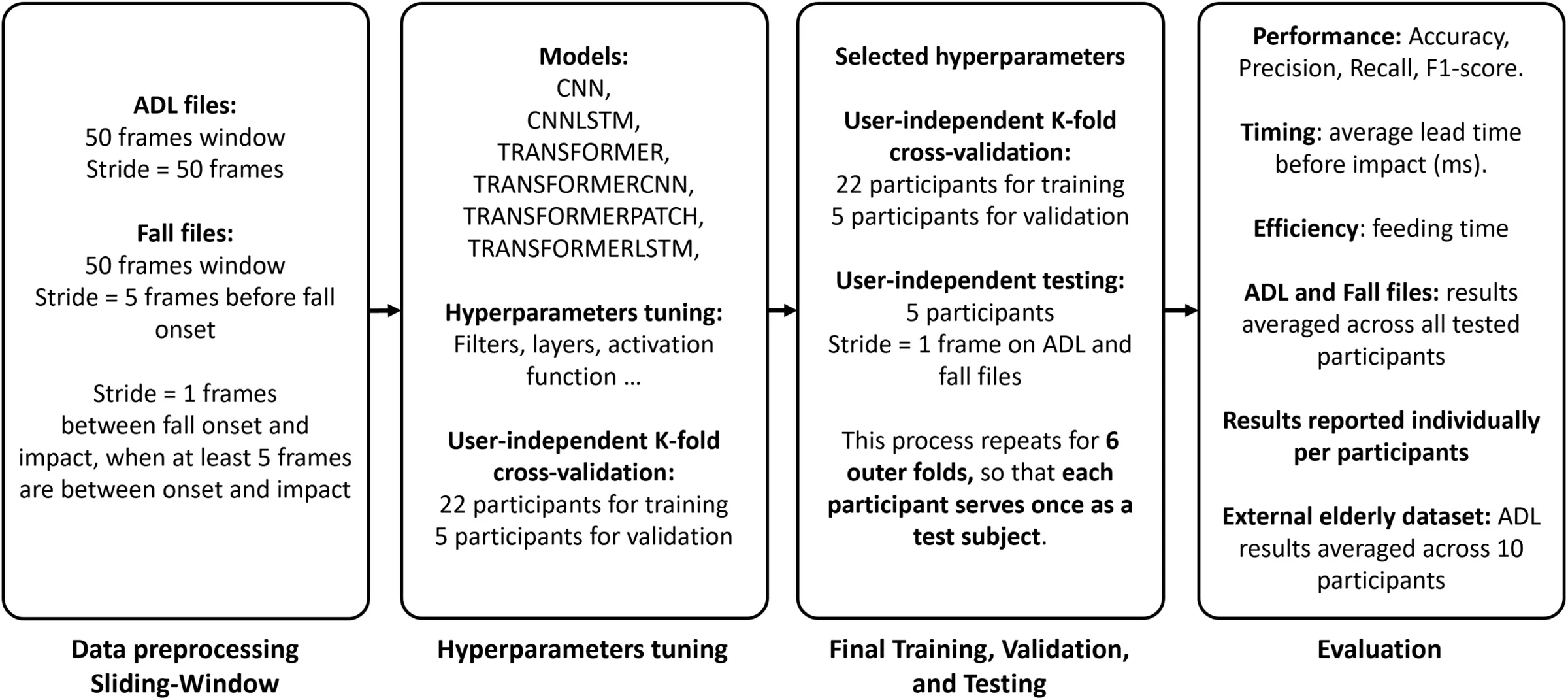
This model evaluation used human motion recordings from a wearable movement sensor in the KFall dataset. Researchers compared computer models trained to recognise movement patterns. They tested them on people whose recordings had not been used for training, with safeguards against data leaking between training and testing.
Fall detection reached an F1-score of 91.1%, which combines the share of fall alerts that were correct with the share of falls detected. Classification of everyday activities reached 99.66% accuracy. Several model types performed comparably. One model combining two approaches had lower detection scores and shorter warning times than the others. Tests on a separate dataset of older adults’ everyday activities also found a low false alarm rate.
Why it matters
Falls pose an injury risk for older adults. The results support further development of systems designed to trigger protective devices, such as wearable airbags, before impact.
Caveats
This was a dataset evaluation, not a test of injury prevention. The independent older-adult dataset tested everyday activities, not falls.