Beyond the Ribosome: The Expanding Role of the Nucleolus in Neurodegenerative Pathways
Abstract
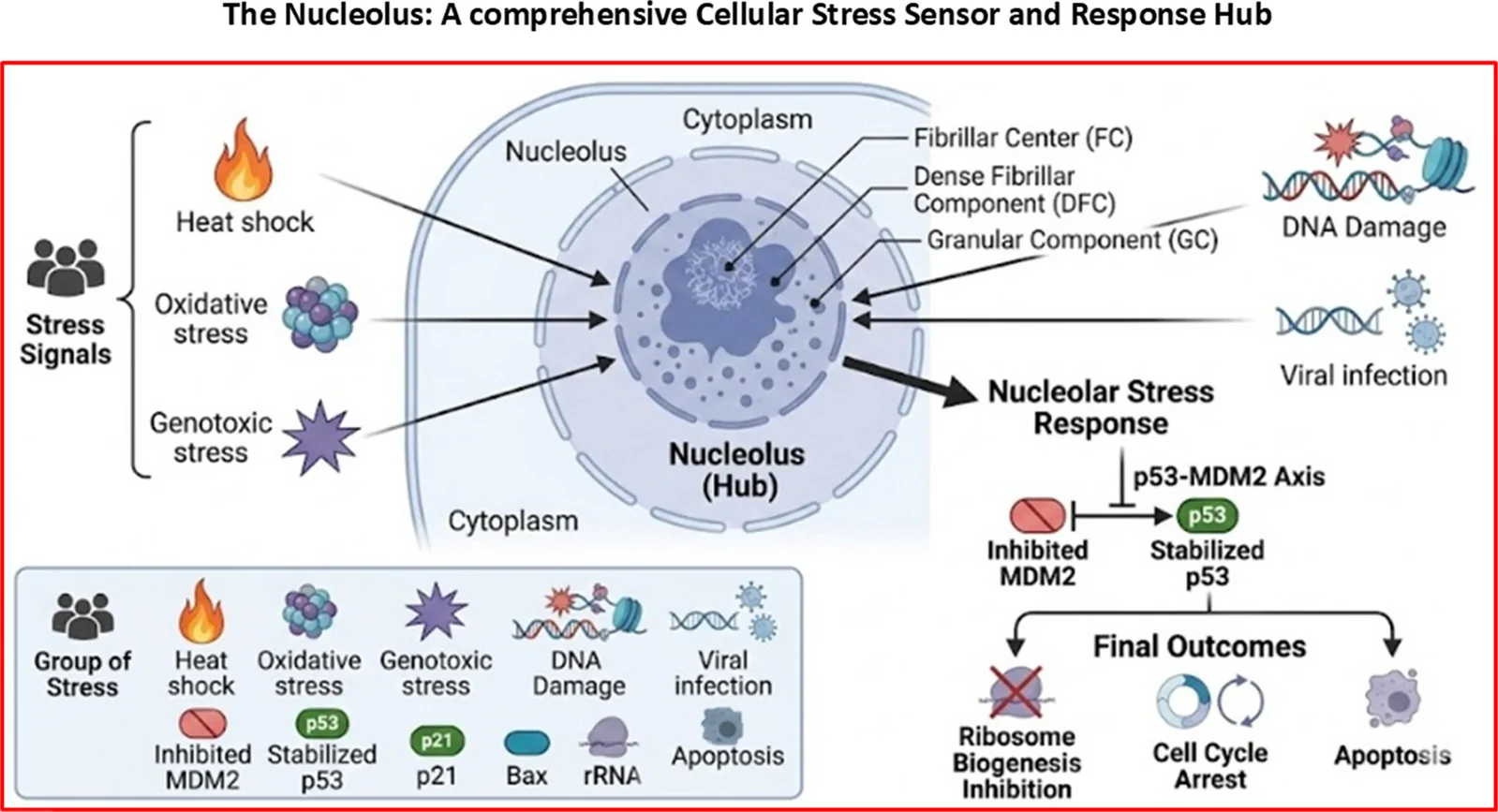
The nucleolus, long defined by its canonical role in ribosome biogenesis, has emerged as a critical nexus for cellular homeostasis, stress sensing, and disease pathogenesis. This article synthesizes a broad range of evidence to construct a comprehensive model of the nucleolus in the context of aging and neurodegeneration. We begin by detailing its fundamental architecture and the intricate process of ribosome production, before exploring the paradigm-shifting discovery of its vast, non-canonical proteome, which implicates it in DNA repair, cell cycle control, and genome stability. A central theme is the nucleolus's function as a primary cellular stress sensor, which, upon disruption by genetic, metabolic, or proteotoxic insults, initiates the nucleolar stress response. We provide a detailed examination of the downstream signaling cascades, focusing on the canonical p53-MDM2 axis and the interconnected mTOR pathway, which together translate nucleolar status into decisions of cell fate, including apoptosis and cell cycle arrest. We then focus on the brain, presenting the neuropathological and morphological alterations of the nucleolus-such as atrophy, fragmentation, and changes in volume-that serve as hallmarks of normal aging and neurodegenerative disorders, including Parkinson's disease, Alzheimer's disease, and C9orf72-linked ALS/FTD. We explore the deep regulatory layers of epigenetics, where DNA methylation and histone modifications of ribosomal DNA genes are dysregulated in disease, and discuss how multi-omics approaches are unraveling the complex molecular landscape of nucleolar function. Finally, we introduce the emerging concept of a gut-brain-nucleolus axis, proposing how systemic factors like the gut microbiome may influence neuronal health by triggering nucleolar stress through inflammatory and metabolic mediators. Overall, by highlighting the nucleolus as a convergence point for diverse pathogenic pathways, we frame it as a promising and druggable target for novel therapeutic strategies aimed at promoting neuronal resilience and combating neurodegenerative diseases.
The paper
Atlantic Health System; Library and Information Science
Molecular Neurobiology, 25 Aug 2026, Open access