Cardiac volumes, function, and arterial stiffness five years after severe preeclampsia: A comparison with sedentary and active controls
Declared no competing interests
Abstract
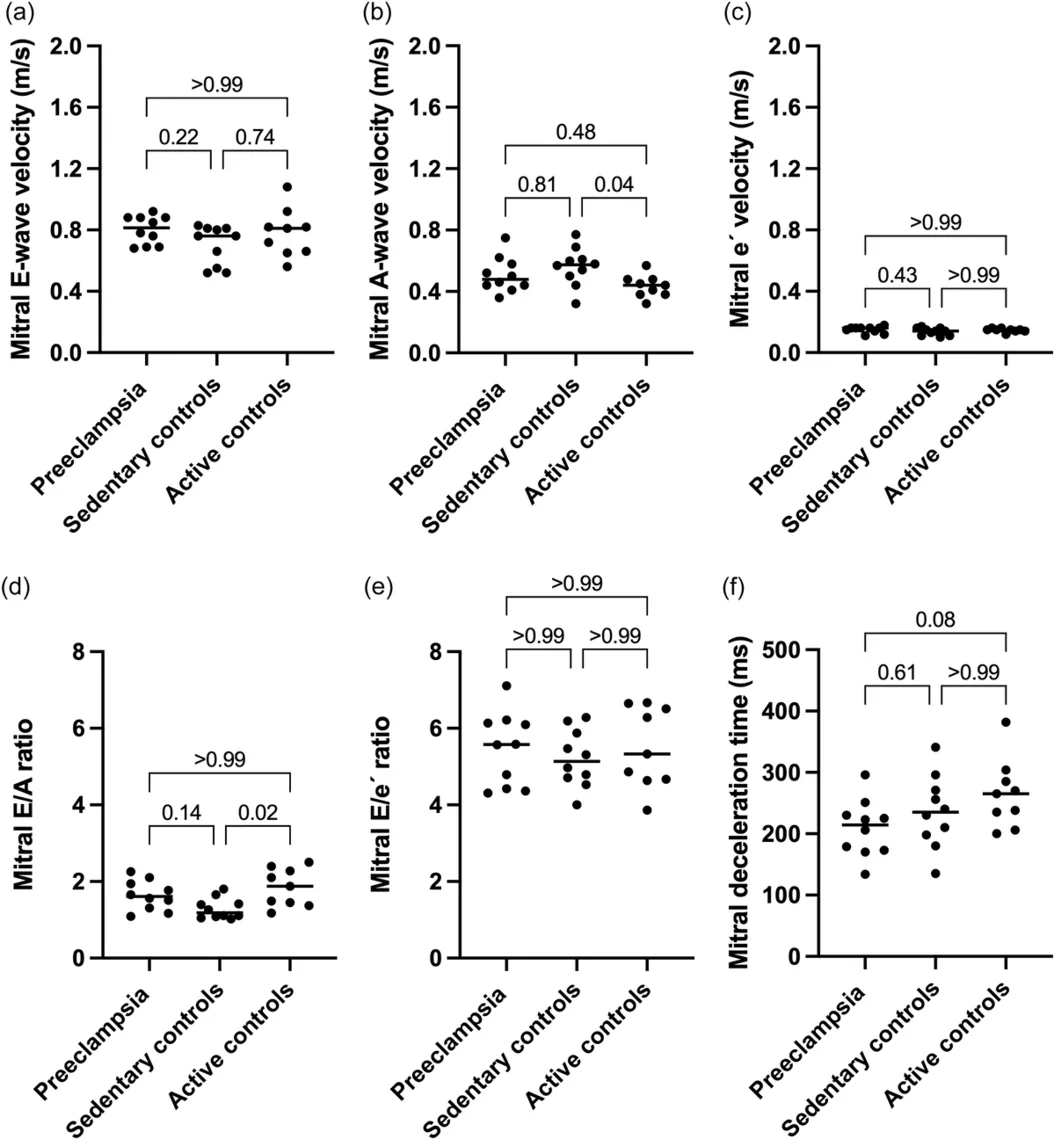
AIMS: Preeclampsia is a pregnancy disorder characterized by hypertension and multiorgan failure related to endothelial damage. It is associated with increased risk of cardiovascular disease later in life, but pathophysiological mechanisms are unclear, and strategies to identify women at risk are missing. The aim was to investigate cardiovascular impact 5 years after severe preeclampsia, compared to normotensive pregnancies. METHODS: The study was powered to detect approximately 5% difference between groups by cardiac magnetic resonance (CMR). Ten women experiencing severe preeclampsia, and 20 women with normotensive pregnancies were included: 10 lifestyle-matched and 10 physically active. Brachial blood pressure, echocardiography and CMR were performed 4-7 years after pregnancy. RESULTS: There was no difference in systolic or diastolic blood pressure, and all women were normotensive (103 vs. 106 vs. 108 mmHg, p = 0.67; and 66 vs. 66 vs. 64 mmHg, p = 0.78). Indexed left ventricular volumes were larger for active controls than for women with prior preeclampsia (98 vs. 84 mL/m², p = 0.004; and 41 vs. 32 mL/m², p = 0.01). Left ventricular mass, cardiac function and pulse wave velocity did not differ. No participant fulfilled the criteria for diastolic dysfunction. CONCLUSION: The difference in left ventricular volumes is most likely related to a physiological adaptation to exercise. The lack of persistent hypertension may be the factor explaining the absence of clinically significant differences between groups using routine investigations for cardiovascular structure and function, despite severe preeclampsia. Structured follow-up is essential to enable early diagnosis of hypertension after preeclampsia, as well as supporting an active and potentially protective lifestyle.
The paper
Lund University
Clinical Physiology and Functional Imaging, 24 Aug 2026