Weight-loss surgery linked to lower dementia risk
Among adults with obesity and type 2 diabetes, 15-year dementia incidence was 1.8% after surgery versus 2.7% without it.
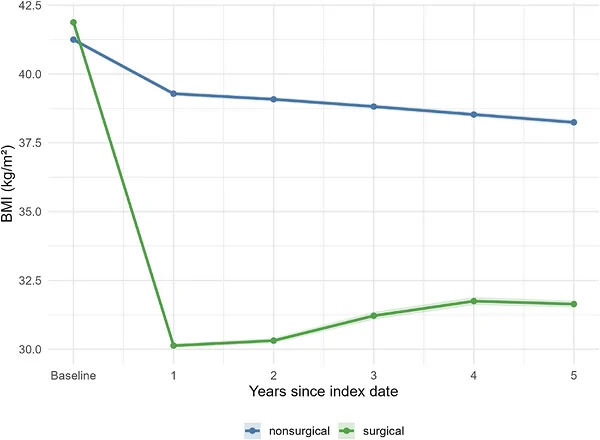
Limit: Differences in obesity or diabetes severity could explain some of the lower dementia risk
Edited by Boris Djordjevic · AgingResearch.News
An observational matched-cohort study in Sweden compared 12,084 adults aged 18–75 with obesity and type 2 diabetes who underwent weight-loss surgery with 23,581 who did not. Researchers matched participants on dementia risk factors using national registries. Mean follow-up was nine years.
At 15 years, dementia incidence was 1.8% after surgery versus 2.7% without surgery. Corresponding figures were 1.2% versus 1.9% for Alzheimer's disease and 0.4% versus 0.7% for vascular dementia, which involves damage to brain blood vessels. Alcohol-related dementia incidence was higher after surgery: 0.2% versus 0.04% at 15 years. Among 11,945 surgical patients with 30-day follow-up, 9.1% had a postoperative complication and 3.3% had a serious one.
Why it matters
Obesity and type 2 diabetes are major risk factors for dementia. The study addresses whether weight-loss surgery may help prevent dementia, a question on which earlier studies have given conflicting results.
Caveats
Matching could not rule out unmeasured differences between groups, so this observational study cannot show that surgery caused the lower dementia risk. The findings do not cover people outside ages 18–75 or those with pre-existing dementia.
The paper
The effects of bariatric surgery on dementia in patients with diabetes and obesity
Örebro University; Danderyds sjukhus
Alzheimer's & Dementia, Aug 2026, Open access


Comments
Be the first to comment.