Brief temperature extremes linked to high blood pressure in China
Hazard ratios, which compare rates over time, were 1.05 to 1.06 for short cold extremes and 1.04 to 1.05 for short heat extremes.
Our read
Populations- Studied:
- Cohort study of 8,147 Chinese participants
- What changed:
- Hypertension risk was higher with short cold and heat extremes (HR range: 1.05-1.06 and 1.04-1.05, respectively)
- The catch:
- The abstract does not report the exposure comparisons behind the hazard ratios
- Why it’s aging research:
- It bears on staying healthy in midlife and later life.
Editor of record: Boris Djordjevic · AgingResearch.News
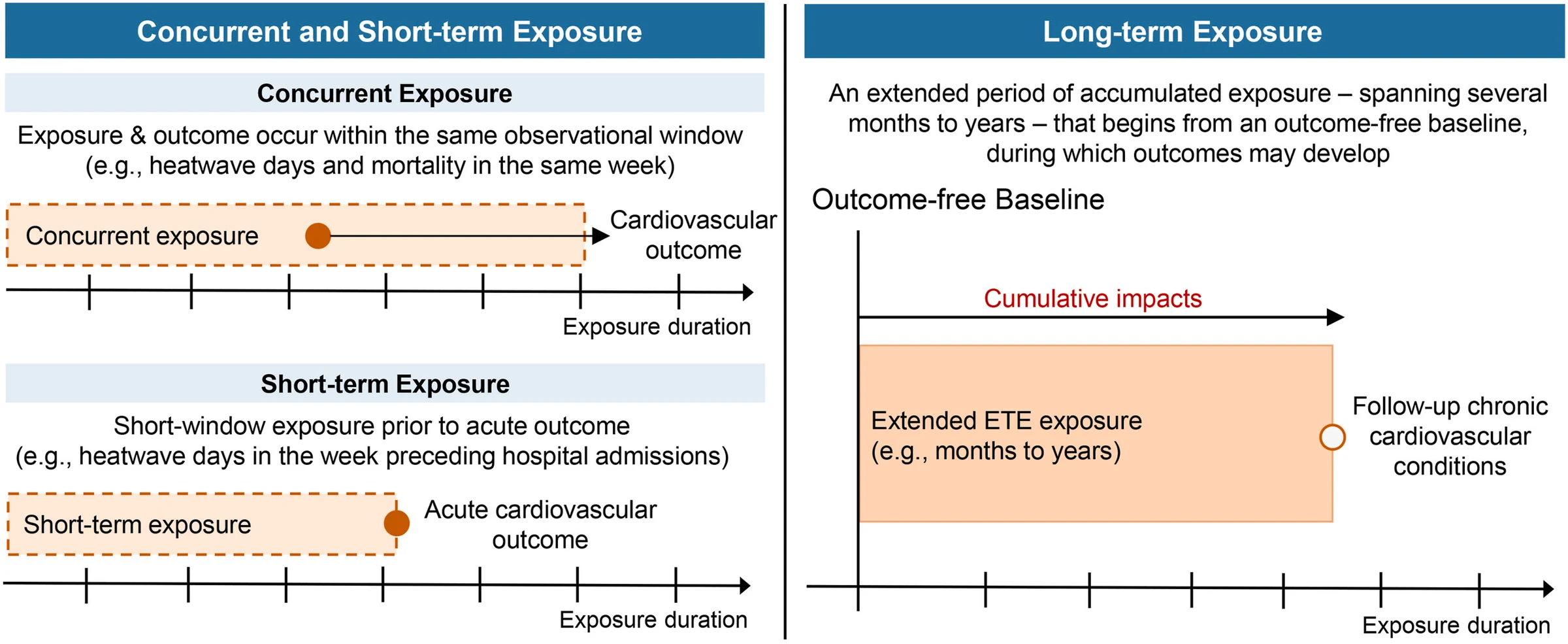
An observational study of 8,147 participants in the China Health and Nutrition Survey examined long-term accumulated exposure to temperature extremes and hypertension, or high blood pressure. Researchers used prospective cohort data and analyzed cold spells, heatwaves and short-duration cold and heat extremes together.
Higher exposure to short cold and heat extremes was associated with higher hypertension risk. For short cold extremes, the association grew stronger at higher exposure levels. Heatwaves had no statistically significant association. Interactions with behavior also emerged: short sleep and prolonged sitting amplified risk, while low physical activity weakened it. The authors interpreted most of the associated risk as reflecting physiological strain from exposure, with lifestyle interactions adding an influence.
Why it matters
High blood pressure matters for cardiovascular health as people age. The authors suggest that climate-sensitive prevention should consider brief temperature extremes, not just longer events.
Caveats
This observational study cannot establish cause and effect or show that changing behavior would alter risk. The abstract does not report participants’ ages, follow-up length or the exposure comparisons behind the hazard ratios.
Exercise is part of Bryan Johnson's Blueprint
The paper
Wuhan University
Environmental Research, Aug 20, 2026

Comments
Be the first to comment.