Lower blood test cutoffs may aid early Alzheimer's detection
A revised blood test threshold detected 83% of people with brain amyloid, versus 57% using a threshold developed for people with Alzheimer's symptoms.
Our read
Biomarkers- Studied:
- Cross-sectional study of 191 adults aged 45 or older with normal cognition
- What changed:
- Study-derived cutoffs detected 83% of amyloid-positive participants for p-tau217 versus 57% with cutoffs developed in people with symptoms
- The catch:
- Only 35 participants had positive amyloid scans
- In the record:
- The 287th paper on estimated glomerular filtration rate with results in people; 1,825 on record in all.
Editor of record: Boris Djordjevic · AgingResearch.News
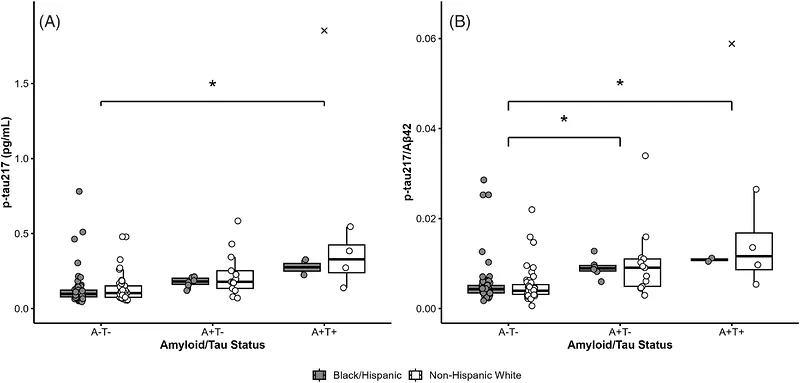
The 191 adults aged 45 or older with normal cognition included 57 Black, 46 Hispanic White and 88 non-Hispanic White participants in an observational study. Researchers measured p-tau217, a modified form of the tau protein, and its ratio to amyloid beta 42, a protein found in Alzheimer's brain deposits. Of 173 participants who had scans for brain amyloid buildup, 35 tested positive.
After accounting for age, both blood measures performed similarly across racial and ethnic groups. Lower, study-derived cutoffs detected 83% versus 57% of amyloid-positive participants for p-tau217, and 77% versus 63% for the ratio, compared with cutoffs developed in people with symptoms. Lower kidney function was associated with higher p-tau217, but not the ratio.
Why it matters
Alzheimer's prevention trials seek people with brain changes before cognitive symptoms. The authors suggested that optimized cutoffs may improve early detection and trial enrollment across ethnoracial backgrounds.
Caveats
The cutoffs were optimized and internally validated within the same cohort; overall accuracy for p-tau217 was similar with the two cutoffs. Only 35 participants had positive amyloid scans, and the findings concern people without cognitive impairment.
The paper
Mayo Clinic in Florida
Alzheimer's & Dementia, Aug 2026, Open access


Comments
Be the first to comment.