Fasting plasma amino acid profiles after resistance exercise with or without nutritional supplementation in older adults: an exploratory analysis of secondary outcomes from a randomized controlled trial
12 weeks, declared ties to: Meiji
Abstract
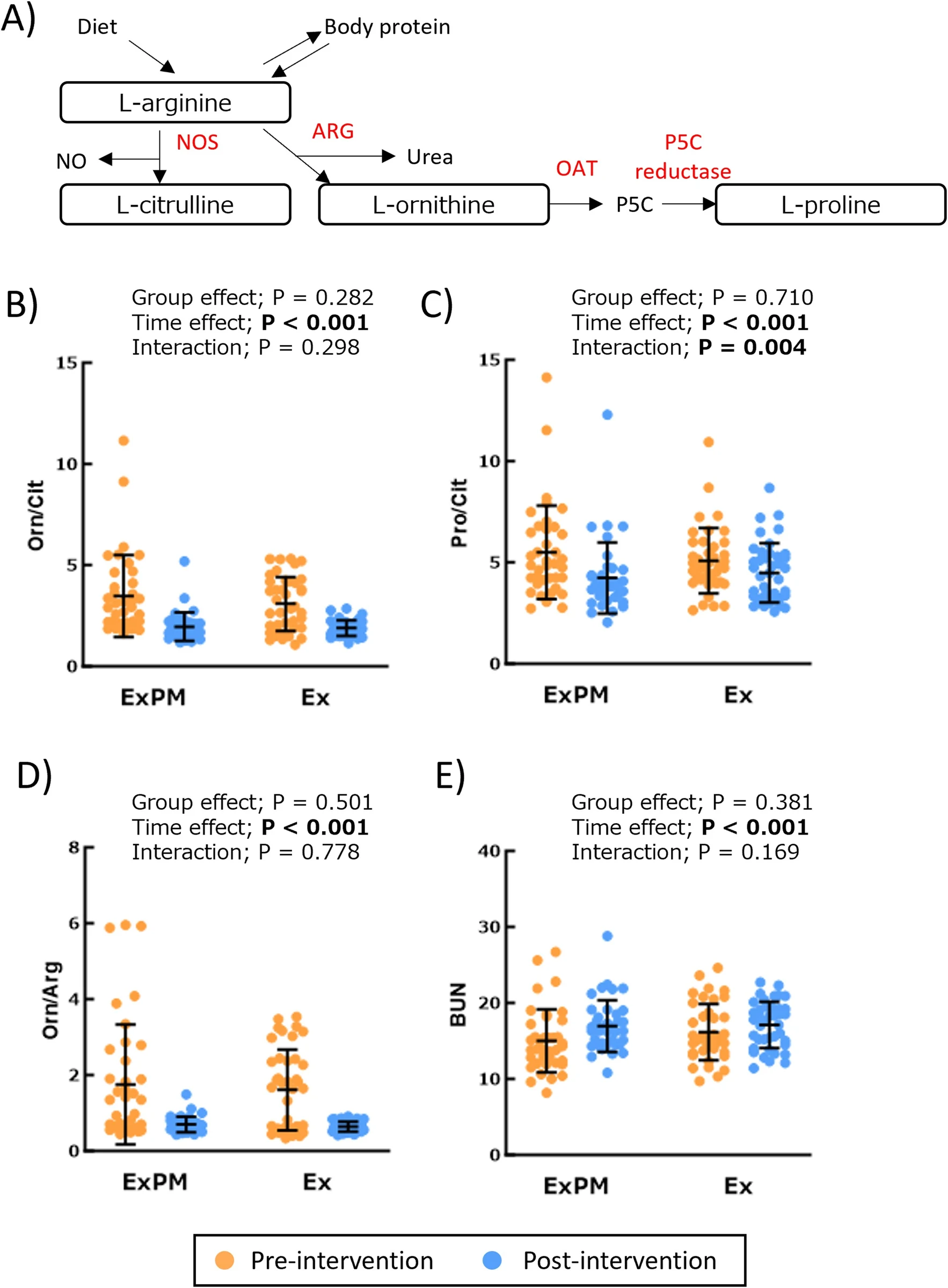
BACKGROUND: Resistance exercise and nutritional supplementation improve muscle health in older adults, but the metabolic significance of fasting plasma amino acid profiles remains unclear. This study examined changes in fasting plasma amino acid composition over a 12-week intervention period in which community-dwelling older adults underwent resistance exercise with or without protein plus micronutrient supplementation. METHODS: Participants were assigned to exercise alone (Ex) or exercise plus protein and micronutrient supplementation (ExPM). Both groups completed the same supervised 12-week resistance exercise program, while the ExPM group additionally consumed protein- and micronutrient-fortified beverages daily. Fasting plasma amino acids were measured before and after intervention using LC-MS. Analyses were conducted primarily in the per-protocol set (n = 78; ExPM, n = 38; Ex, n = 40) using linear mixed-effects models adjusted for age and sex. RESULTS: Total, essential, and non-essential amino acid concentrations generally decreased from baseline to post-intervention in both groups. Leucine and phenylalanine showed significant group-by-time interactions, with greater decreases in the Ex group than in the ExPM group. The global arginine bioavailability ratio (GABR; Arg/[Orn + Cit]) increased significantly in both groups, with larger observed increases among participants with lower baseline values. In contrast, glutamine-related ratios (e.g., Gln/TAA and Gln/[Glu + BCAA + Asp + Asn]) increased in the Ex group but remained largely unchanged in the ExPM group. CONCLUSIONS: Fasting plasma amino acid profiling revealed two temporal patterns during the 12-week intervention period: an increase in GABR observed under fasting conditions in both groups and nutrition-sensitive differences in glutamine-related ratios. These findings suggest that fasting plasma amino acid profiles may provide complementary metabolic insight into exercise-nutrition interventions in older adults.
- Resistance training
- Dietary protein
- Amino acid metabolism
- Amino acids
- Global arginine bioavailability ratio
- Humans
The paper
Meiji (Japan); Japan Nutrition University
The Journal of Nutrition, Health & Aging, 19 Aug 2026