Mesenchymal Stromal Cell Rejuvenation Strategies to Enhance Clinical Translation in Cell Therapy
Abstract
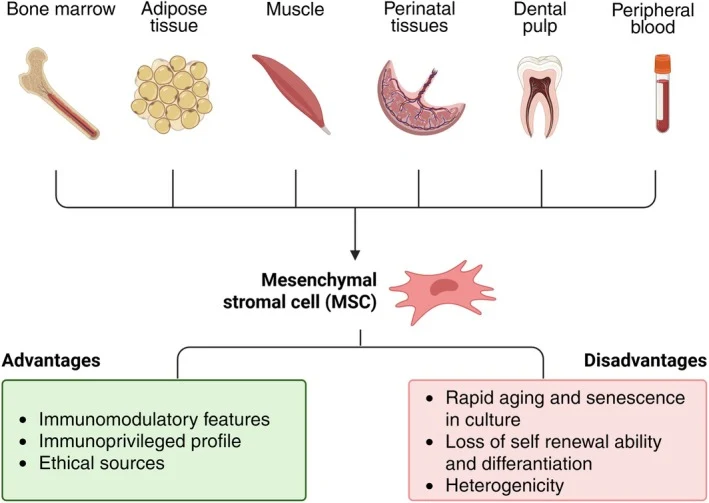
Cell therapies represent a promising frontier in modern medicine. Mesenchymal stromal cells (MSCs) constitute a valuable source due to their minimal ethical concerns, low immunogenicity, negligible tumorigenicity in vivo, and robust paracrine activity mediated by the secretion of anti-inflammatory and angiogenic factors. Despite these advantages, MSCs undergo rapid replicative senescence accompanied by a progressive loss of stemness markers and functional potency. In this context, cellular rejuvenation has been emerging as a pivotal strategy to restore their original biological features. These approaches aim to modulate the hallmarks of aging; as these processes are highly interconnected, multiple and complementary targets have been proposed. This review aims to discuss and analyze the main rejuvenation strategies reported in the literature for MSCs, with particular attention to approaches that can enhance their functionality and translational potential. In this context, the review focuses on five key categories of interventions: epigenetic modifications, metabolic reprogramming, modulation of cellular senescence, telomere biology, and extracellular vesicles. These strategies represent the fundamental axes through which cellular aging can be counteracted and the efficacy of cell-based therapies improved.