Signals spread aging-linked changes in human brain cell lines
Experiments in five human brain cell lines mapped differences in how senescence spread and found that inhibitors reduced some aspects of the process.
Our read
Mechanisms- Studied:
- Experiments in human brain cell lines, seven days, against controls
- What changed:
- Exposure to liquid from senescent cells spread senescence to other brain cells compared with controls
- The catch:
- Did not measure brain function or outcomes in neurodegenerative disease
Editor of record: Boris Djordjevic · AgingResearch.News
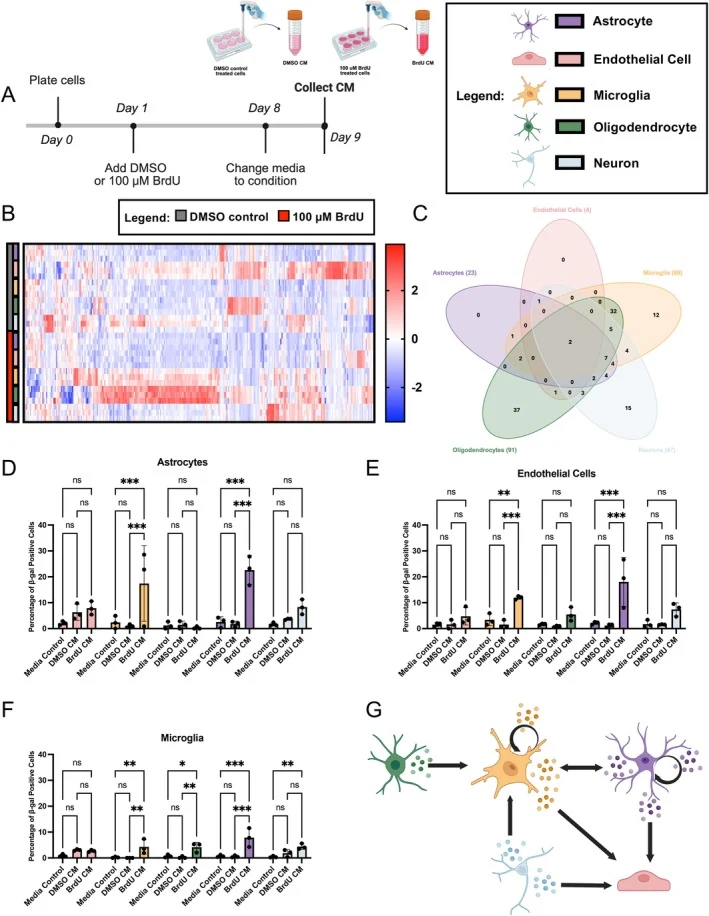
In experiments with five human brain cell lines, researchers mapped how senescence, a state in which cells stop dividing, spread through substances released by other cells. They chemically induced senescence and collected liquid in which the cells had grown. They exposed other cells to this liquid for seven days and compared them with controls.
Astrocytes, which support nerve cells, and microglia, the brain’s immune cells, appeared to be the main sources of signals that spread senescence. Responses varied by cell type and by the measure of senescence used. The team identified signaling molecules and their cell-surface receivers involved in the spread. Inhibitors aimed at selected targets reduced some aspects of it, depending on the cell type.
Why it matters
Cell senescence has been linked to age-related brain disease and inflammation. The authors see its secreted signals as potential targets for interventions against age-related tissue dysfunction.
Caveats
These experiments used lab-grown cell lines, not intact brains or people. They did not test whether the inhibitors benefited brain function or people with neurodegenerative disease.

Comments
Be the first to comment.