Senescent human lung cells show variation after DNA damage
Lab experiments found disrupted DNA damage responses in senescent lung cells from people with idiopathic pulmonary fibrosis, a lung-scarring disease.
Our read
Mechanisms- Studied:
- Experiments in primary human lung fibroblasts
- What changed:
- Human lung fibroblasts showed subtle variation in senescence over time after DNA damage
- The catch:
- The experiments measured cell responses, not lung disease improvement from targeting those responses
- Stake:
- Six authors work for Rubedo Life Sciences, hold shares in it, or both.
- In the record:
- One of 8 papers on senescence-associated gene signature on record: 3 with results in people.
Editor of record: Boris Djordjevic · AgingResearch.News
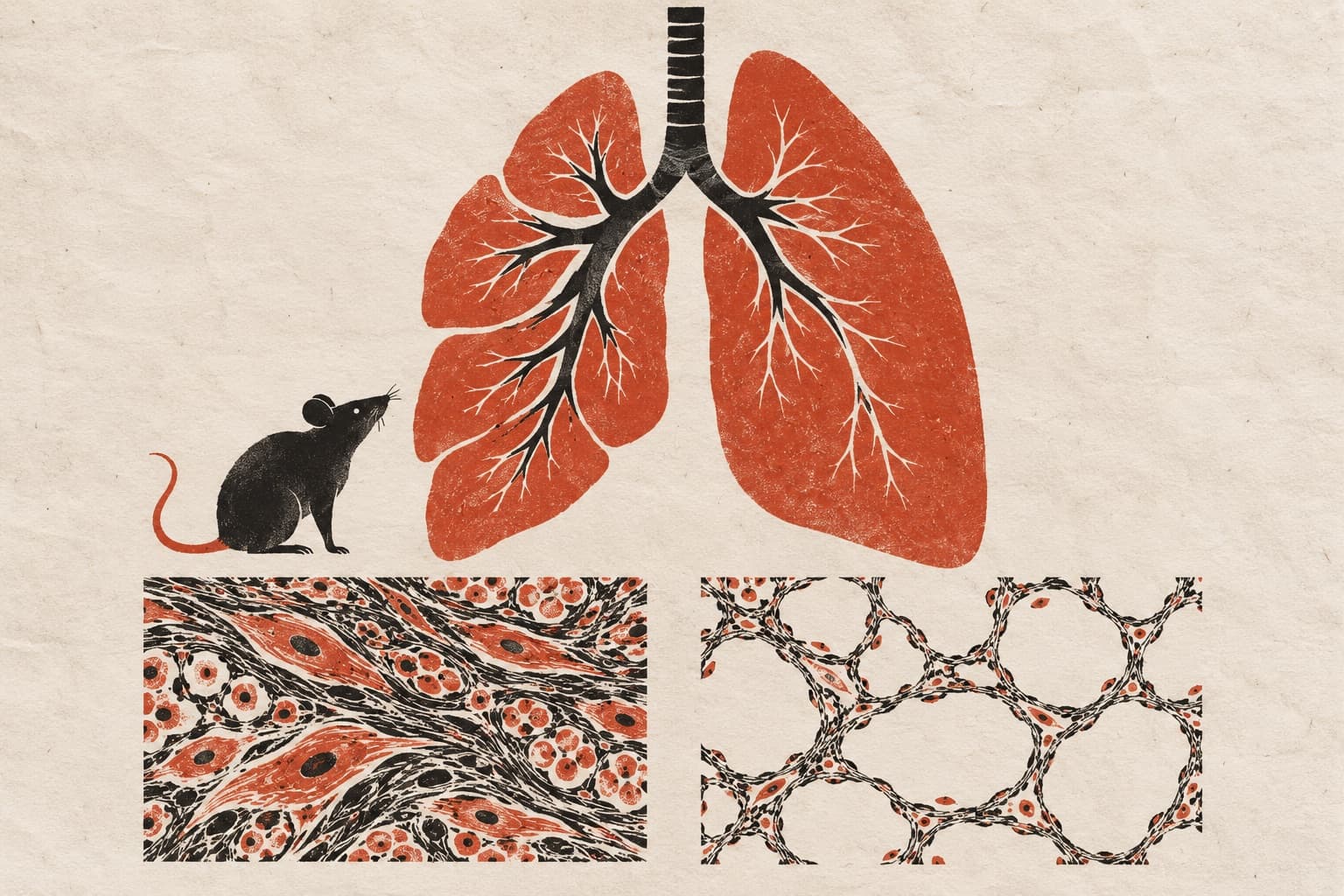
Primary human lung fibroblasts, cells that help form connective tissue, from healthy donors and people with idiopathic pulmonary fibrosis were studied in laboratory experiments. After DNA damage, the cells showed subtle variation over time in senescence, a stress response in which cells stop dividing.
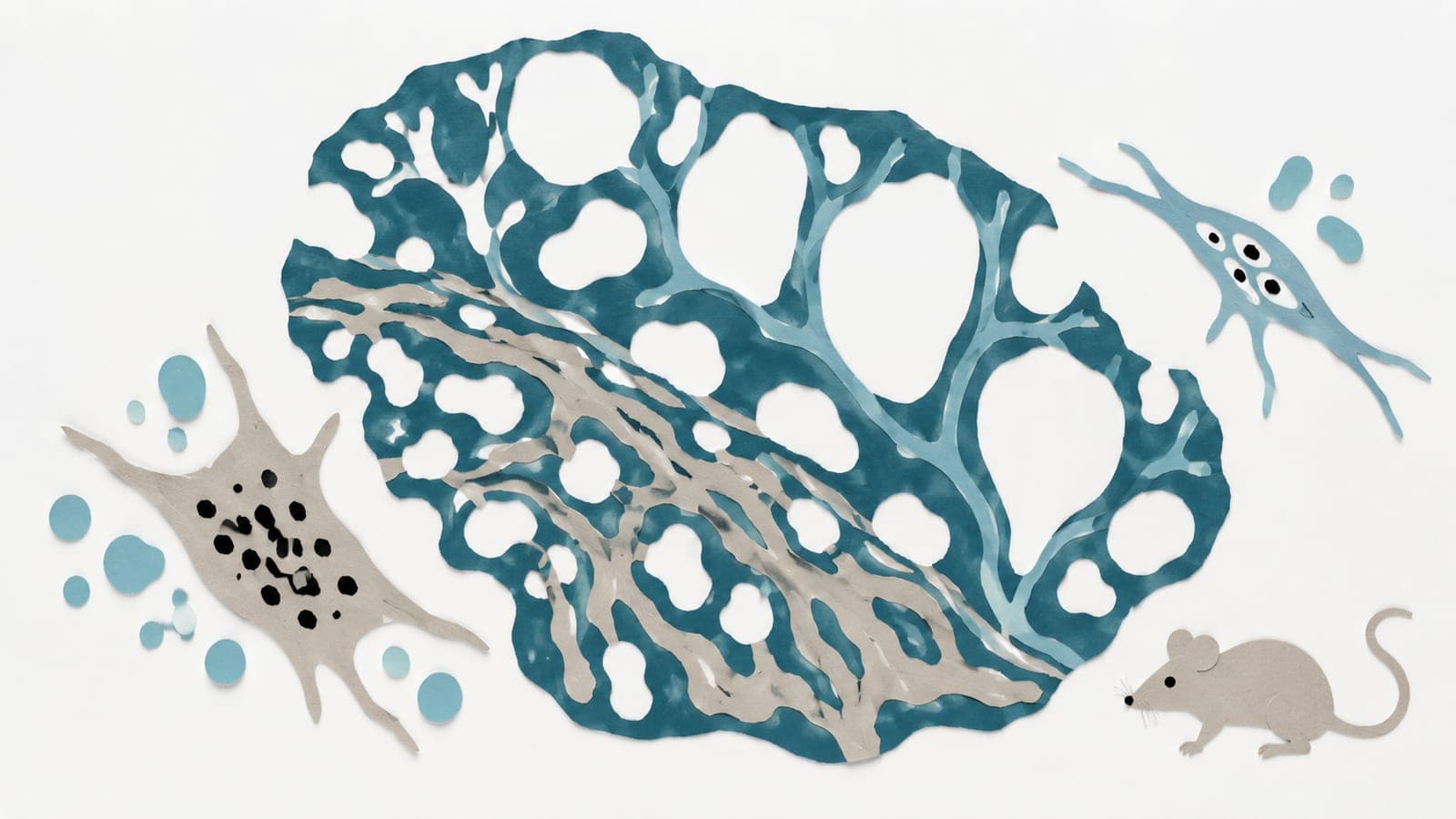
Senescent fibroblasts from donors with pulmonary fibrosis showed disrupted gene activity and protein responses to DNA damage. An analysis of genes whose activity varied together linked differences among these cells to genes associated with DNA damage and repair, and with signals involved in immune responses. The researchers also combined gene-activity data from healthy and disease-derived senescent cells to create a senescence signature—a pattern of gene activity associated with this state. This signature identified disease-relevant cells in human data measuring gene activity in individual cells.
Why it matters
Senescence contributes to age-related dysfunction. Mapping its variation within one lung cell type offers a way to investigate how this aging-related process relates to pulmonary fibrosis.
Caveats
The DNA damage experiments used cells grown in the lab; their results do not show whether targeting these responses would improve lung disease in people.
Corrected Nov 10, 2026, after the authors pointed out something the story underplayed.
- Transcriptomics
- Cellular senescence
- DNA damage response
- Idiopathic pulmonary fibrosis
- Senescence-associated gene signature
- Humans
The paper
University of Southern California
npj Aging, Jun 18, 2026, Open access
Comments
Be the first to comment.