Higher fitness linked to lower breast cancer risk in men
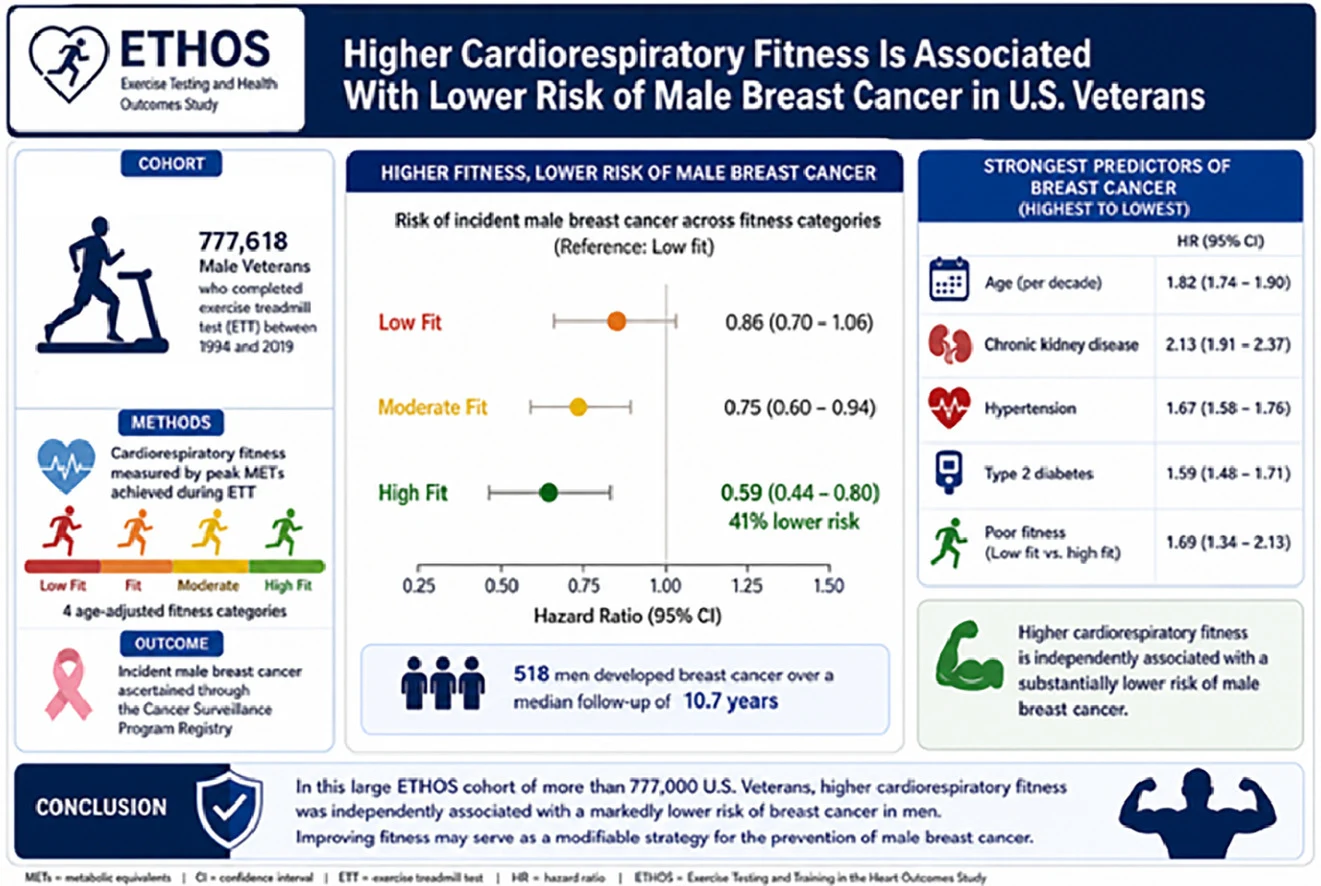
Among 777,618 male US veterans, the highest fitness group had a 41% lower relative risk than the lowest over a median 10.7 years.
Limit: The analysis compared fitness levels, not cancer risk reduction after improving fitness
Edited by Boris Djordjevic · AgingResearch.News
An observational cohort study included 777,618 male US veterans who completed exercise treadmill testing between 1999 and 2024 and had no evidence of breast cancer before testing. Researchers used peak treadmill performance to group the men into four fitness categories adjusted for age. They identified breast cancer diagnoses through Veterans Affairs medical records.
Over a median follow-up of 10.7 years, 518 men were diagnosed with breast cancer. Men in the highest fitness category had a 41% lower relative risk than those in the lowest category. The association remained after accounting for factors including age, race, smoking, alcohol use, high blood pressure, type 2 diabetes and chronic kidney disease.
Why it matters
Older age was also linked to higher breast cancer risk in this cohort. The authors suggest that fitness may be a modifiable risk factor relevant to prevention in men.
Caveats
This observational study cannot show that greater fitness prevented breast cancer. The results may not apply to women or to men outside the population of US veterans who underwent treadmill testing.
The paper
Cardiorespiratory fitness and male breast cancer association: The ETHOS cohort
Uniformed Services University of the Health Sciences; VA Palo Alto Health Care System
Journal of Sport and Health Science, Aug 14, 2026, Open access


Comments
Be the first to comment.