Higher fitness linked to lower death risk in kidney disease
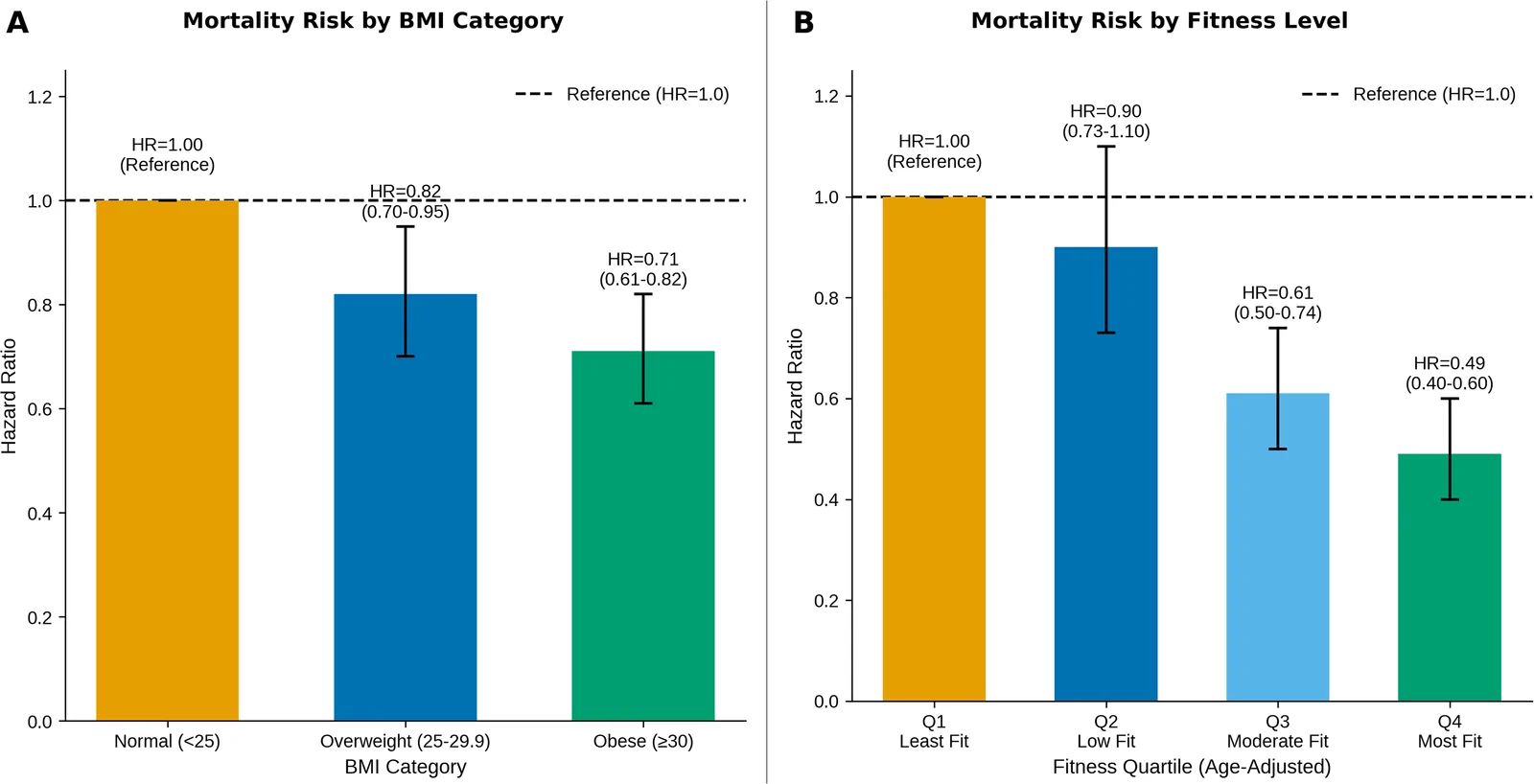
The most fit veterans had a hazard ratio of 0.49, a measure of relative death risk, compared with the least fit.
Limit: Fitness and body mass index were measured only once
Edited by Boris Djordjevic · AgingResearch.News
Researchers analyzed records from 13,521 US veterans with chronic kidney disease, 97.4% of them male, in a retrospective cohort study. They assessed cardiorespiratory fitness—how well the heart and lungs support physical activity—using maximal exercise tests. They grouped participants by fitness adjusted for age and by body mass index, a measure of weight relative to height.
Over an average 7.4 years, 5,144 participants (38.0%) died. Higher fitness was associated with progressively lower risk of death, independent of body mass index. Higher body mass index was also associated with lower mortality across all fitness levels. The analysis accounted for age, sex, diabetes, high blood pressure and cardiovascular disease.
Why it matters
Survival in chronic kidney disease is relevant to healthy aging. The findings support including fitness assessment in kidney disease care.
Caveats
The observational design cannot establish cause and effect, and fitness and body mass index were measured only once. Findings from this predominantly male veteran population may not generalize to women or nonveterans.
The paper
VA Palo Alto Health Care System
Kidney Medicine, Jul 15, 2026, Open access