Drug pair limited pollution-induced vessel changes in mice
In a nine-day experiment, dasatinib and quercetin limited white blood cells sticking to blood vessels in male mice exposed to fine-particle pollution.
Edited by Boris Djordjevic · AgingResearch.News
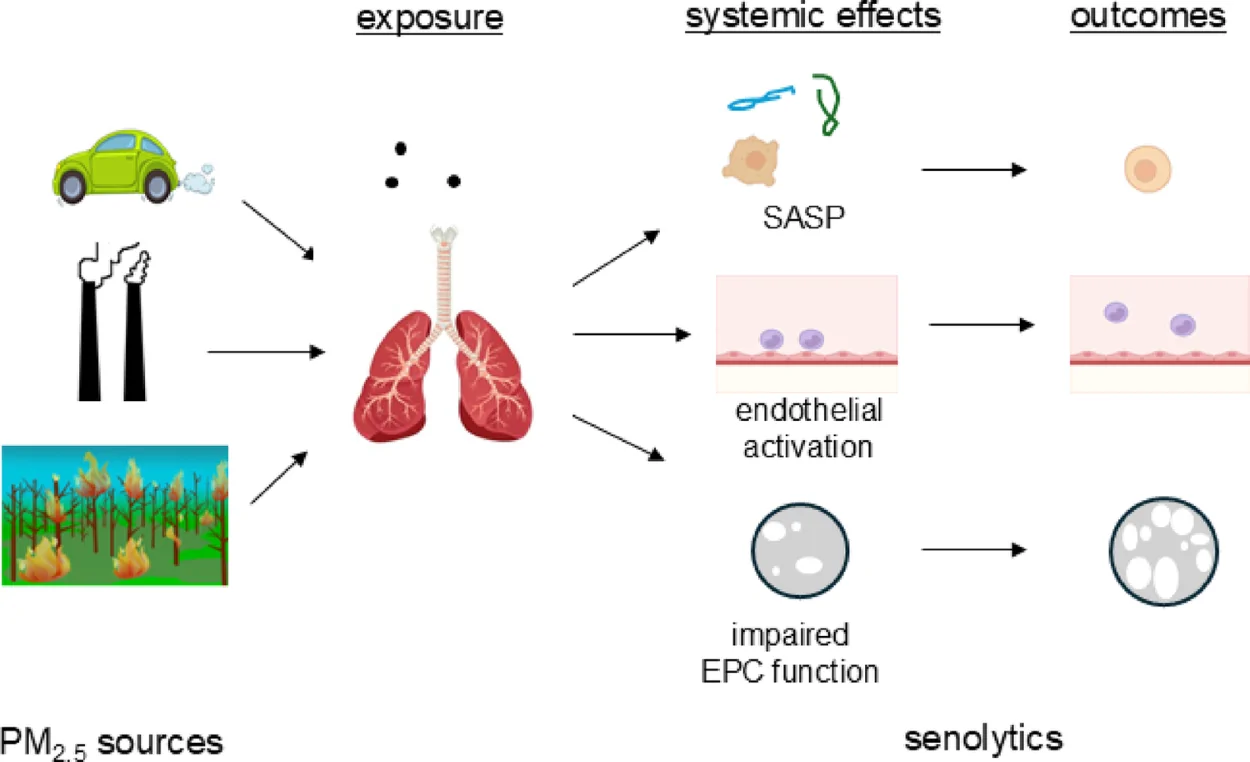
Male C57BL/6J mice inhaled concentrated fine-particle air pollution or filtered air for six hours daily for nine days in an animal experiment. Pollution concentrations averaged 50.6 micrograms per cubic meter. Some mice also received dasatinib (5 milligrams per kilogram of body weight) plus quercetin (100 milligrams per kilogram) by mouth every other day, starting on day one. These drugs are senolytics, which eliminate senescent cells—cells that have stopped dividing.
Pollution increased white blood cells rolling along and sticking to blood vessel walls. The drug pair limited this response and reduced signs of senescence in blood cells and blood vessel precursor cells grown from the mice’s bone marrow. Cells from mice given both drugs showed no pollution-related impairment in forming tube-like structures in the lab.
Why it matters
The work addresses whether senescent cells contribute to early changes involved in artery disease. The authors suggest senolytics may help combat cardiovascular harm from chronic fine-particle exposure.
Caveats
The drugs began with pollution exposure, so this experiment did not test treatment of established damage. It studied male mice over nine days, not cardiovascular outcomes in people.
- Concentrated ambient pm2.5
- Dasatinib + quercetin
- Angiogenesis
- Cellular senescence
- Vascular dysfunction
- Mice
The paper
Senolytics Reverse PM2.5 - Induced Cell and Vascular Dysfunction
University of Louisville
Cardiovascular Toxicology, Aug 13, 2026, Open access

Comments
Be the first to comment.