Operational Approach to the Lancet 2025 Obesity Framework in Mexican Adults: Prevalence and Clinical Characteristics
Abstract
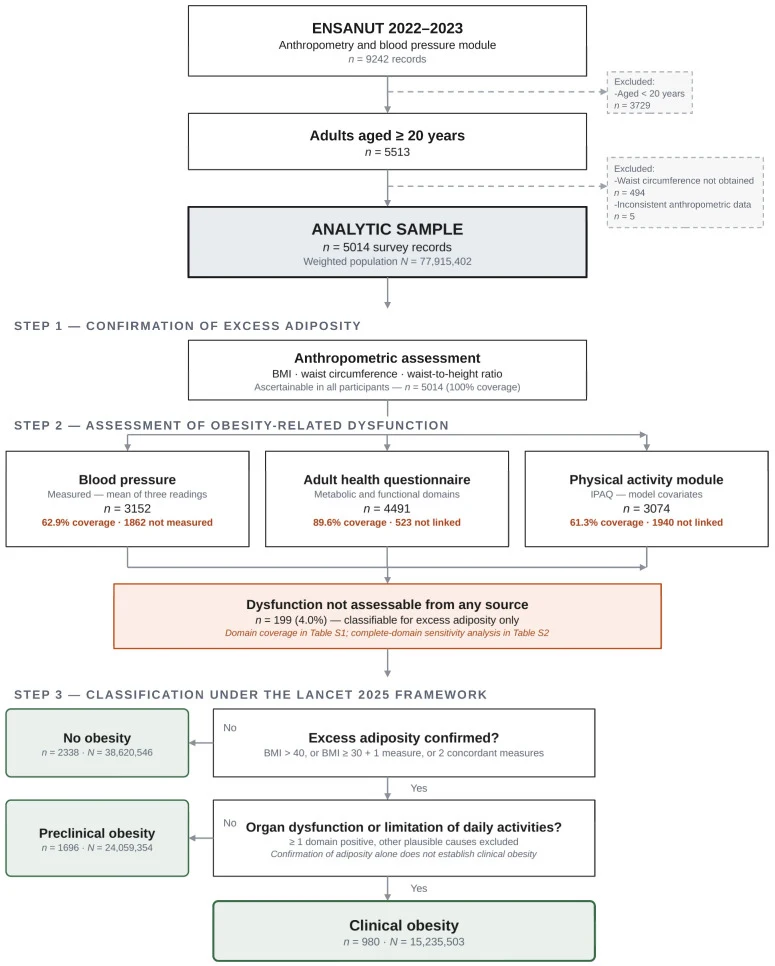
Background/Objectives: The 2025 Lancet Diabetes & Endocrinology Commission proposed a framework that distinguishes preclinical from clinical obesity based on confirmed excess adiposity and evidence of obesity-related organ dysfunction. We estimated the prevalence and clinical characteristics of preclinical and clinical obesity in Mexican adults and quantified their discordance with conventional body mass index (BMI) categories. Methods: Cross-sectional analysis of 5014 adults aged ≥20 years (weighted population 77,915,402) from the 2023 Mexican National Health and Nutrition Survey (ENSANUT). Excess adiposity was confirmed by a BMI ≥ 30 kg/m² plus one altered measure of central adiposity, by two altered measures irrespective of BMI, or by a BMI ≥ 40 kg/m² alone. Obesity-related dysfunction was ascertained from available cardiovascular, metabolic, and functional indicators. All analyses accounted for the complex sampling design. Results: Preclinical obesity affected 30.9% of adults and clinical obesity 19.6%. Among adults with clinical obesity, 4.9% had a normal BMI and 18.3% were overweight so that 23.2% fell below the conventional 30 kg/m² threshold. Cardiovascular dysfunction was the most frequent qualifying domain (78.1%), followed by limitations in activities of daily living (27.6%) and metabolic dysfunction (6.7%). Conclusions: BMI alone underestimates obesity-related clinical severity and misses a substantial share of adults with organ dysfunction, supporting the integration of central adiposity measures and assessment of obesity-related dysfunction into routine obesity surveillance.
The paper
Universidad Autónoma de Guadalajara; Universidad de Guadalajara
Nutrients, 6 Aug 2026