Protein reduces brain immune cell activation in aged mice
Aged mice given eight injections of a youth-associated protein had a smaller share of inflammation-promoting brain immune cells than controls.
Limit: Isolated cells from treated aged mice took up less myelin
Stake: An author holds patents licensed to Alkahest.
Edited by Boris Djordjevic · AgingResearch.News
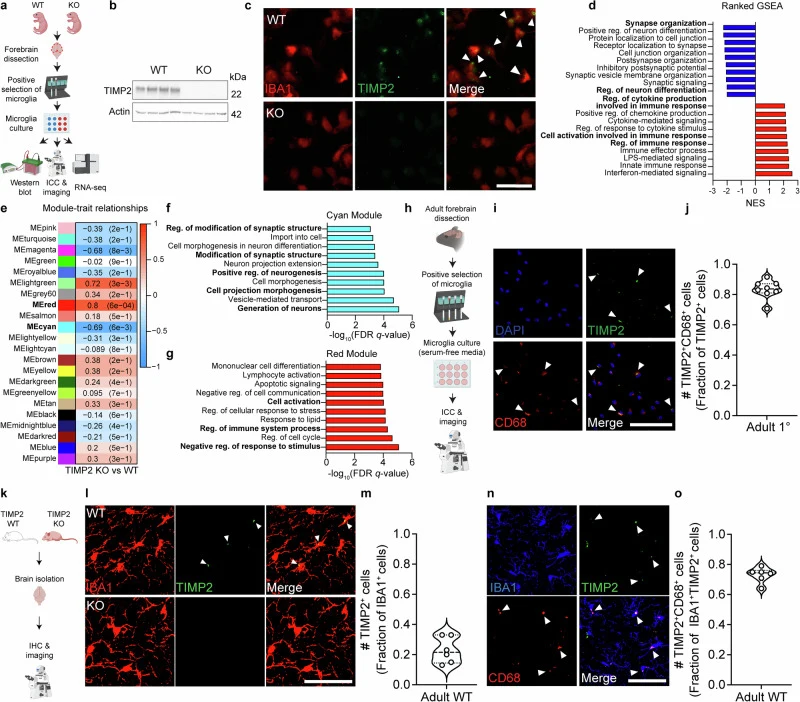
In experiments in mice on a C57Bl/6J background, researchers tested how TIMP2, a youth-associated protein, affected microglia, the brain’s immune cells. They deleted the gene for the protein throughout the body or in selected cell types. They also gave aged mice eight injections of TIMP2 at 50 micrograms per kilogram every other day, comparing them with mice given a control solution.
Deleting TIMP2 worsened aging-associated microglial changes and raised levels of stress and inflammatory proteins in fluid between brain cells. In aged mice, TIMP2 injections reduced microglial activation and the proportion of inflammation-promoting microglia. In 20-month-old mice, injections increased the amount of material from nerve-cell connections inside microglial waste-processing compartments, which the researchers interpreted as enhanced uptake.
Why it matters
Microglia become more inflammatory and less effective at clearing debris with age. The authors suggest harnessing TIMP2 may limit age-associated harms to these cells’ function.
Caveats
These experiments examined mice and isolated mouse cells, not benefits in people. Uptake results were not uniform: isolated cells from treated aged mice took up less myelin, the insulating material around nerve fibers.
The paper
Youth-associated protein TIMP2 regulates microglial state and function in healthy and aged mice
Icahn School of Medicine at Mount Sinai
Nature Communications, Aug 12, 2026, Open access


Comments
Be the first to comment.