Disrupting RNA tags cut dengue infection in heat-exposed mosquitoes
Azacytidine reduced dengue virus 2 infection prevalence from 78% to 37% in mosquitoes exposed to a five-day heatwave.
Limit: The abstract omits sample sizes, preventing assessment of how precise the infection reduction is
Edited by Boris Djordjevic · AgingResearch.News
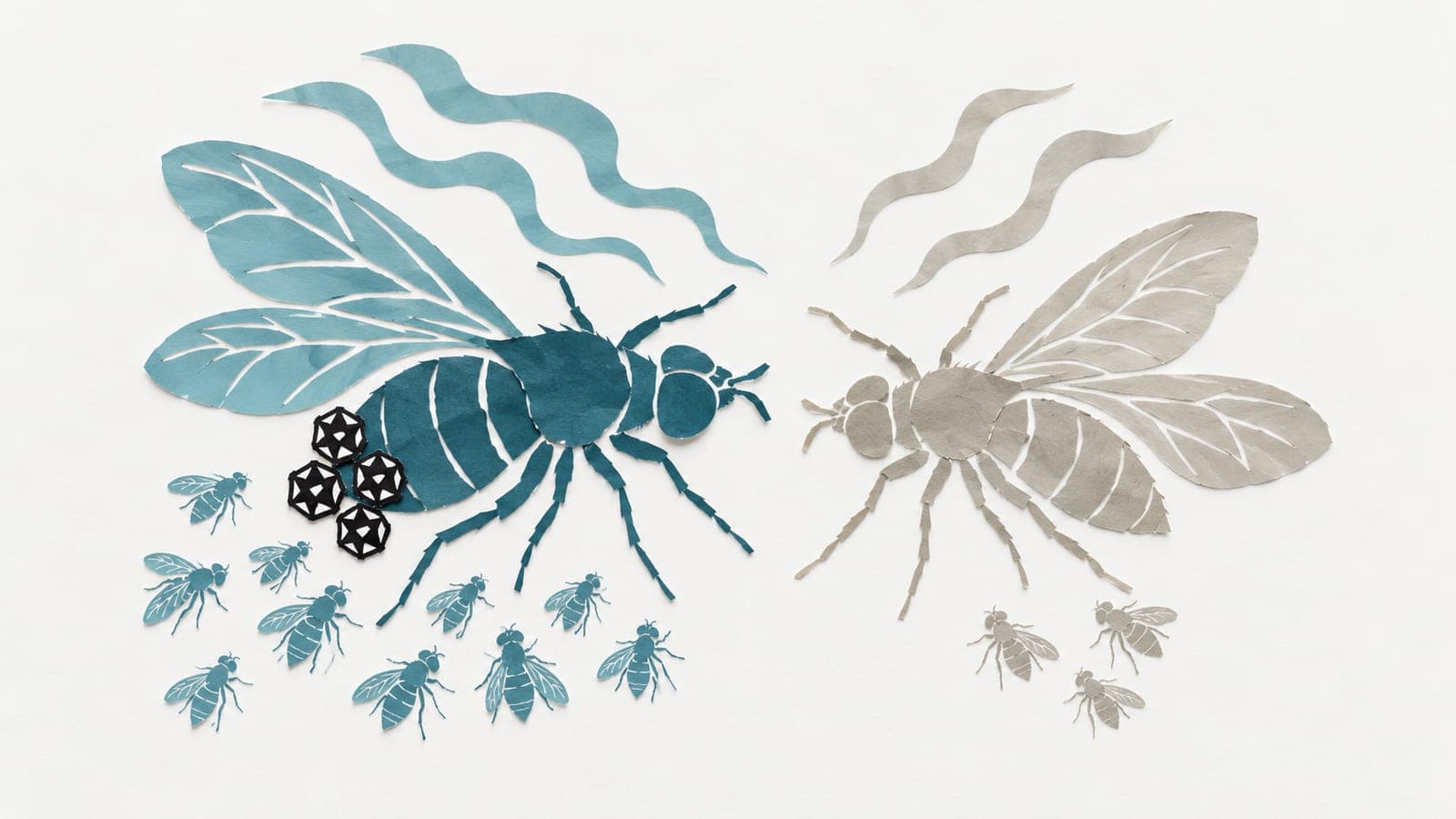
In an experiment in Aedes aegypti mosquitoes, researchers started a five-day heatwave when the insects acquired dengue virus 2. The heatwave increased the lifespan of surviving mosquitoes, extending their window of potential virus transmission.
Heat-exposed mosquitoes had higher levels of 5-methylcytosine, a chemical tag on RNA, a molecule involved in using genetic instructions. They also had lower antiviral gene activity, facilitating viral replication. Researchers used azacytidine to disrupt this RNA modification. The drug increased antiviral gene activity and reduced infection prevalence from 78% to 37%. It also restored late-life survival to rates comparable to mosquitoes not exposed to heat stress. The authors highlighted RNA methylation—the addition of these chemical tags—as a potential target for reducing dengue transmission.
Why it matters
Late-life survival affects how long mosquitoes can potentially transmit dengue. This work addresses how an environmental stress response connects mosquito longevity with transmission risk.
Caveats
The experiment concerned transmission potential in mosquitoes, not dengue spread in people. The abstract does not report sample sizes or the azacytidine dose.
- Azacitidine
- Epigenetic regulation of gene expression
- Immune response
- Dengue
- 5-methylcytosine RNA
- A. aegypti
The paper
Instituto Nacional de Salud Pública
Insect Biochemistry and Molecular Biology, Jul 25, 2026

Comments
Be the first to comment.