Aging measure linked to eye and kidney disease in type 2 diabetes
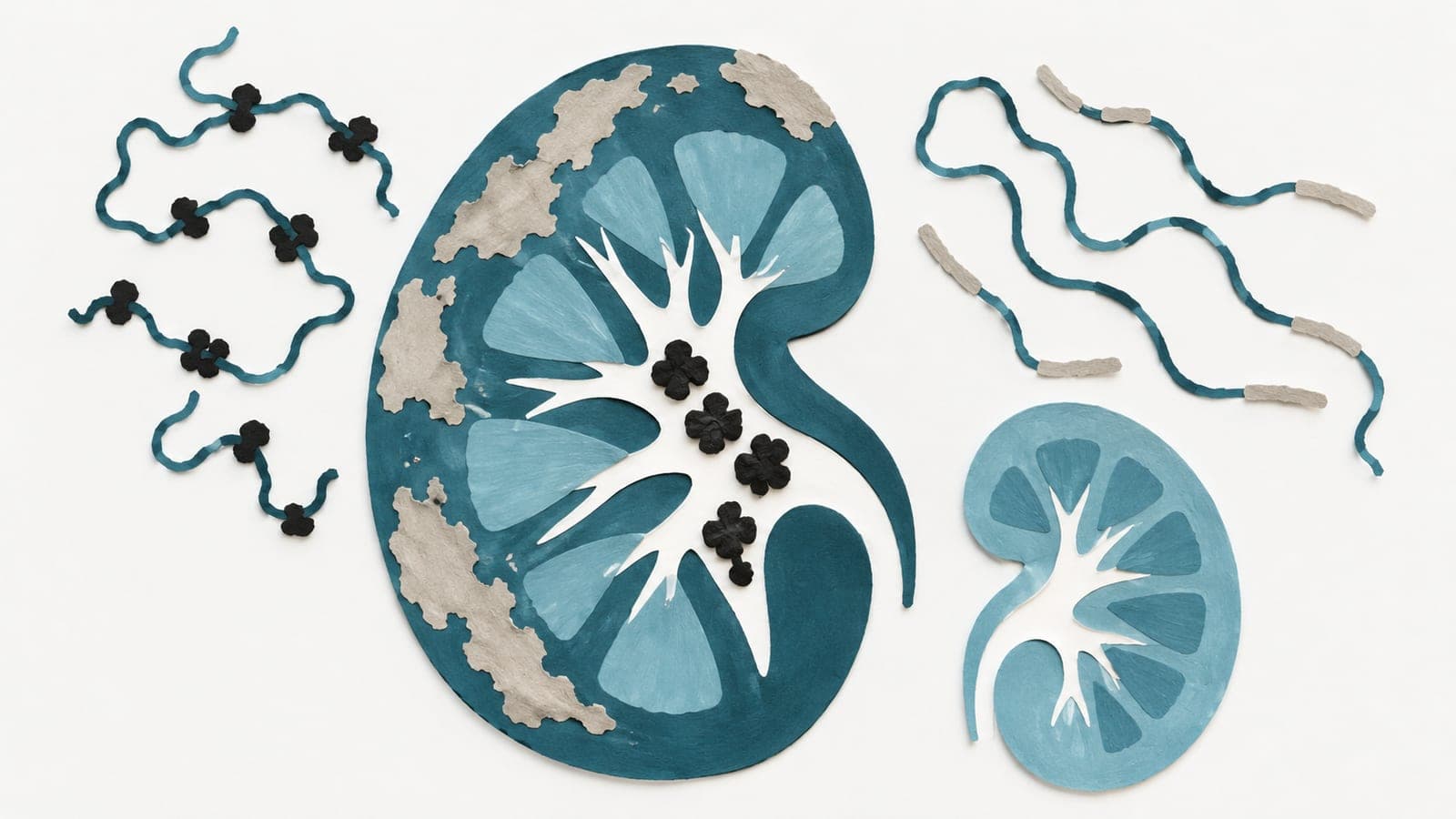
The highest versus lowest third of biological-age acceleration had relative risks of 1.56 for developing diabetic eye disease and 1.30 for diabetic kidney disease.
Limit: The abstract omits follow-up duration, leaving the timeframe of disease risks unspecified
Edited by Boris Djordjevic · AgingResearch.News
A prospective observational cohort study assessed 8,194 adults with type 2 diabetes for links between biological aging and diabetic eye and kidney disease. Researchers calculated phenotypic age, a biological-aging measure based on nine routine biomarkers, at baseline and follow-up. Analyses accounted for conventional risk factors.
The highest versus lowest third of baseline age acceleration had relative risks of 1.56 for developing eye disease, 1.30 for kidney disease and 3.24 for both. Among participants with existing kidney disease, the highest versus lowest third had a relative risk of 2.04 for progression. The highest third did not have an increased risk of eye disease progression among participants with existing eye disease. Increases in acceleration over time were associated with developing kidney disease, while decreases were associated with a lower risk of kidney disease progression.
Why it matters
Small-blood-vessel complications in type 2 diabetes raise a question about aging: how biological aging relates to the development and worsening of damage in these organs.
Caveats
This observational study cannot establish cause and effect, and its findings concern adults with type 2 diabetes. The abstract does not report follow-up duration.
The paper
Shanghai Jiao Tong University
Diabetes Research and Clinical Practice, Jul 8, 2026