Vaccine ingredient boosts antibody responses in older monkeys
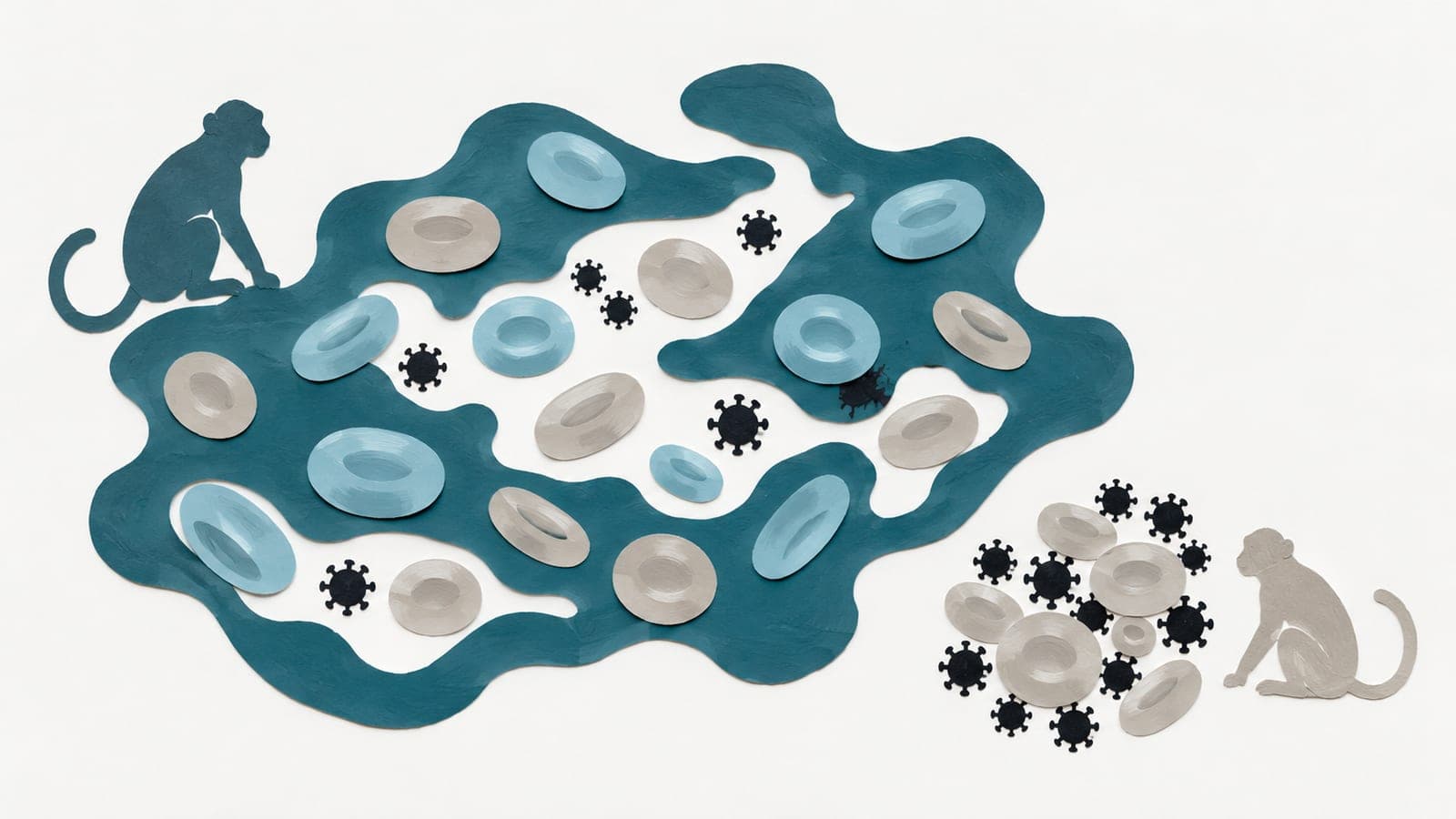
Older macaques given two doses had average antibody readings of 5,100 with the immune-stimulating ingredient versus 186 with aluminum phosphate.
Limit: Antibody levels do not directly measure protection against disease
Stake: Merck & Co. funded the study; an author works for it and holds shares in it.
Edited by Boris Djordjevic · AgingResearch.News
Rhesus macaques aged 20–29 years received two injections, one month apart, of 50 micrograms of a protein from the virus that causes shingles. In this animal experiment, researchers paired the protein with either AS01B, an immune-stimulating vaccine ingredient given at the human dose, or 250 micrograms of aluminum phosphate. They compared responses with those in younger macaques aged 5–6.1 years.
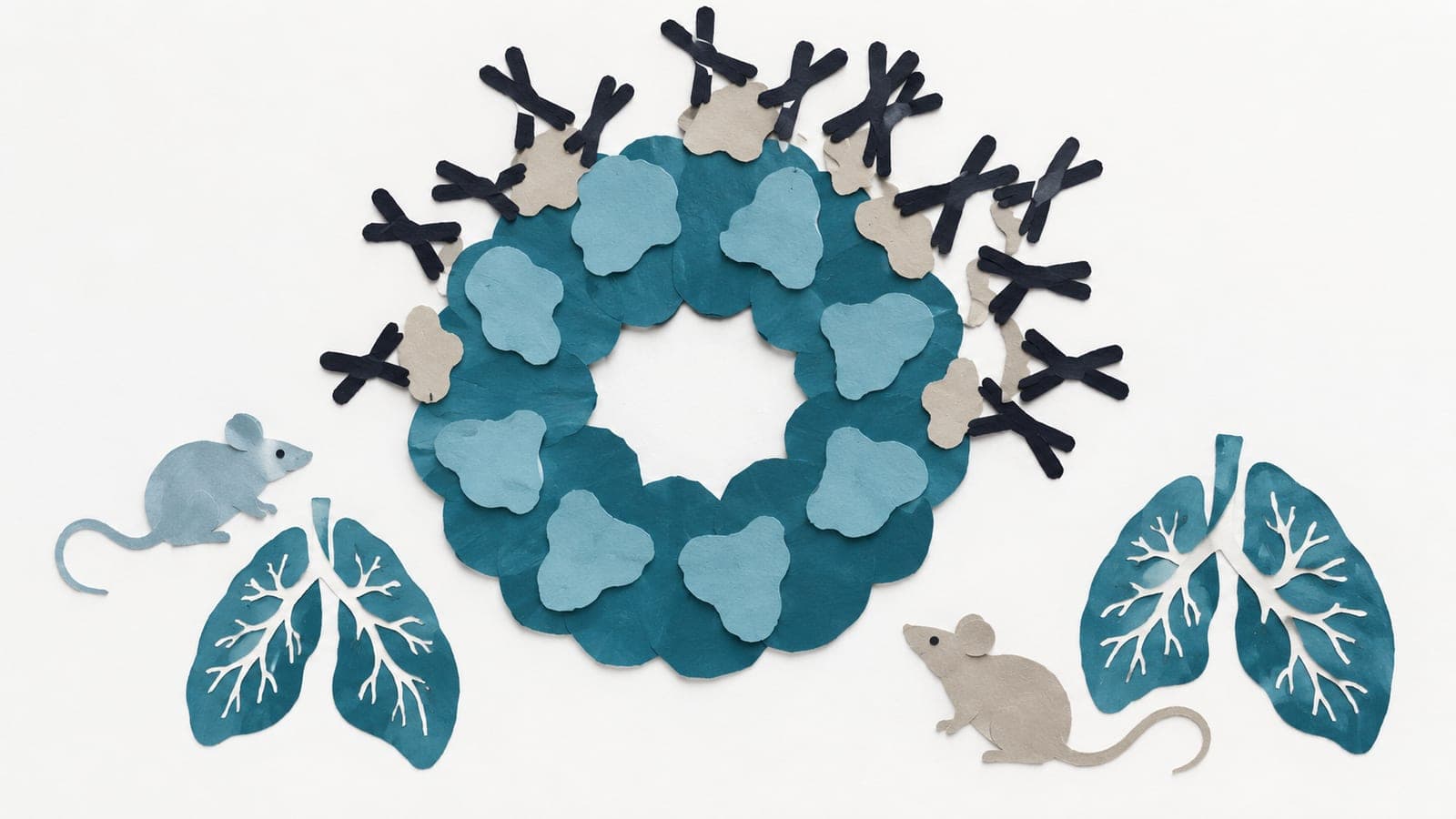
After two doses, older macaques had mean antibody titers—a measure of antibody levels—of 5,100 with AS01B versus 186 with aluminum phosphate. AS01B largely reduced the age-associated shortfall in antibody responses. Experiments in female mice, with eight per group, also found weaker responses to several vaccines in older animals. A second dose of the shingles vaccine containing the immune-stimulating ingredient improved their lower response.
Why it matters
Age-related immune decline can weaken responses to vaccination. The authors proposed these animal models for studying that decline and approaches to address its effects on vaccines for older people.
Caveats
Antibody responses are not the same as protection against disease. These animal experiments did not test whether the approach improves vaccine protection in older people.
The paper
Merck & Co., Inc., Rahway, NJ, USA (United States)
Human Vaccines & Immunotherapeutics, Jun 23, 2026, Open access