Breast cancer therapy linked to shifts in mutated blood cells
An observational study of 171 women linked expanding groups of mutated blood-forming cells during treatment to shorter survival than stable or shrinking groups.
Our read
Mechanisms- Studied:
- Cohort study of 171 women with breast cancer, against women receiving hormone therapy (Dose-response, independent replication)
- What changed:
- The mix of blood-forming cells narrowed more with chemotherapy than with hormone therapy
- The catch:
- Blood-cell population restrictions were model estimates, not direct cell counts
- Stake:
- An author works for Regeneron.
Editor of record: Boris Djordjevic · AgingResearch.News
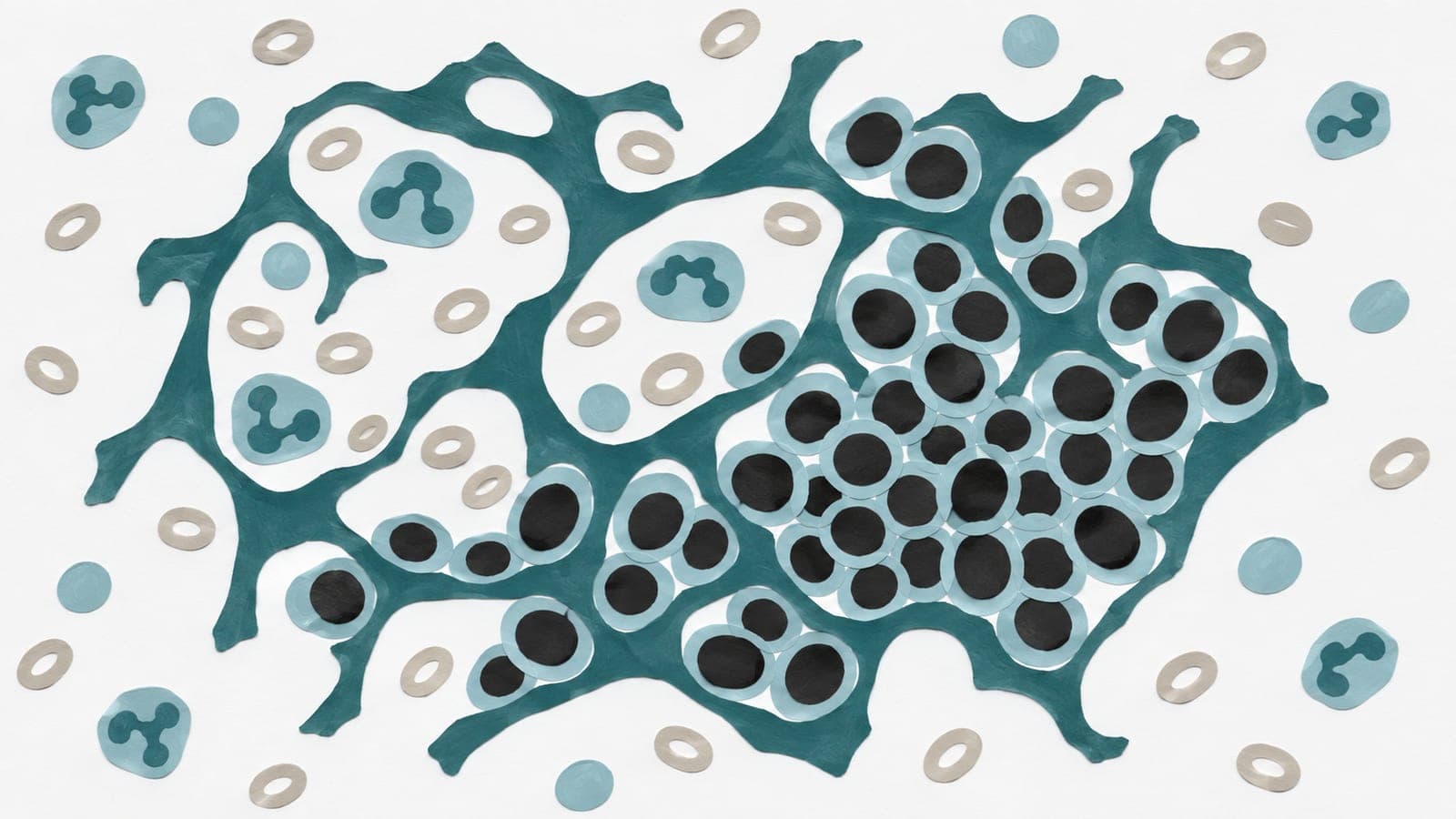
Blood samples from 171 women with breast cancer were analyzed before and after treatment in an observational cohort study. The researchers tracked clonal hematopoiesis, the age-related expansion of mutated blood-forming stem cells without blood abnormalities.
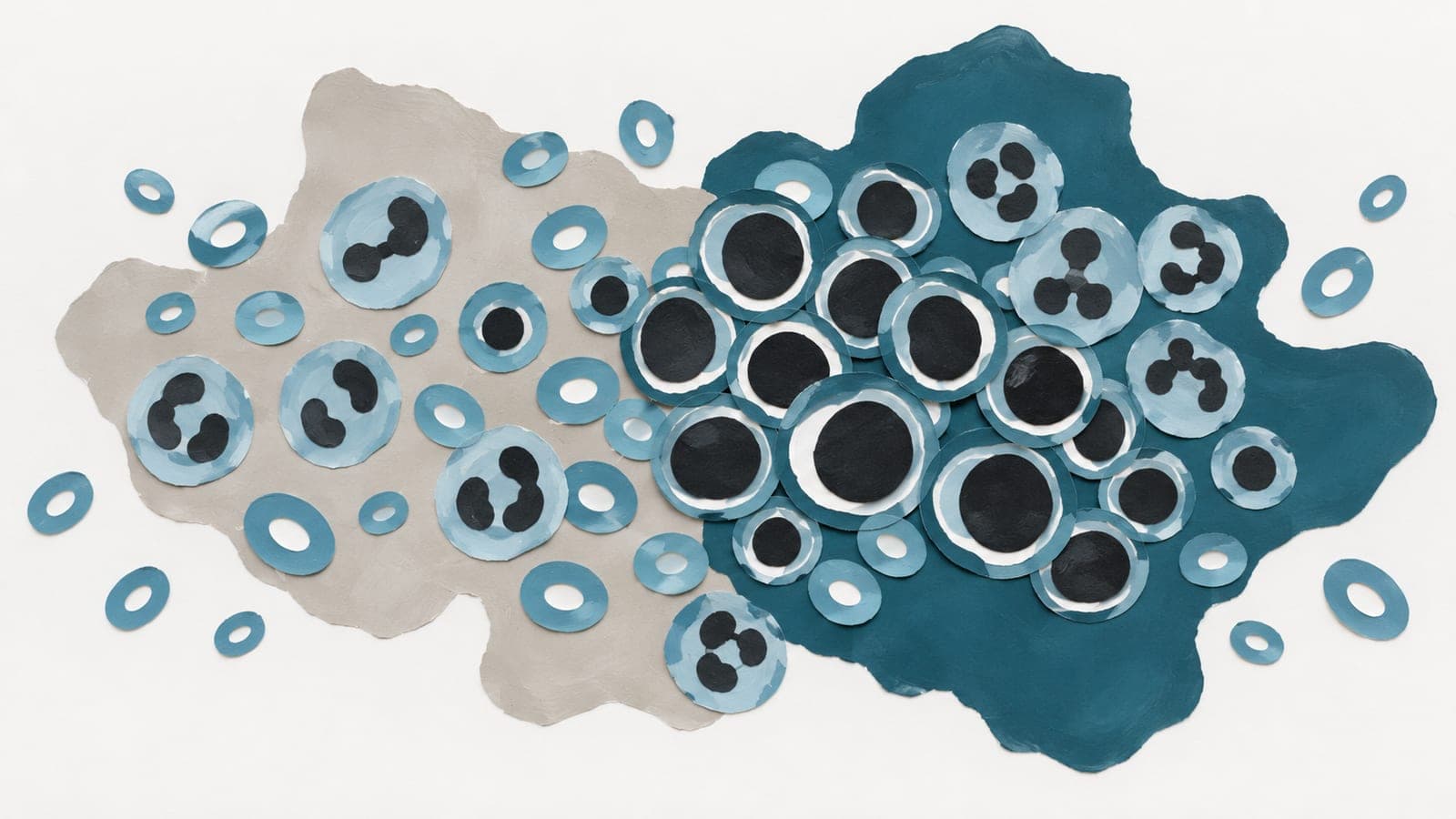
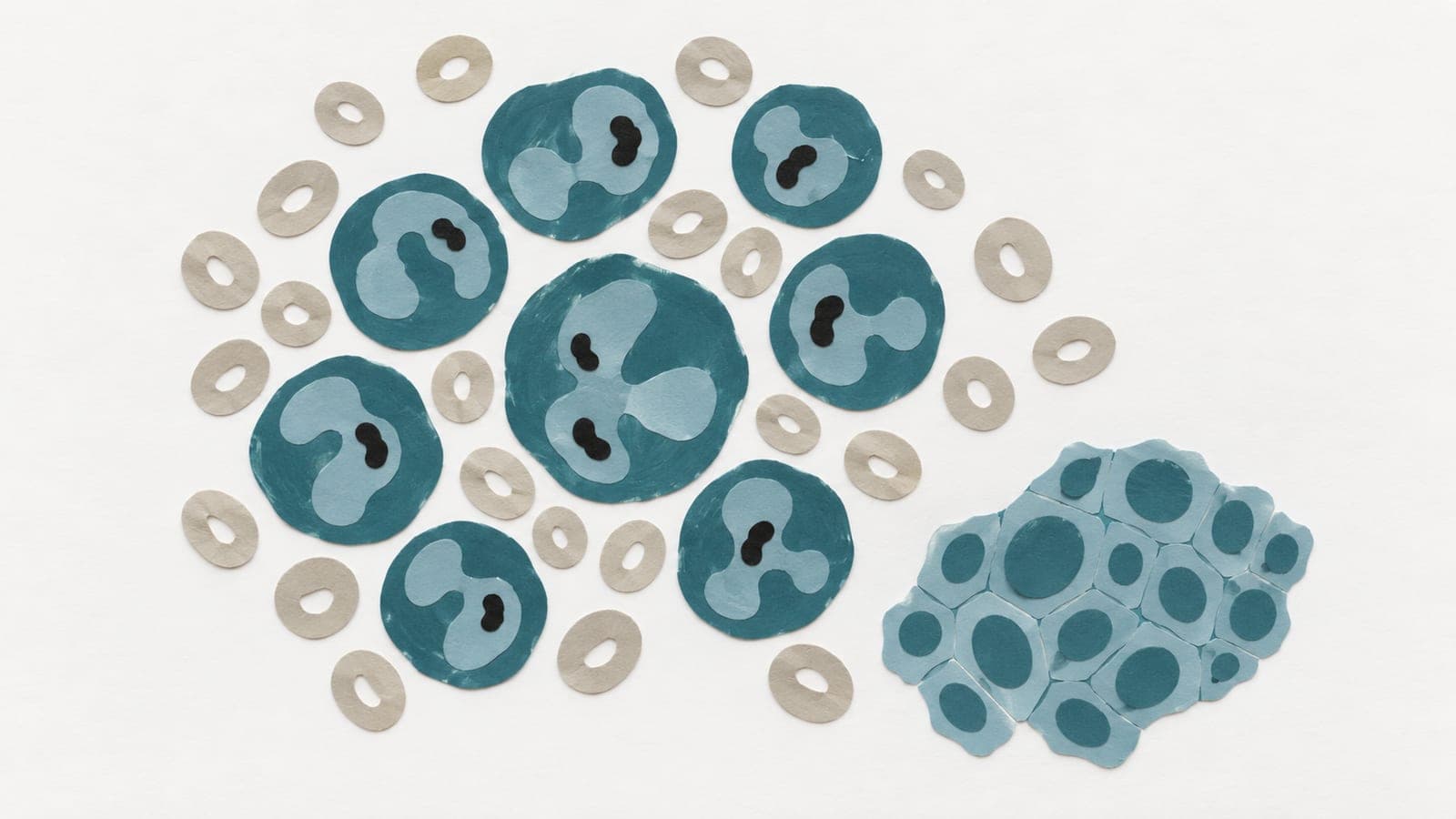
Genetic modeling suggested that chemotherapy restricted the mix of blood-forming cells more strongly than hormone therapy did. Higher chemotherapy exposure was linked to stronger restrictions. Some mutated cell groups expanded beyond what the model predicted from chance alone. Women with these expanding groups had shorter overall survival and shorter survival without cancer progression than women with stable or shrinking groups. Simply having clonal hematopoiesis before treatment was not linked to survival differences. Independent cohorts of 62 people with early-stage breast cancer and 394 people with solid tumors supported the findings.
Why it matters
Age-related changes in blood-forming cells may help assess risk during cancer care. The authors supported monitoring how these cell populations change during treatment.
Caveats
Cancer severity or treatment choices could have contributed to both blood cell changes and survival differences, despite adjustment for age, cancer stage and tumor features. The population restrictions were model estimates, not direct cell counts, and the main cohort included women only.
- Cytotoxic cancer therapy
- Stem cell maintenance
- Breast cancer
- Clonal hematopoiesis of indeterminate potential
- Hematopoietic allelic populations
- Humans
The paper
Evolution of clonal hematopoiesis during cancer treatment and its impact on outcomes
Rutgers, The State University of New Jersey; Moffitt Cancer Center
The Journal of Clinical Investigation, Jun 9, 2026, Open access
Comments
Be the first to comment.