Blood and brain-fluid signals more strongly linked in Alzheimer’s
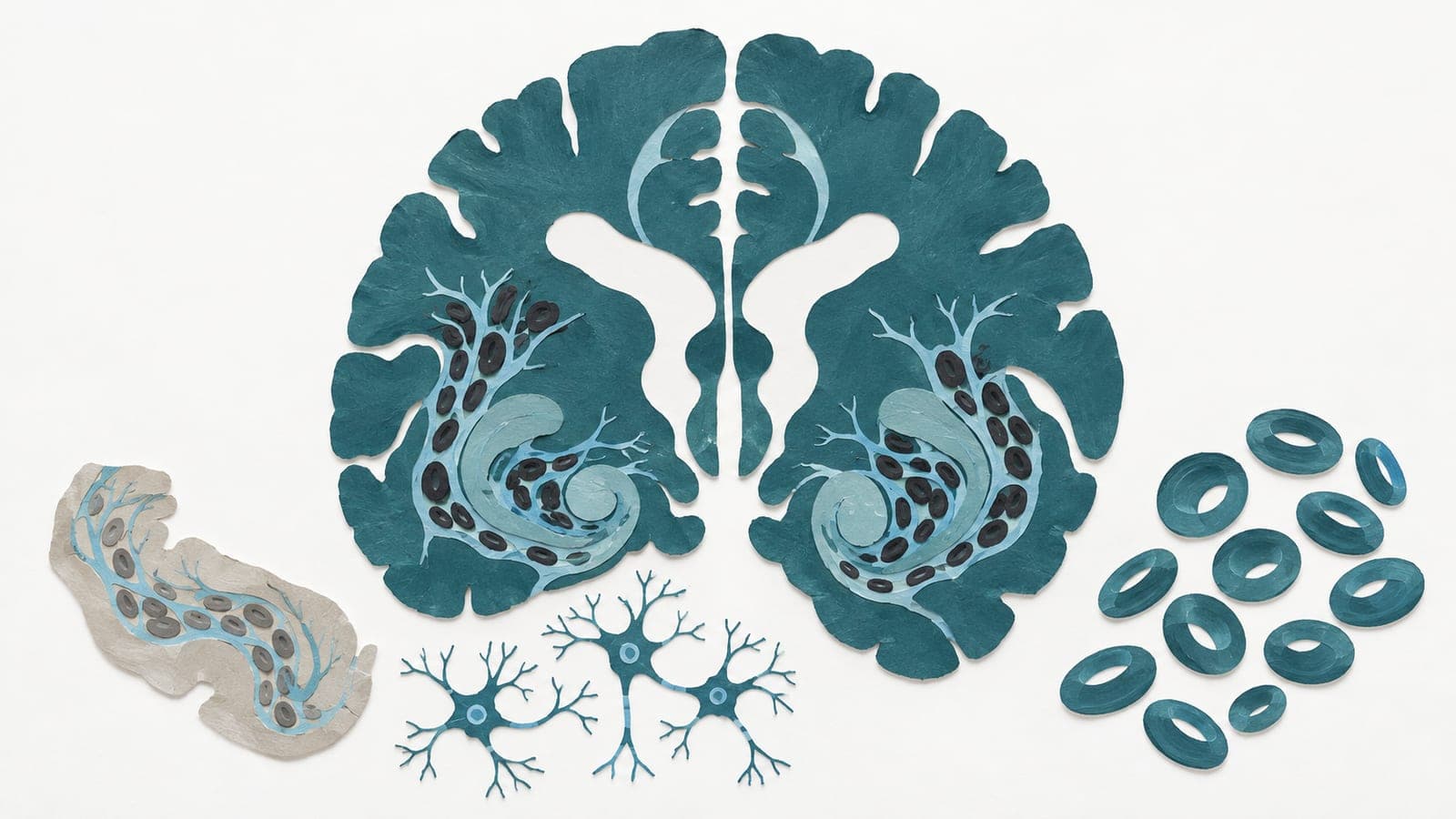
An observational study found stronger links between blood and brain-fluid signals in 16 people with early-stage Alzheimer’s than in 27 healthy older adults during seven-minute recordings.
Limit: Brain-fluid signals were estimated indirectly rather than measured directly
Edited by Boris Djordjevic · AgingResearch.News
An observational study compared 26 healthy young adults, 27 healthy older adults and 16 people with early-stage Alzheimer’s disease. The young adults averaged 22.4 years of age (14 men, 12 women). Healthy older adults averaged 67 years (5 men, 22 women). People with Alzheimer’s averaged 72.8 years (8 men, 8 women).
Researchers used seven-minute forehead light recordings to estimate changes in blood volume and signals related to cerebrospinal fluid, the liquid surrounding the brain. The two signals moved in opposite directions. Their relationship was stronger in people with Alzheimer’s than in healthy older adults across all three ranges of slow rhythms studied. Young adults had the weakest relationship. The authors suggested that the stronger link might represent an early response compensating for impaired fluid transport.
Why it matters
Cerebrospinal fluid helps clear toxic substances from the brain. The authors suggested that measuring its interaction with blood circulation may offer a physiological marker of brain aging and early Alzheimer’s disease.
Caveats
This observational comparison used an indirect fluid estimate and did not test whether the measure predicts future disease. Its Alzheimer’s findings concerned early-stage disease, not later stages.
- Alzheimer's disease
- Cerebrovascular-CSF coupling
- Free-water fluctuations
- Total hemoglobin concentration
- Humans
The paper
The University of Texas at Arlington
Frontiers in Aging Neuroscience, May 1, 2026, Open access