Human blood vessel model lasts over 180 days in the lab
An experimental vessel model made from human stem-cell-derived cells lasted over 180 days and enabled researchers to model disease-associated vascular aging.
Our read
AI & data- Studied:
- Preprint: experiments in human iPSC-derived vascular cells, over 180 days
- What changed:
- The human vascular avatar was maintained for over 180 days
- The catch:
- No comparison group was maintained to evaluate avatar longevity against standard vessel models
Editor of record: Boris Djordjevic · AgingResearch.News
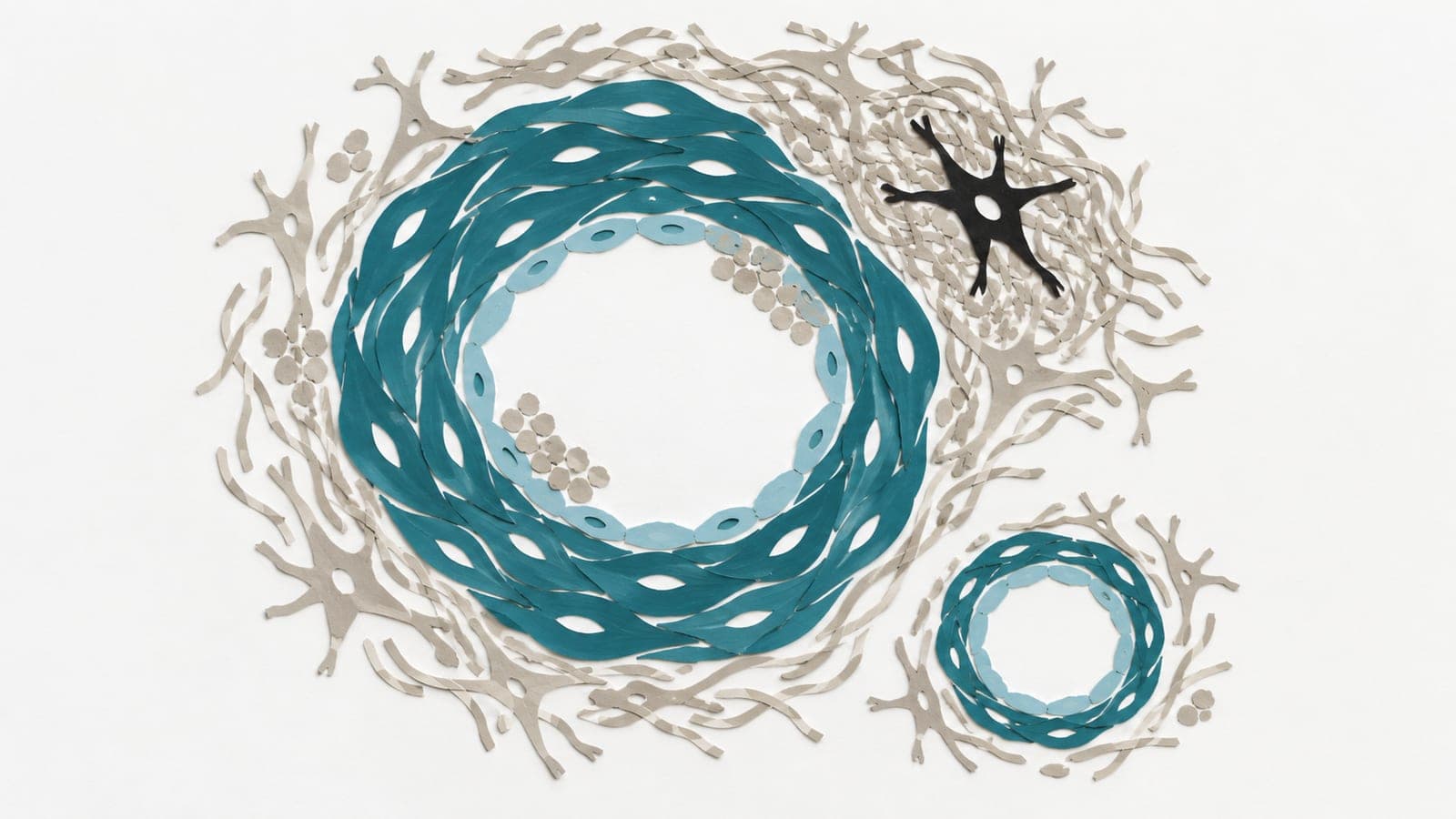
Researchers built a three-dimensional vessel model using human blood vessel lining and smooth muscle cells grown in the lab. The experiment used induced pluripotent stem cells—cells reprogrammed to a stem-cell state—to produce both cell types. Donors included people unaffected by Hutchinson-Gilford progeria syndrome and people with the syndrome, a condition that causes premature aging.
The team optimized the liquid used to nourish the cells. One formulation supported the long-term health of vessel-lining cells. A modified version supported communication between the two cell types and their long-term survival. Researchers grew the cells in vessel chips with a three-dimensional supporting matrix. They maintained the model for over 180 days and used cells from donors with progeria to model disease-associated vascular aging.
Why it matters
Cell senescence, a state in which cells stop dividing, can limit long-term models of vascular aging. The authors propose this platform for studying chronic vascular disease and evaluating potential therapies.
Caveats
The results came from cells grown in the lab, not studies in people. This preprint has not been peer-reviewed.
The paper
A Long-lived Avatar for Modeling Age-Related Vascular Disease
Houston Methodist
bioRxiv, May 4, 2026, Open access, Preprint, not yet peer-reviewed


Comments
Be the first to comment.