Older surgical patients showed poorer gut-defense cell function
Tissue comparisons in emergency surgical patients aged 60 or older and 35 or younger linked older age to poorer function of gut-defense cells.
Limit: The report gives no complication rates to accompany the lower Paneth cell activity
Edited by Boris Djordjevic · AgingResearch.News
In an observational comparison, surgical patients aged 60 or older who needed emergency surgery after abdominal injury had more small-intestine lining damage than patients aged 35 or younger. None had preexisting chronic intestinal disease. Older patients also had lower activity of Paneth cells, which release antimicrobial molecules and support nearby stem cells.
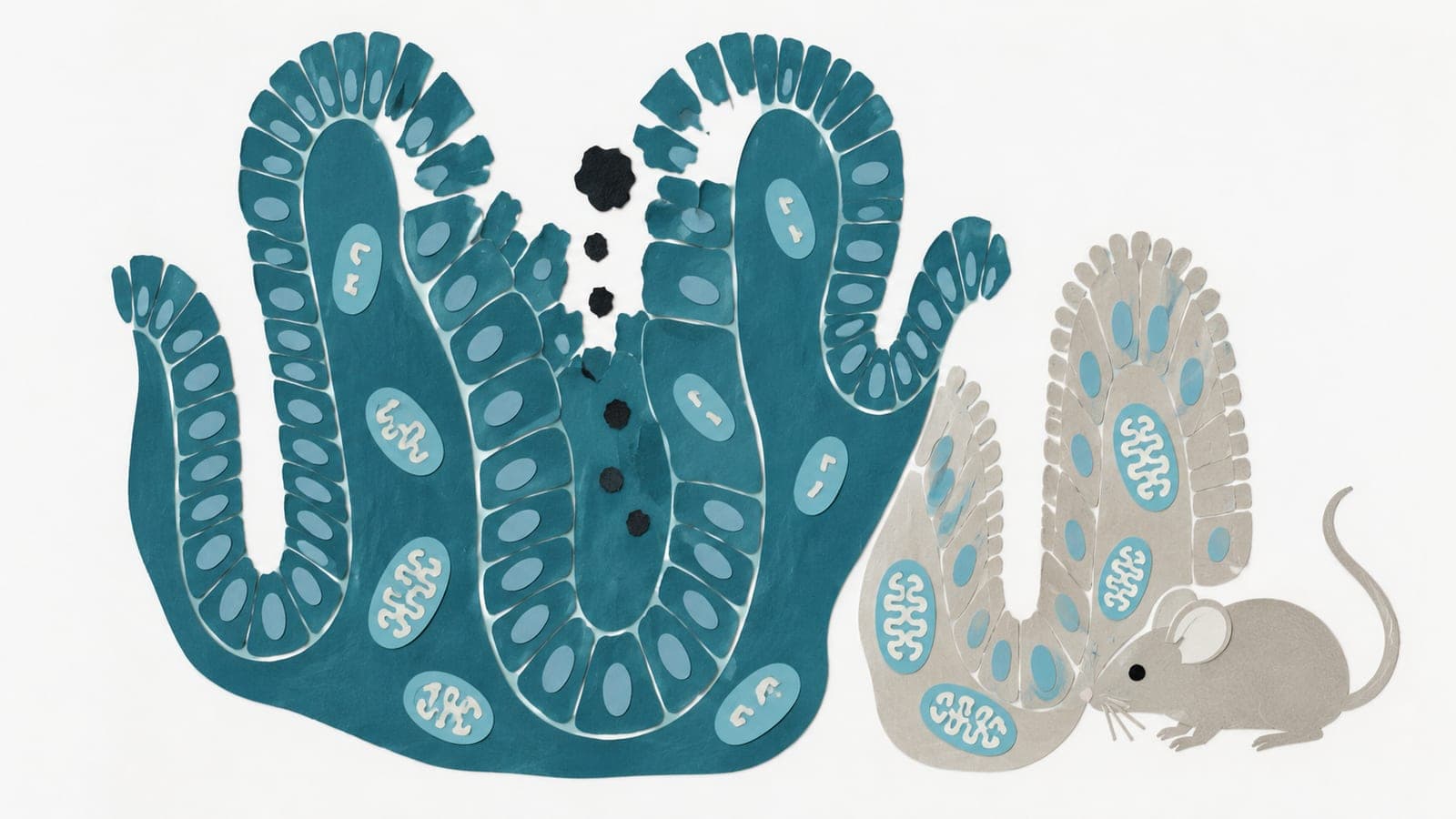
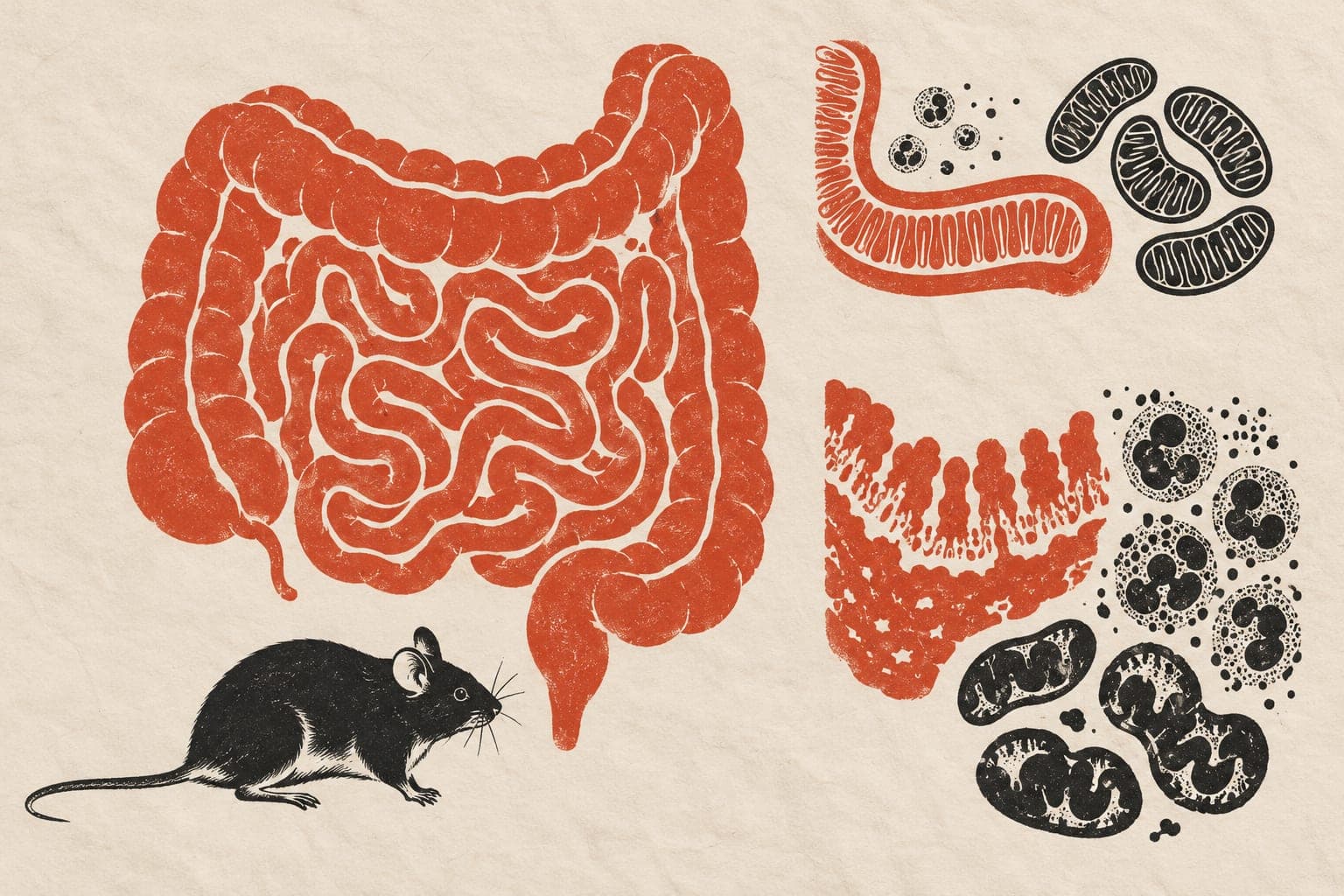
The researchers also compared 8-week-old and 76-week-old mice and ran experiments in cells grown in the lab. Older mice had impaired Paneth cell function and higher levels of microRNA-152, a small RNA molecule that regulates protein production. In human colon cancer cells grown in the lab, raising microRNA-152 for 48 hours reduced oxygen consumption and levels of prohibitin 1, a protein in mitochondria, the cell’s energy-producing structures. The authors concluded that disrupted microRNA-152 activity plays a central role in age-related Paneth cell dysfunction.
Why it matters
Declining intestinal defenses partly contribute to severe complications in older surgical patients. The authors suggested that understanding this pathway could inform efforts to protect the gut lining in older patients.
Caveats
The human comparison was observational and could not establish that aging caused the differences. These patients needed emergency surgery and had no chronic intestinal disease; the laboratory experiments did not establish a treatment benefit in people.
The paper
University of Maryland, Baltimore
Aging Cell, May 2026, Open access

Comments
Be the first to comment.