Autopsies found overlapping disease markers in young people
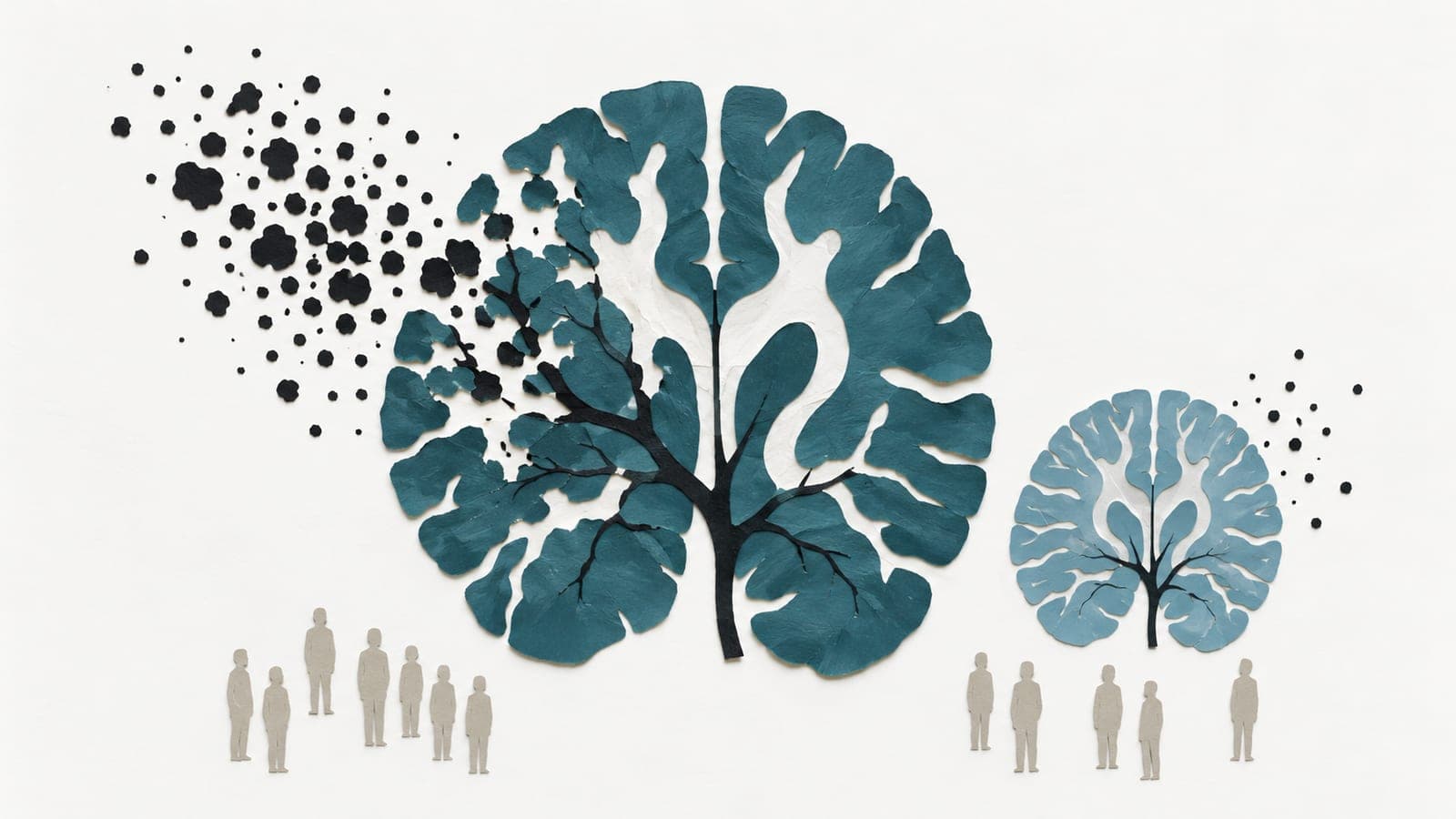
Among 37 Mexico City children, 37.8% had Alzheimer- and Parkinson-related brain changes; 32.4% had both plus abnormalities in a third protein.
Our read
Mechanisms- Studied:
- Cross-sectional study of 189 children and young adults
- What changed:
- Among Mexico City adults aged 18–40, 50% had both Alzheimer- and Parkinson-related changes; 37.8% of children had both changes
- The catch:
- Selected sudden-death cases do not establish prevalence in the wider young population
- In the record:
- The 465th paper on fine particulate matter with results in people; 739 on record in all.
Editor of record: Boris Djordjevic · AgingResearch.News
An observational autopsy study examined brains from 179 Metropolitan Mexico City residents aged 11 months to 40 years and 10 people from lower-pollution cities. The cases involved sudden deaths from accidents, homicides or suicides that did not involve the brain. A specialist used antibody stains to identify abnormal proteins in selected brain regions.
Among Mexico City adults aged 18–40, 50% had both Alzheimer- and Parkinson-related changes; 32.0% had those changes plus abnormalities in a third protein. These were tissue findings, not clinical disease diagnoses. Overlapping abnormalities also appeared in children with lower estimated cumulative exposure to fine-particle air pollution. After accounting for age, the combinations of abnormal proteins did not explain differences in estimated cumulative pollution exposure.
Why it matters
For age-related diseases such as Alzheimer’s and Parkinson’s, the authors proposed mapping early protein abnormalities in young urban populations to inform prevention and pollution-control efforts.
Caveats
This observational autopsy study cannot show that pollution caused the changes or that the markers predict future disease. These selected sudden-death cases, which excluded significant disease outside the brain, do not establish prevalence in the wider young population.
- Fine particulate matter
- Proteostasis
- Alzheimer's disease
- Neurodegenerative disease
- Parkinson's disease
- Humans
The paper
Universidad Autónoma de Piedras Negras; Instituto de Ciencias de la Atmósfera y Cambio Climático
Journal of Neuropathology and Experimental Neurology, Apr 21, 2026, Open access
Comments
Be the first to comment.