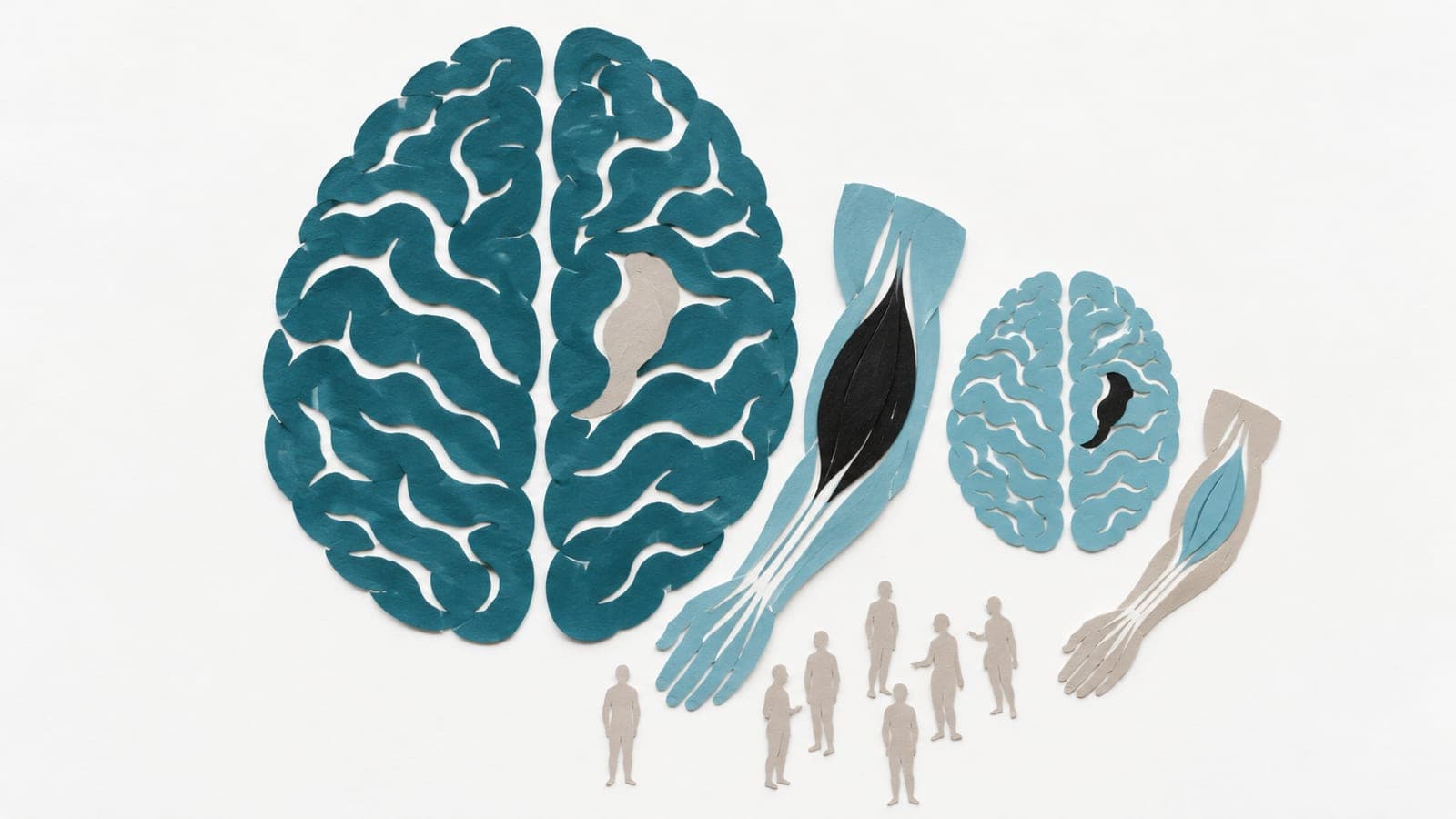
Brain proteins linked to disability in older adults
After accounting for dementia-related brain abnormalities, 12 proteins remained linked to mobility disability, 215 to difficulty with complex daily activities and 291 with basic activities.
Limit: Self-reported disability leaves protein associations vulnerable to reporting errors
Edited by Boris Djordjevic · AgingResearch.News
An observational study of 850 older adults who died at an average age of 89.3 examined brain proteins and disability before death. Women made up 67% of participants. All came from two long-running studies and had no known dementia at enrollment. Researchers measured proteins in donated tissue from the dorsolateral prefrontal cortex, a region of the brain’s outer layer. They compared these measurements with participants’ final reports of needing help with mobility and daily activities.
The authors labeled the identified proteins “resilience” proteins because their disability links remained after accounting for 10 brain abnormalities related to Alzheimer’s disease and other dementias. Exploratory analyses highlighted the function of mitochondria, the energy-producing structures inside cells.
Why it matters
Late-life disability limits independence. The authors suggested that targeting these proteins may eventually lead to therapies that help aging adults maintain it.
Caveats
This observational analysis linked protein measurements taken after death to self-reported disability; it could not establish protective effects. Participants were very old at death and had no known dementia at enrollment, limiting applicability to other groups.
The paper
Rush University Medical Center
The Journals of Gerontology, Series A, Apr 19, 2026, Open access