Weighted vest use or resistance exercise to offset muscle loss in older adults: secondary findings from the INVEST in bone health RCT
12 months
Abstract
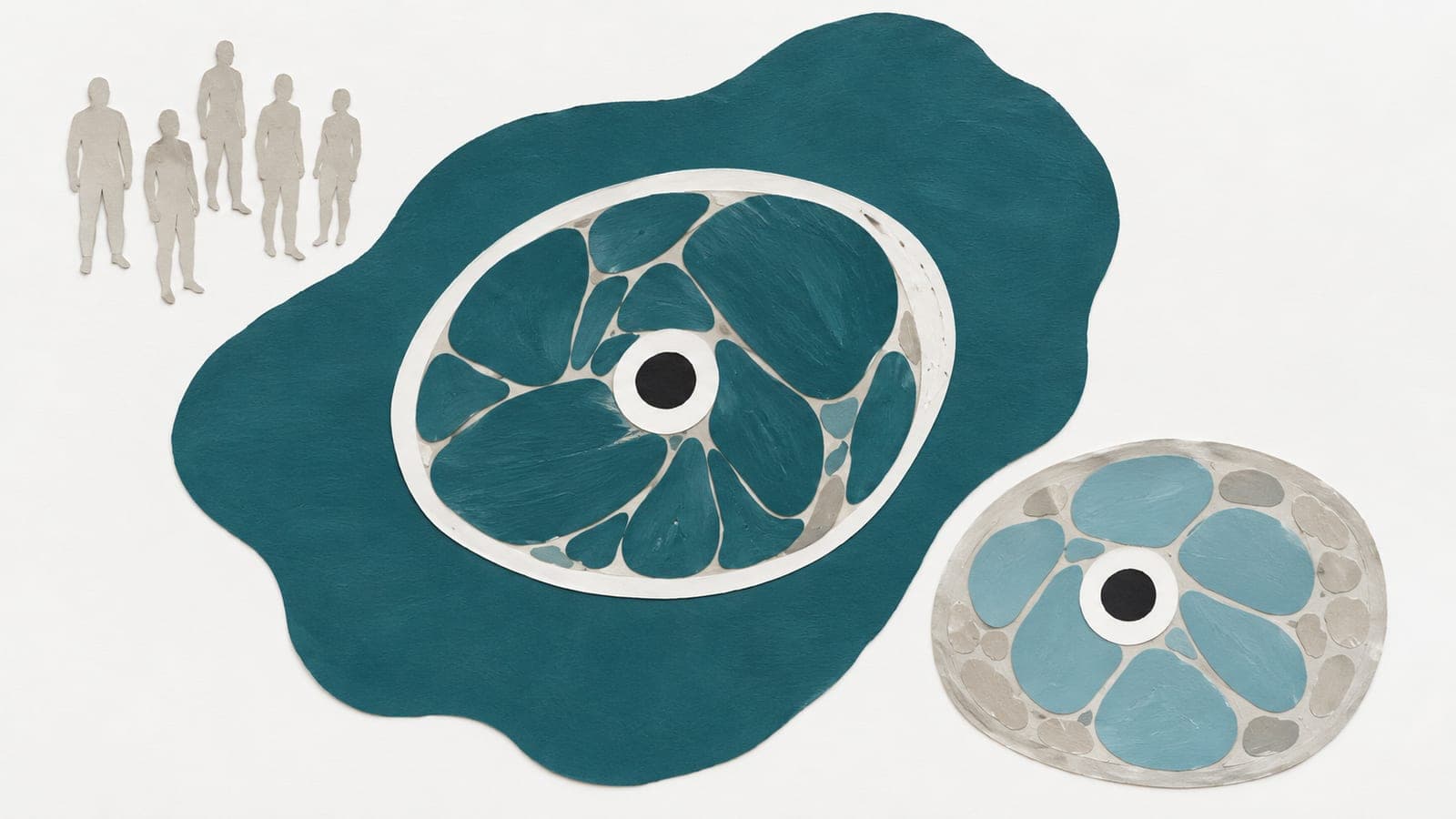
BACKGROUND: The INVEST in Bone Health Trial examined the effects of weight loss (WL), WL plus resistance training (WL + RT), or WL plus weighted vest use (WL + VEST) on musculoskeletal health. This secondary analysis evaluated changes in muscle area and density using computed tomography (CT) and lean and fat mass using dual-energy x-ray absorptiometry (DXA). METHODS: One hundred fifty participants (50/group) were randomized to 12-months of WL, WL + RT, or WL + VEST, undergoing CT and DXA scans at baseline, six- and 12-months. DXA measured lean and fat mass, while CT assessed muscle and intermuscular adipose tissue (IMAT) cross-sectional area (CSA) and density. Mixed linear models evaluated changes and treatment effects, and partial Pearson's correlations examined relationships between weight change and CT/DXA outcomes. RESULTS: Participants (66.4 ± 4.6 years, 75% female, 69% white) were living with overweight (14.7%) or obesity (85.3%). All groups achieved similar and significant weight loss (∼10%). At 12-months, WL + RT increased mid-thigh muscle CSA (0.5%, p < .05), improved muscle density (3.7%-5.9%, p < .03), and reduced IMAT (20%-22%, p < .05) and fat masses (22%-26.8%, all p < .061). At the trunk, WL + VEST showed a trend toward muscle preservation and improved density (4.2%, p = .08) compared to WL, but had minimal impact on other measures. Differences between WL + VEST and WL were insignificant (all p > .05), but group comparisons showed improvements for WL + RT. Weight loss correlated with increased muscle density (r < 0, p < .001) but reduced muscle CSA and IMAT (r > 0, p < .001), indicating improved quality but reduced quantity. CONCLUSION: Our findings underscore the significance of weight loss-associated muscle loss, highlighting progressive RT as a minimally effective preservation strategy.
The paper
Wake Forest University Health Sciences
The Journals of Gerontology, Series A, 28 Feb 2026