Bone marrow adipose tissue mass and dipeptidyl peptidase-4 link aging and metabolic health to biomarkers of bone turnover
By Heider S, Gohlke S, Kuxhaus O et al.
Abstract
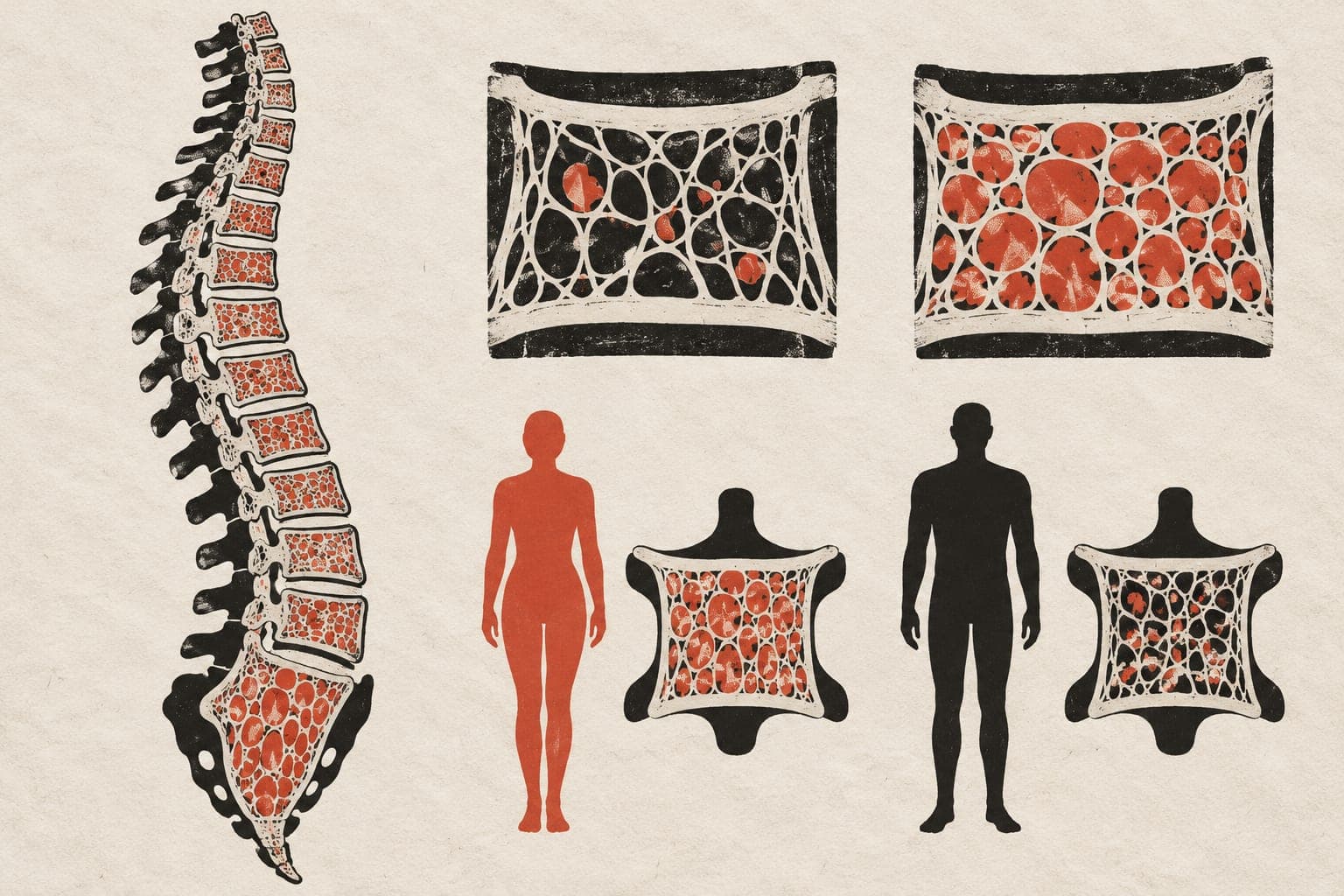
Bone marrow adipose tissue (BMAT) has been linked to negative bone health outcomes, and a high level of bone marrow adipocyte accumulation is observed during aging and in individuals with diabetes and obesity. This study explores the relationships between BMAT, age, metabolic health, and the impact of their interactions on bone turnover in a cross-sectional cohort of healthy women and men. Levels of bone turnover biomarkers, procollagen type 1 N-terminal propeptide (P1NP) and β-CrossLaps, were determined alongside dipeptidyl peptidase-4 (DPP4) concentration and activity as biomarkers of metabolic health. We used magnetic resonance imaging to assess proton density fat fraction to quantify BMAT mass in healthy individuals and correlated results to sex, age, body mass index (BMI), and glycated hemoglobin A1c (HbA1c), which represents long-term glycemic control. Age was the strongest determinant of increased BMAT mass, explaining more than a third of its overall variation, as well as a robust determinant of bone turnover. A sex-specific correlation pattern was observed between BMAT and bone turnover: women displayed a trend for a positive correlation of BMAT, which depended on age. In men, BMAT mass correlated significantly, but inversely, with both biomarkers, which was also age-dependent. DPP4 concentration and activity were positively associated with P1NP in both sexes, and these relationships were independent of age, BMI, or HbA1c. These findings indicate that the impact of BMAT on bone turnover may be age-dependent, whereas metabolic regulator DPP4 is linked to bone turnover independently of metabolic health or aging.NEW & NOTEWORTHY Our findings highlight the central role of bone marrow adipose tissue in the relationship between bone health, age, and metabolism. Increased marrow adipocytes produce endocrine signals, such as dipeptidyl peptidase-4, which modulate these associations. We show that women and men have distinct associations between bone turnover, age, and bone marrow adipocytes.
The paper
Heider S, Gohlke S, Kuxhaus O et al.
American Journal of Physiology Endocrinology and Metabolism, 18 Feb 2026