Myeloid-Derived CD38 Mediates Age-Related Endometrial Aging Through NAD⁺ Depletion
Abstract
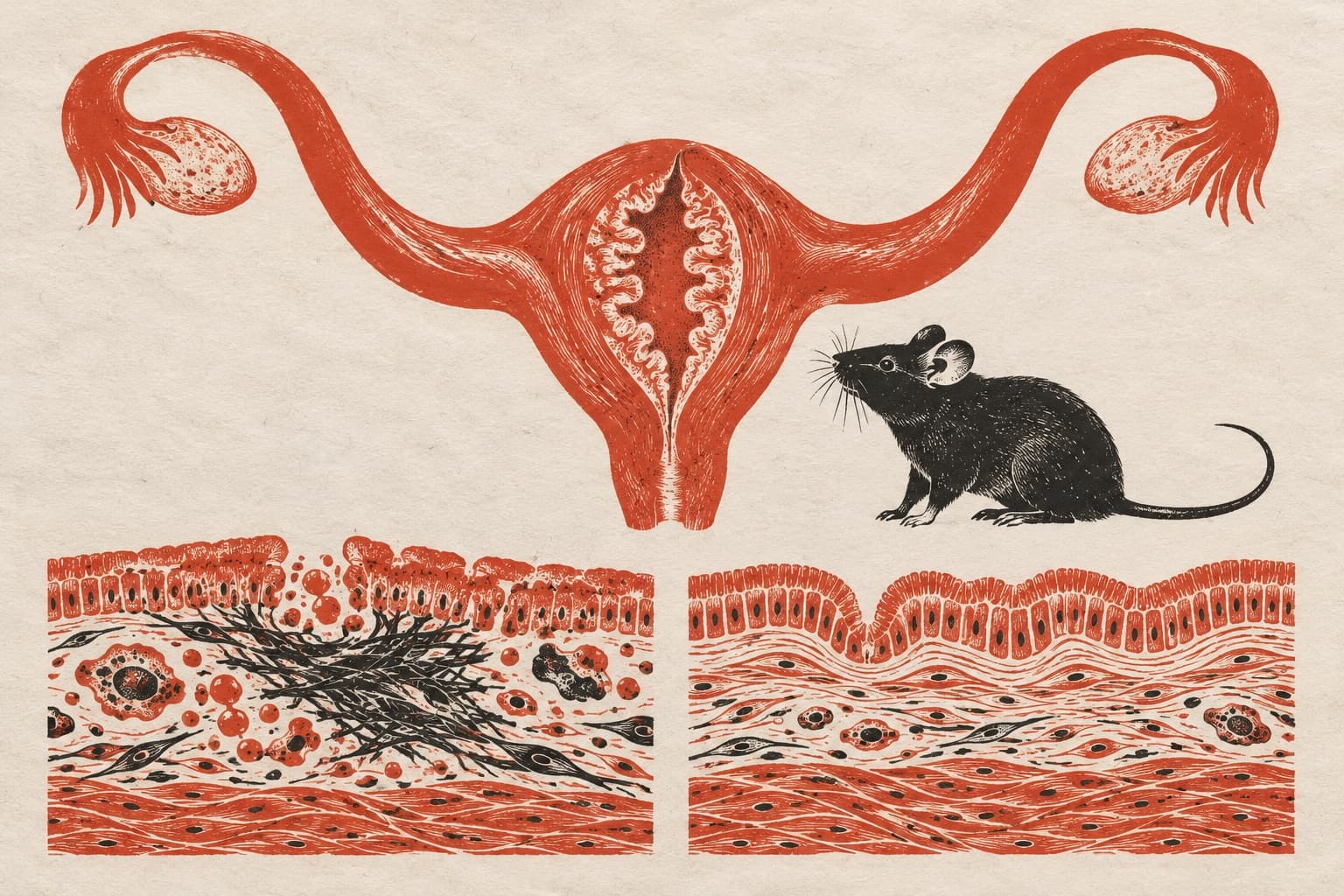
Against the backdrop of the global trend toward delayed childbearing, elucidating the mechanisms underlying uterine aging has emerged as a critical biomedical priority for addressing age-related implantation failure. Through unbiased global metabolomic profiling of peri-implantation uteri across different ages in mice, we identified nicotinamide adenine dinucleotide (NAD⁺) depletion as a hallmark metabolic feature of endometrial aging. Single-cell RNA sequencing further revealed an expansion of senescent stromal cell populations, which was accompanied by a decline in NAD⁺ levels. Supplementation with NAD⁺ precursors alleviated age-related stromal senescence and endometrial dysfunction, thereby restoring the uterus' implantation competence. Mechanically, we demonstrate that CD38 derived from myeloid serves as a principal driver of uterine NAD⁺ depletion; this process accelerates stromal senescence and impairs uterine receptivity. These findings establish CD38 as a central physiological integrator that links NAD⁺ metabolism to uterine function and highlight it as a promising target for rejuvenation strategies aimed at improving reproductive outcomes in women of advanced maternal age.