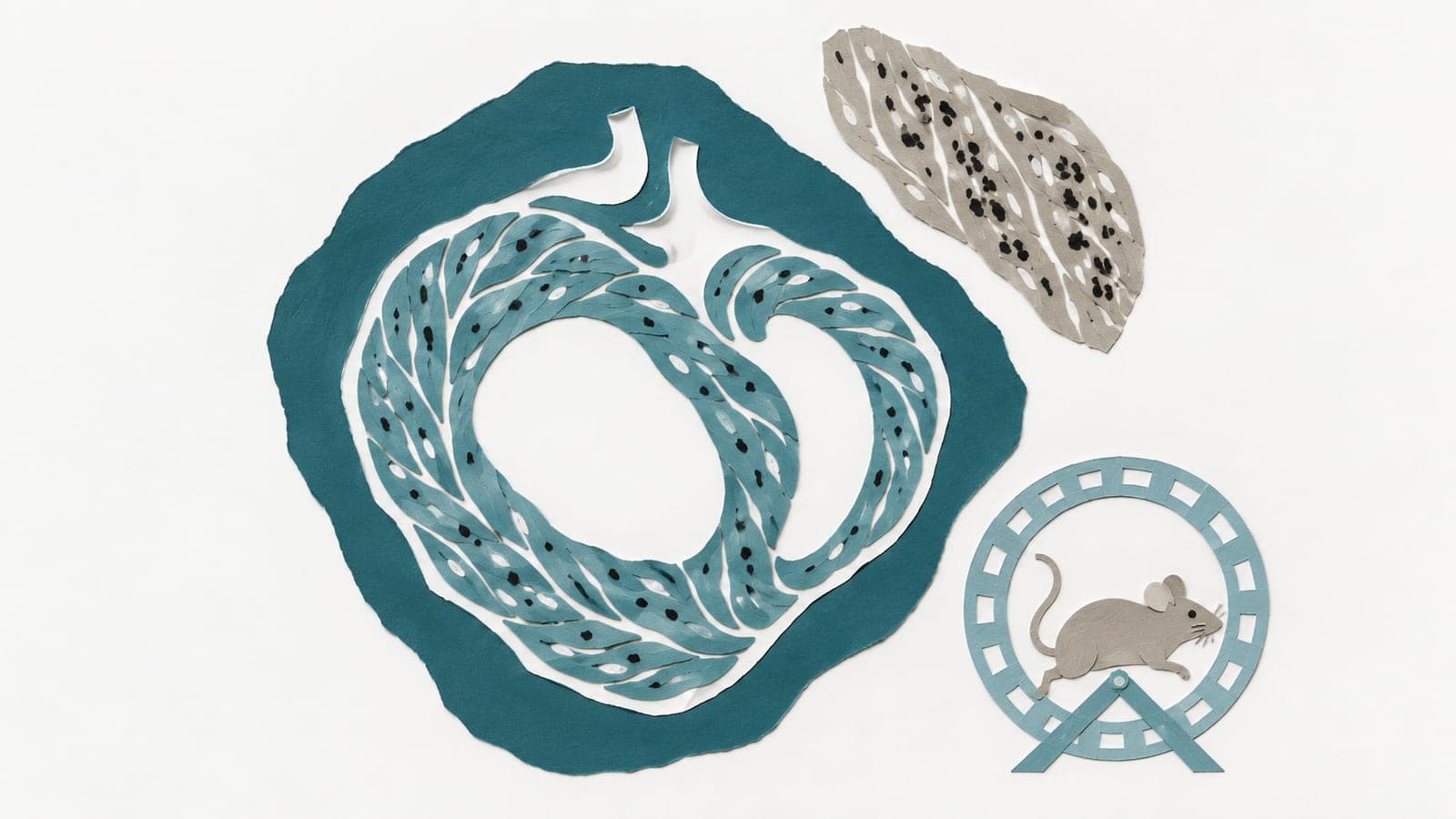
Targeting cellular senescence in dystrophin-/-/utrophin-/-double knockout mice improves musculoskeletal health and increases lifespan
12 days
Abstract
Duchenne muscular dystrophy (DMD) is a severe genetic muscle disease caused by mutations of the dystrophin gene. Previous studies have detected senescent cells in the skeletal muscle of human DMD, dystrophin-deficient mice (Mdx), and rats. This study aimed to use a more severe dystrophin-/-/utrophin-/- (dKO-Hom) mouse model to identify which cells become senescent and if targeting cellular senescence can improve bone quality and muscle pathology in dKO-Hom mice. Immunohistochemistry of P21 and GLB1 revealed significantly more senescent cells in the skeletal muscle tissues of 4-week-old Mdx and dKO-Hom mice compared to WT mice, but not in the bone tissue. The senescent cells were predominantly macrophages (GLB1⁺/CD68⁺). Treatment of dKO-Hom mice with ruxolitinib improved spine L5 trabecular bone microarchitecture and ameliorated skeletal muscle histopathology by decreasing senescent macrophages (GLB1⁺CD68⁺, FUCA1⁺/CD68⁺ or P21⁺/CD68⁺) and senescent-associated phenotypes (SASP) such as macrophage migration inhibitory factor (MIF) in skeletal muscle. Ruxolitinib treatment also improved heart muscle pathology by decreasing senescent macrophages. Additionally, ruxolitinib treatment increased muscle grip strength and treadmill endurance of Mdx mice. Moreover, ruxolitinib significantly extended the lifespan of dKO-Hom mice after 12 days of treatment. Furthermore, treatment of dKO-Hom mice with ruxolitinib and deflazacort synergistically improved bone microarchitecture of the spine L5 vertebrate and the proximal tibia trabecular bone (BV/TV, Tb.N, Tb.Th) by increasing osteoblast cells and decreasing osteoclasts. Co-administration of ruxolitinib and deflazacort also synergistically ameliorated skeletal muscle and heart pathology. Therefore, targeting senescent cells with ruxolitinib represents a promising approach for treating DMD patients but warrants further studies in humans.
The paper
Steadman Philippon Research Institute
Pharmacological Research, 30 Oct 2025