Plasminogen activator inhibitor 1 promotes aortic aging-like pathophysiology in humans and mice
Abstract
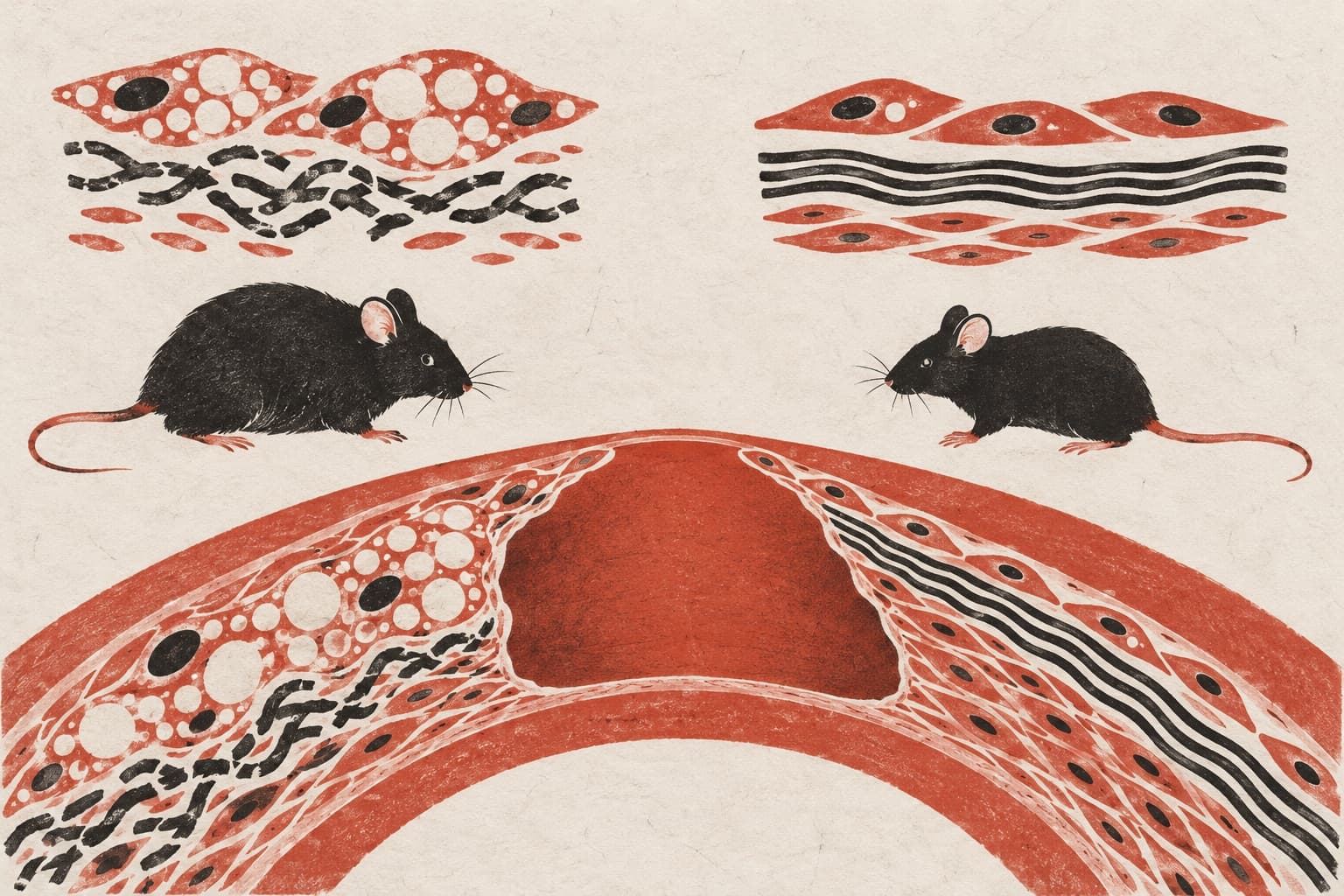
Plasminogen activator inhibitor 1 (PAI-1), encoded by SERPINE1, contributes to age-related cardiovascular disease (CVD) and other aging-related pathologies. Humans with a heterozygous loss-of-function SERPINE1 variant exhibit protection against aging and cardiometabolic dysfunction. We engineered a mouse model mimicking the human mutation (Serpine1TA700/+) and compared cardiovascular responses with WT littermates. Serpine1TA700/+ mice lived 17% longer than did littermate control mice. Under l-NG-nitro-arginine methyl ester-induced (l-NAME-induced) vascular stress, Serpine1TA700/+ mice exhibited diminished pulse wave velocity (PWV), lower systolic blood pressure (SBP), and preserved left ventricular diastolic function compared with controls. Conversely, PAI-1-overexpressing mice had measurements indicating accelerated cardiovascular aging. Single-cell transcriptomics of Serpine1TA700/+ aortas revealed a vascular-protective mechanism with downregulation of the extracellular matrix regulators Ccn1 and Itgb1. Serpine1TA700/+ aortas were also enriched in a cluster of smooth muscle cells that exhibited plasticity. Finally, PAI-1 pharmacological inhibition normalized SBP and reversed l-NAME-induced PWV elevation. These findings demonstrate that PAI-1 reduction protects against cardiovascular aging-related phenotypes, while PAI-1 excess promotes vascular pathological changes. Taken together, PAI-1 inhibition represents a promising strategy to mitigate age-related CVD.
The paper
Northwestern University
The Journal of Clinical Investigation, 30 Sep 2025