Comparison between vascular age based on brachial-ankle pulse wave velocity or carotid-femoral pulse wave velocity
Abstract
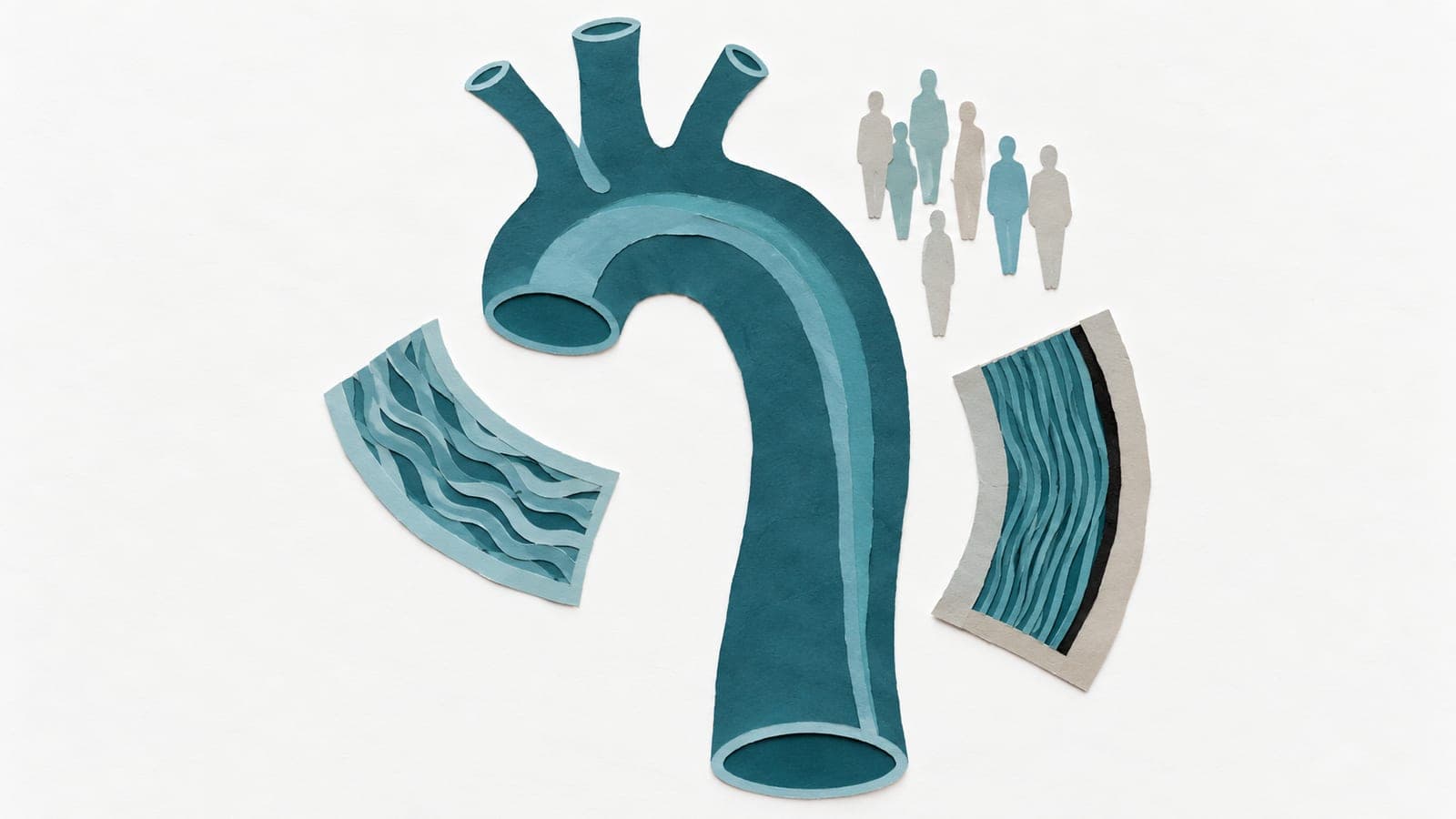
Vascular age (VA) as a surrogate of chronological age can improve cardiovascular risk prediction. This study examines which vascular age calculated by brachial-ankle pulse wave velocity (baPWV) or carotid-femoral pulse wave velocity (cfPWV) has a stronger association with the risk of cardiovascular events. This prospective study included 5723 participants from a community-based atherosclerosis cohort in Beijing, China. VA was defined as the predicted age in a multivariable regression model, including classical cardiovascular risk factors, treatment, and pulse wave velocity (baPWV or cfPWV). Residuals by regressing vascular age on chronological age were defined as ∆-age, and the 10th and 90th percentiles of ∆-age were used as cutoffs to define supernormal vascular aging, normal vascular aging, and early vascular aging, respectively. During the median 3.1-year follow-up period, 173 (3.0%) composite endpoints were observed. After adjusting for age and sex, ∆-age calculated by baPWV was significantly associated with cardiovascular risk (hazard ratio [HR]: 1.05, 95% confidence interval [CI]: 1.01-1.09, p = 0.025). After adjusting for traditional cardiovascular risk factors, early vascular aging group calculated by baPWV had an increased cardiovascular risk (HR: 1.84, 95% CI: 1.25-2.73, p = 0.002), compared with the normal vascular aging group. In contrast, no significant results were observed in the analyses of VA calculated by cfPWV. Since baPWV is a simple and convenient method, VA calculated by baPWV is more valuable for cardiovascular disease risk prediction of large sample population. The association between VA based on baPWV or cfPWV and MACE. EVA early vascular aging, normal VA normal vascular aging, SUPERNOVA supernormal vascular aging.
- Vascular age
- Age
- Brachial-ankle pulse wave velocity
- Carotid-femoral pulse wave velocity
- Cardiovascular disease
- Humans
The paper
Peking University First Hospital; Peking University
Hypertension Research, 18 Jul 2025