Unveiling Cognitive Health Disparities: A Gender Perspective on Aging in India
Abstract
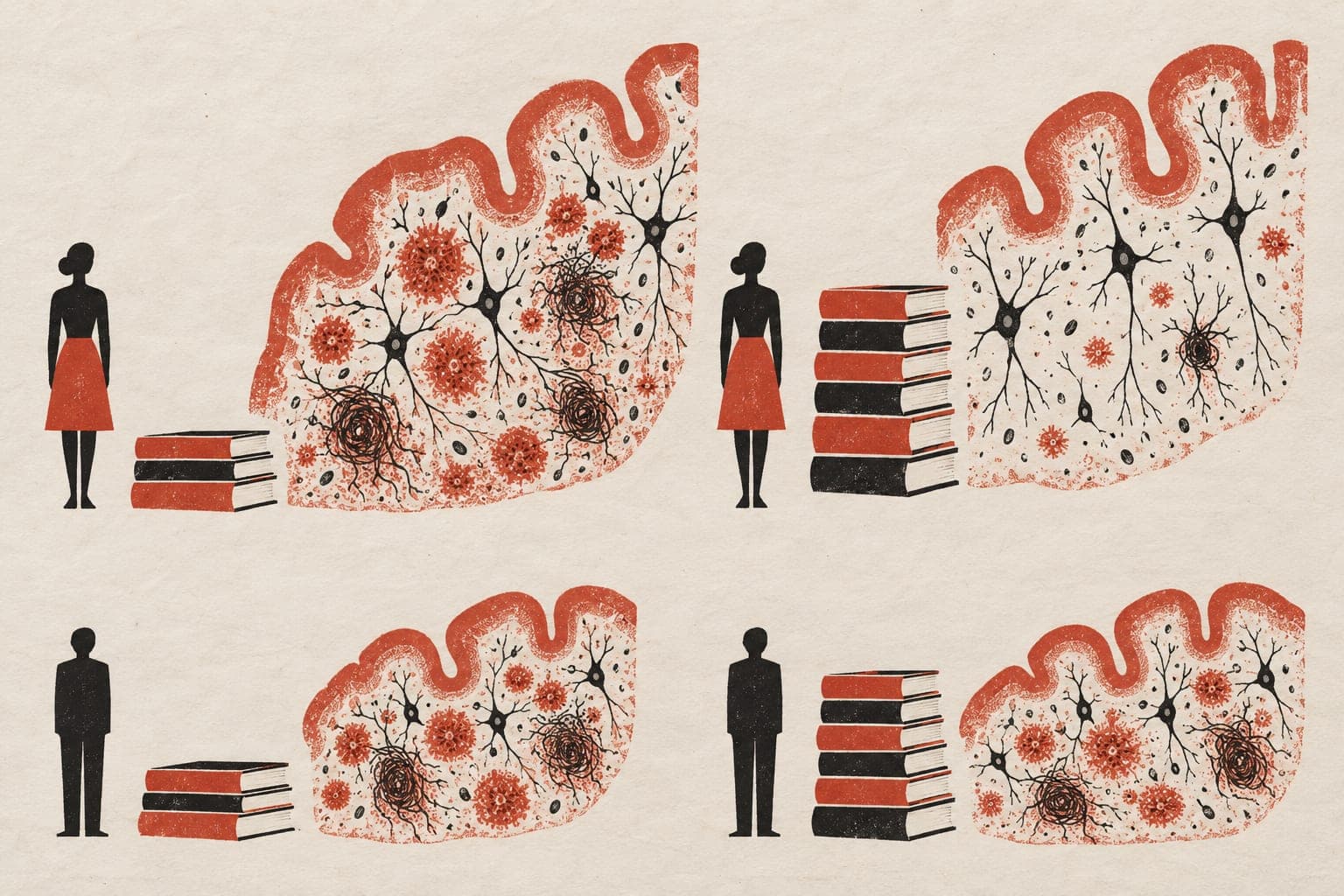
OBJECTIVE: The study examined the association of various socioeconomic, demographic, health risk behavior, and social capital factors with the cognitive health status of older adults in India. METHODS: Data from the Longitudinal Ageing Study in India (LASI, 2017-18), wave-1 was used. Binary logistic regression was applied to explore the significant predictor variables of poor cognitive health status. Further, decomposition analysis was employed to explore the gender differences in cognitive health status. RESULTS: The results revealed that female older adults had a higher odds of poor cognitive health status than male older adults (aOR: 2.37; 99% CI: 1.97-2.85). Increasing years of age, not being in a marital union, lower levels of social capital, and the presence of health risk behavior increased the odds of poor cognitive health. Education had a protective effect against the decline in cognitive health. The decomposition analysis results indicated that the gender difference in educational attainment contributed largely to the gender inequality in poor cognitive health status. CONCLUSIONS: The results suggest that gender equality in educational attainment could reduce the gender difference in cognitive health among male and female older adults to a large extent.
The paper
Vellore Institute of Technology University; Institute of Rural Management Anand
Experimental Aging Research, 30 Dec 2024