Use of Multiple Languages Provides Cognitive Reserve Amidst Age-Related White Matter Changes
Abstract
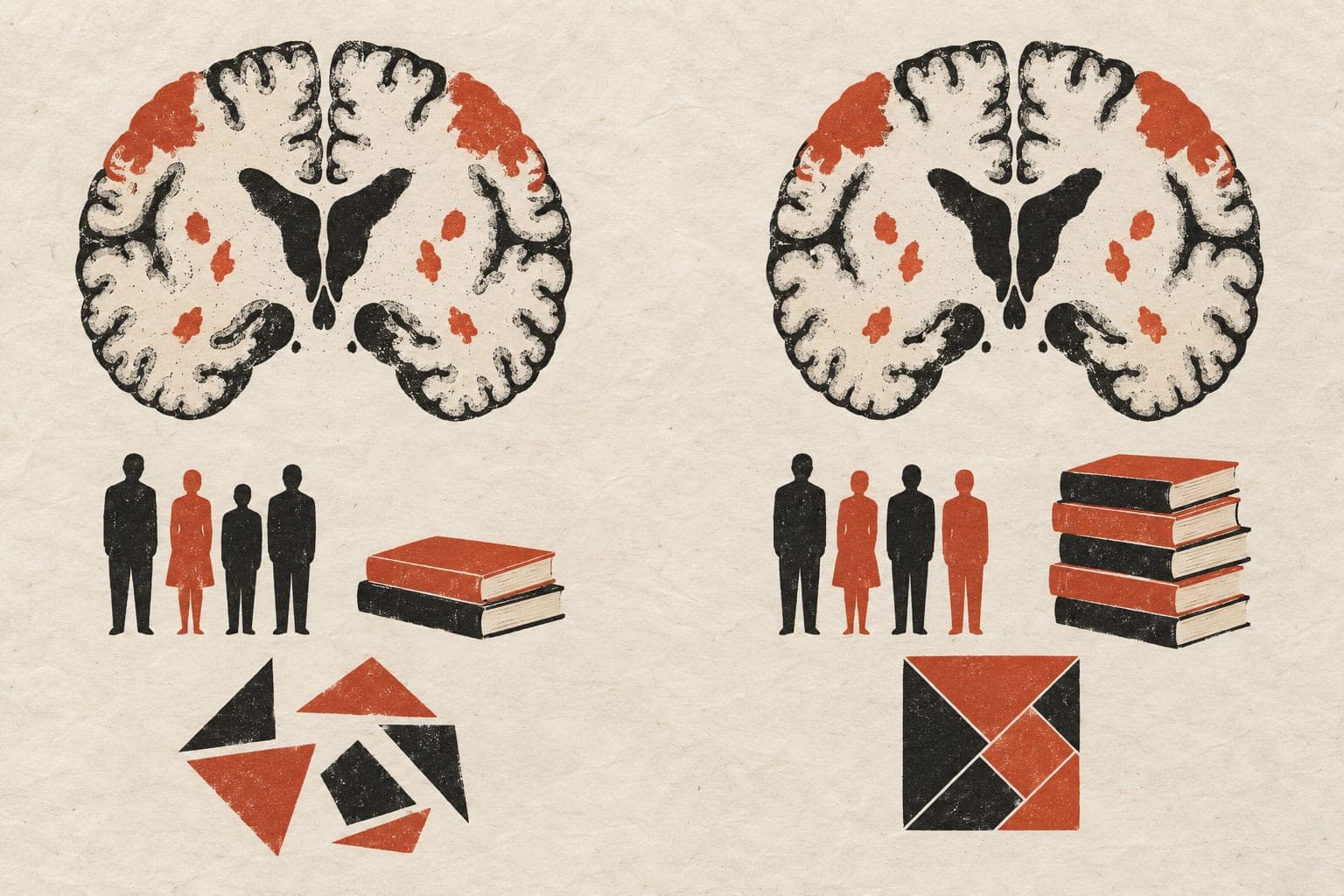
OBJECTIVES: Bilingualism can stimulate brain plasticity and is often associated with better executive function. We investigated whether language usage was related to the volume of white matter lesions in a cohort of middle-aged to older adults with different multilingual characteristics, including monolingualism in daily life (use of one language), bilingualism (use of two languages), and multilingualism (active use of 3 languages, i.e., Catalan, Spanish, English). We also explored cognitive status and cognitive change over a 2-year follow-up period linked to possible associations between language usage and white matter status to provide insights into the theory of cognitive reserve (CR). METHODS: All participants (N = 397, age range: 45-69, 50.1% female) underwent cognitive and structural magnetic resonance imaging assessments at baseline, and 306 of them completed additional cognitive and neuroimaging assessments 2 years later. Active use of languages was computed at baseline with the Shannon Entropy equation, which measured the frequency of use of each language in 4 different contexts: home, work, friends, and family. The volume of white matter hypointensities (WM-hypo) was determined using FreeSurfer. RESULTS: There was a positive correlation between Entropy values and WM-hypo. Compared to monolinguals, participants using 3 languages daily presented equivalent cognitive function and increased white matter lesions, both at baseline and follow-up examinations. DISCUSSION: Among middle-aged participants with equivalent cognitive levels, active multilingualism was associated with greater white matter deterioration, suggesting increased CR.
The paper
Consorci Institut D'Investigacions Biomediques August Pi I Sunyer; Universitat Autònoma de Barcelona
The Journals of Gerontology, Series B, 8 Apr 2025