GBA moderates cognitive reserve's effect on cognitive function in patients with Parkinson's disease
Abstract
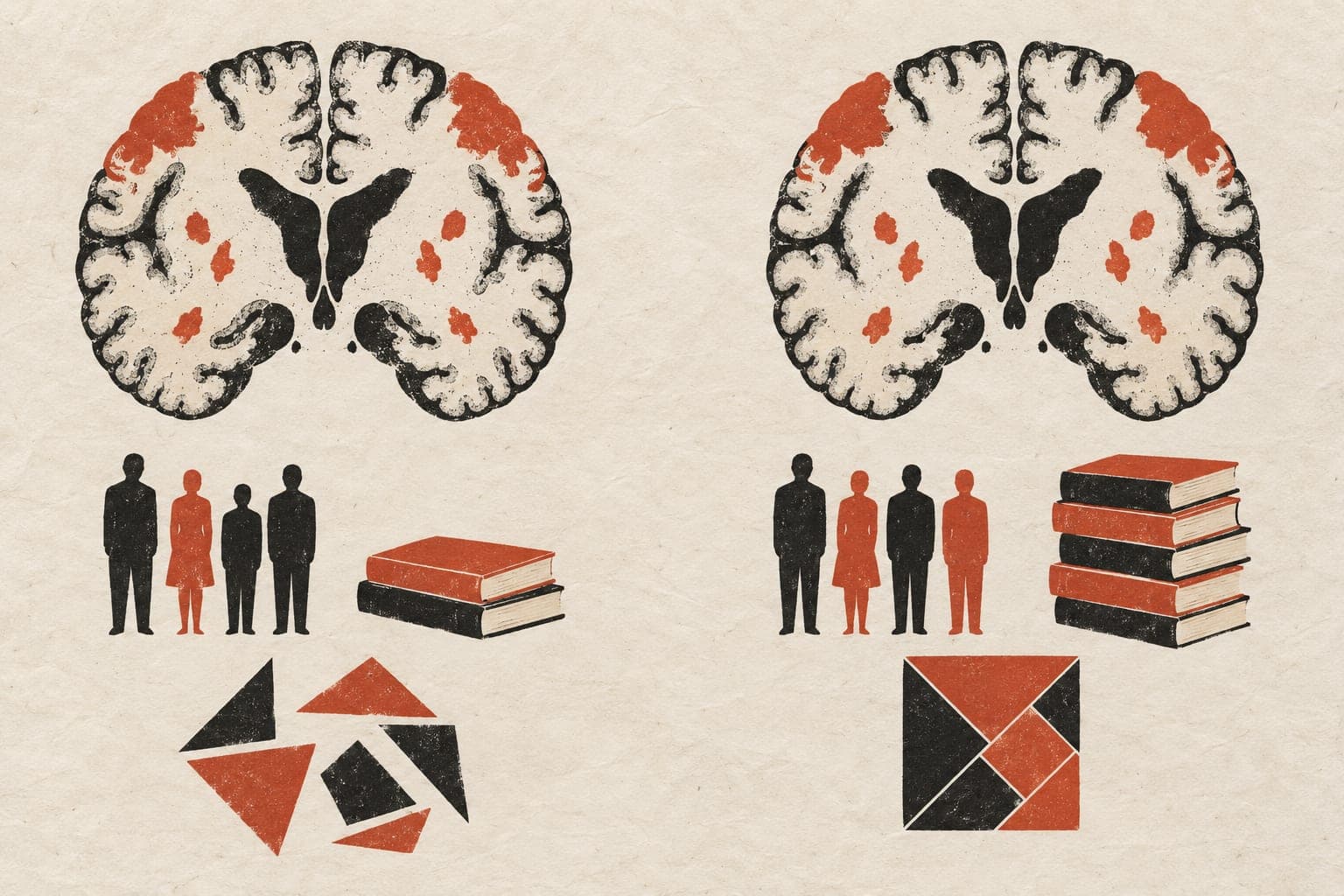
BACKGROUND: Cognitive reserve (CR) involves an individual's ability to maintain cognitive vitality over their lifespan. Glucocerebrosidase (GBA) gene mutations contribute to additional effects on cognitive function in Parkinson's disease (PD) patients, but the interplay between GBA mutations and CR remains unclear. We investigated the interactions among CR, GBA, and diseases, aiming to examine whether the CR established at different stages interacts with specific genotypes to affect cognitive function. METHODS: Three hundred and eighteen participants' CR indicators (i.e., education, occupation, and social function) and comprehensive neuropsychological function (i.e., tests for executive function, attention/working memory, visuospatial function, memory, and language) were evaluated. RESULTS: We found that CR established in a specific life stage influences the individual's cognitive function, particularly in PD, based on their distinct GBA rs9628662 genotypes. Attention/working memory and memory performance are affected by occupational complexity in midlife in PD patients with the GG genotype (q < 0.0001; q < 0.0001) and healthy adults with the T genotype (q = 0.0440; q < 0.0001). Language is influenced by early education and occupation, and the effects of occupation are also observed in PD patients with the GG genotype (q = 0.0040) and in healthy adults carrying the T genotype (q = 0.0040). CONCLUSIONS: CR, established at different life stages, can be influenced by the GBA rs9628662 genotype, impacting later-life cognition. Validating genotypes and incorporating genotype information when assessing cognitive reserve effects is crucial and can enhance targeted cognitive training.
The paper
National Cheng Kung University
Journal of Neurology, 24 Apr 2024