Intervals added more muscle in older adults with sarcopenic obesity
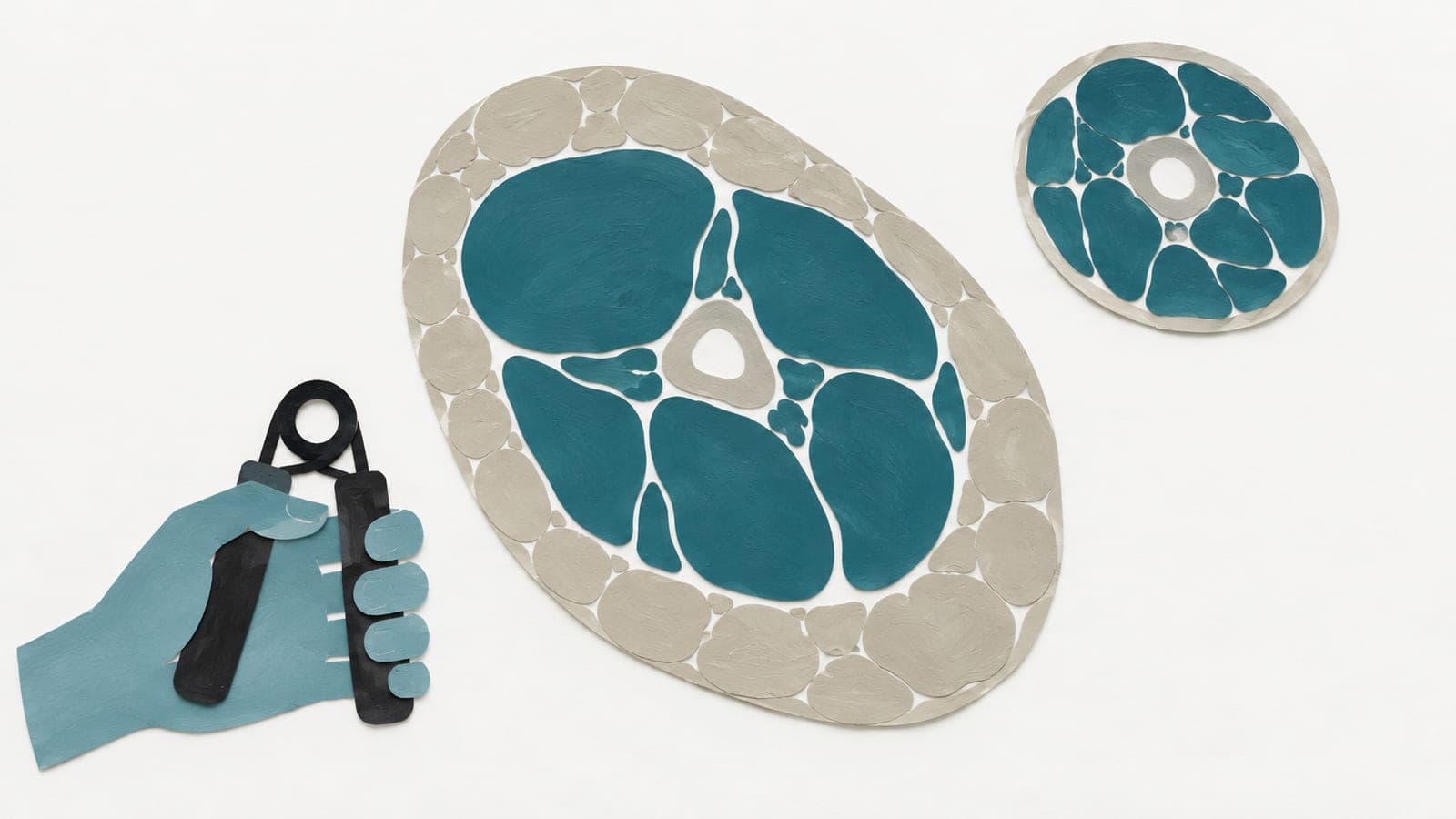
Muscle mass in the arms and legs rose 0.70 kg with high-intensity intervals versus 0.11 kg with moderate continuous exercise over 12 weeks.
Our read
Interventions- Studied:
- Randomized trial in 35 older adults with sarcopenic obesity, 12 weeks (Blinded, multicenter)
- What changed:
- Arm and leg muscle mass rose 0.70 kg with intervals versus 0.11 kg with moderate continuous exercise
- The catch:
- Only 35 of 40 participants completed the trial
- In the record:
- The 329th paper on high-intensity interval training with results in people; 675 on record in all. Its result on gait speed agrees with 7 of 8 other findings on record; 1 found no change.
- Why it’s aging research:
- It studies an intervention with evidence of extending healthy life.
Editor of record: Boris Djordjevic · AgingResearch.News
Forty adults aged 60 or older with sarcopenic obesity—low muscle mass alongside obesity—took part in a randomized trial at one center. They performed supervised high-intensity interval training or moderate-intensity continuous training three times a week for 12 weeks. The groups completed the same total workload. Outcome assessors did not know participants’ group assignments.
Thirty-five participants completed the trial. Muscle mass in the arms and legs, estimated using a test that passes a small electrical current through the body, increased more with interval training. Usual walking speed over 4 meters rose by 0.13 meters per second with intervals versus 0.04 with continuous training. Grip strength increased by 2.28 kg versus 1.07 kg. Body fat percentage fell by 2.52 versus 1.31 percentage points, respectively.
Why it matters
For older adults with sarcopenic obesity, exercise programs aim to address both muscle mass and mobility. These results support larger trials comparing supervised exercise approaches.
Caveats
Only 35 of 40 participants completed this single-center trial, and muscle mass was estimated with an electrical test. The findings concern adults aged 60 or older with sarcopenic obesity; the abstract does not report adverse events.
Where the evidence stands
High-intensity interval training
- 248 independent labs in 48 countries
- 89 findings against
- Funders: National Institutes of Health and others
- 26 of 1,123 findings with company ties
- High-intensity interval training
- Sarcopenic obesity
- Body fat percentage
- Appendicular skeletal muscle mass
- Gait speed
- Humans
The paper
JSS Academy of Higher Education and Research
Adolescencia E Saude, Nov 3, 2026, Open access, CC BY
Comments
Be the first to comment.