Calorie restriction protected isolated rat hearts from injury
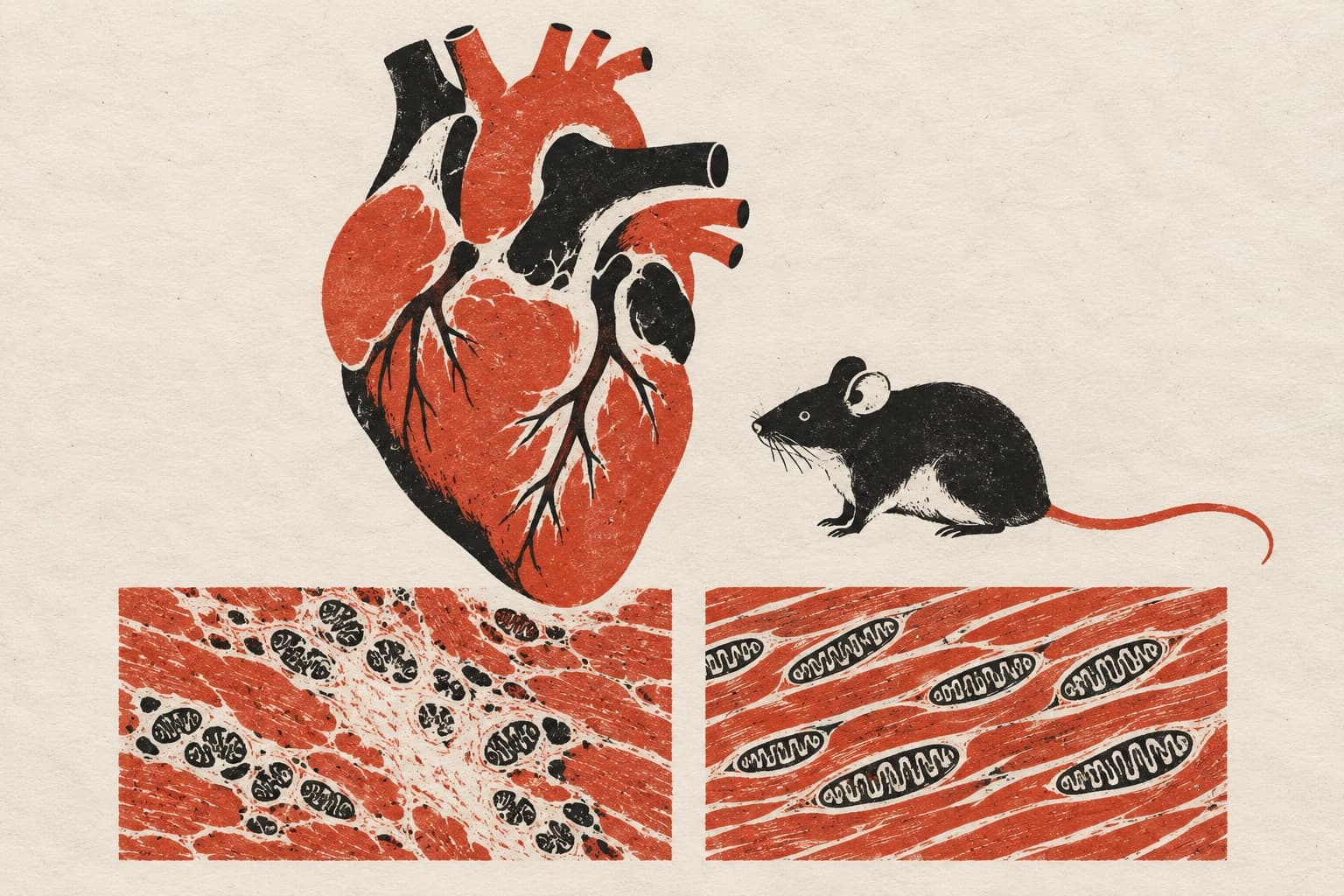
In a 16-week feeding experiment, isolated hearts from male rats given 40% fewer calories recovered better after interrupted nutrient flow than those from freely fed rats.
Our read
Interventions- Studied:
- Preprint: experiments in male Sprague-Dawley rats, 16 weeks, against hearts from freely fed rats
- What changed:
- Hearts from calorie-restricted rats recovered function better than hearts from freely fed rats
- The catch:
- Recovery was followed for only 30 minutes after nutrient flow was restored
- In the record:
- One of 4,194 papers on caloric restriction on record: 638 with results in people, 1,499 in animals.
Editor of record: Boris Djordjevic · AgingResearch.News
In an animal experiment, eight-week-old male Sprague-Dawley rats were randomly assigned to unrestricted feeding or 40% calorie restriction for 16 weeks. Researchers then tested the removed hearts by stopping the flow of nutrient solution for 40 minutes and restoring it for 30 minutes.
Calorie-restricted rats’ hearts recovered function better than hearts from freely fed rats. After the injury, their mitochondria, the cells’ energy-producing structures, removed calcium faster and released less hydrogen peroxide, a reactive chemical. A drug that inhibited sodium-dependent calcium removal from mitochondria eliminated the recovery benefit. The authors concluded that this calcium-removal pathway helped preserve mitochondrial function and protect the hearts against injury when flow stopped and restarted.
Why it matters
Calcium overload in mitochondria contributes to heart damage when flow returns after an interruption. Understanding this process could inform research on maintaining heart resilience with age.
Caveats
The recovery experiments used isolated hearts from male rats, not hearts in living animals or people, and did not test aging or lifespan. The findings come from a preprint that has not been peer-reviewed.
- Caloric restriction
- Oxidative stress and ROS signaling
- Mitochondrion
- Cardiac ischemia-reperfusion injury
- Hydrogen peroxide release
- Rats
Caloric restriction is part of Bryan Johnson's Blueprint
The paper
Universidade de São Paulo
bioRxiv, Jul 21, 2026, Open access, CC BY, Preprint, not yet peer-reviewed

Comments
Be the first to comment.